
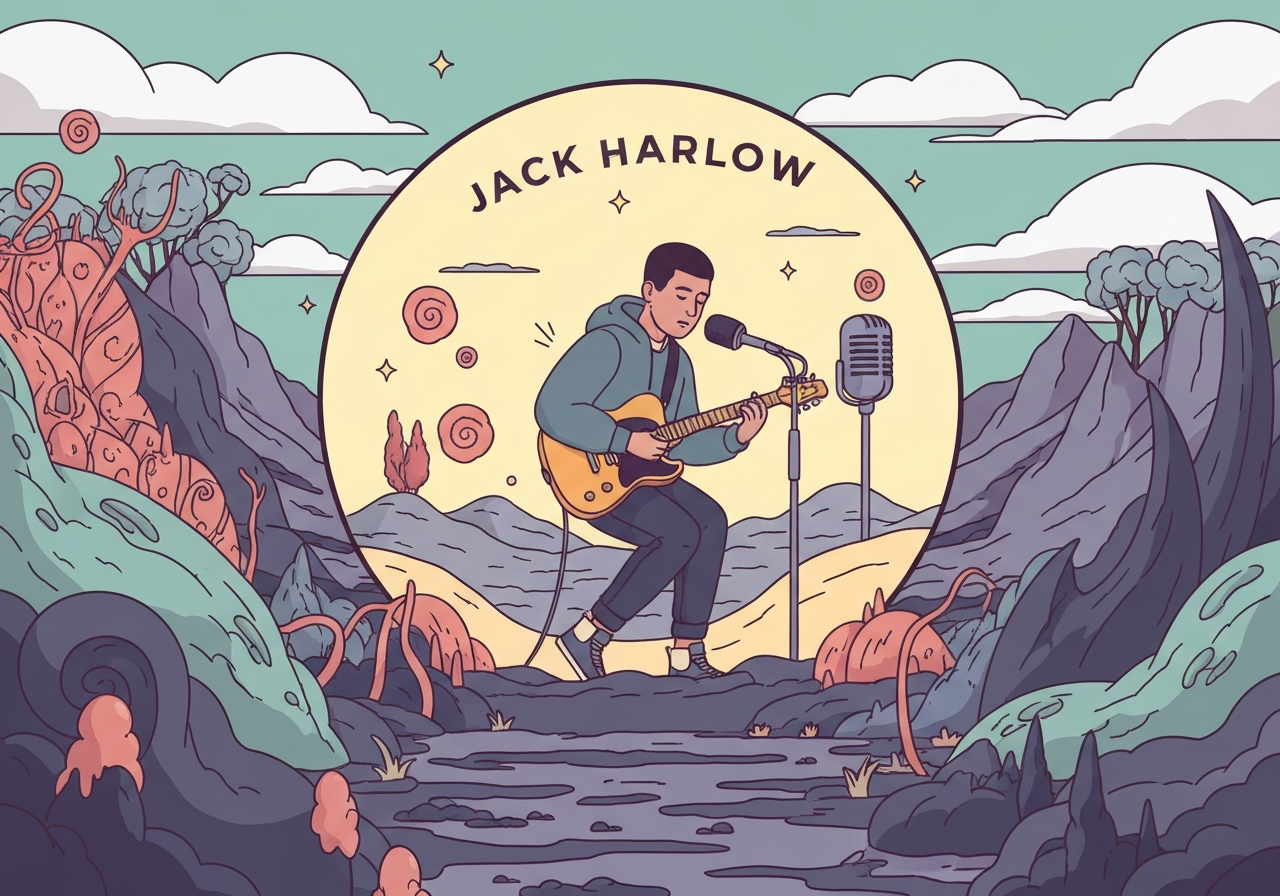
Jack Harlow Turns Inward: From Chart Rapper to Intimate R&B on Monica
Lead: Jack Harlow, the Louisville-born artist who scored multiweek No. 1 hits with 2022’s ‘First Class’ and 2023’s ‘Lovin on Me,’ has released a markedly different fourth album, Monica, on March 13, 2026. After relocating to New York in January 2025 and abandoning an initial set of sessions, Harlow pursued a softer, live-band approach recorded at Electric Lady Studios. The new record emphasizes sung vocals and pared-down R&B textures rather than pop-rap sampling and braggadocio. Early collaborators include executive producer Aksel Arvid and contributors such as Robert Glasper, Cory Henry, Jermaine Paul, Ravyn Lenae, Omar Apollo and Mustafa.
Key Takeaways
- Album release: Monica was released on March 13, 2026, marking Harlow’s fourth studio album.
- Chart history preserved: Harlow previously topped the Billboard Hot 100 with ‘First Class’ for three weeks in 2022 and with ‘Lovin on Me’ in 2023 for a longer run.
- Creative pivot: Sessions at Electric Lady Studios emphasized live instrumentation, soft guitars and intimate vocal delivery, shifting away from sample-driven pop-rap.
- Personnel: Aksel Arvid served as executive producer; sessions featured Robert Glasper, Cory Henry and Jermaine Paul; guest vocals came from Ravyn Lenae, Omar Apollo and Mustafa.
- Geography and timing: Harlow moved from Louisville/Atlanta influences to New York in January 2025 to seek fresh inspiration and restarted the album after scrapping earlier material.
- Sound lineage: The record nods to 1990s organic R&B and to underground hip-hop collectives known for warm, soul-inflected production.
Background
Jack Harlow emerged from Louisville, Kentucky, and was initially discovered while working scenes tied to Atlanta’s music ecosystem. He crossed into mainstream pop-rap with catchy, sample-forward singles that translated into sustained chart success — most notably ‘First Class’ in 2022. Those hits established a recognizable commercial template: melodic hooks built on familiar samples and a playful, self-assured persona.
By 2024–25, Harlow signaled dissatisfaction with repeating that formula. He relocated to New York in January 2025 for what he described as a search for new creative inputs, spending time in city cultural spaces between studio sessions. Frustrated with material that felt ‘patented’ to him, he chose to discard much of the early work and pivot toward a smaller-band, more intimate sound. The decision reflects a broader pattern among pop artists who trade maximalist production for organic musicianship as they reconfigure identity and audience expectations.
Main Event
The recording of Monica took place largely at Electric Lady Studios in downtown Manhattan, a facility long associated with neo-soul and live-band recordings. Harlow moved away from heavy sampling and programmed beats, opting instead for guitar-led arrangements and live rhythm sections. The sessions were reportedly small in scale and drew on veteran jazz and soul players to shape a warmer sonic palette.
Aksel Arvid, known for production that often references 1990s textures, executive produced the project and helped steer the record toward subtlety rather than bombast. Contributors included keyboardist and arranger Cory Henry, pianist Robert Glasper and vocalist Jermaine Paul, each bringing a history of genre-blending musicianship. Guest vocalists Ravyn Lenae, Omar Apollo and Mustafa appear across tracks, adding harmonic and timbral contrast to Harlow’s softer delivery.
In interviews and on The New York Times Popcast, Harlow framed the change as less a rejection of his past hits than an attempt to escape a rehearsed persona. He described the new album as a work born of pared-down studio rooms and a willingness to make himself vulnerable musically. The result is a record that leans on cooed melodic lines and warm, analog textures rather than the brassiness of stadium-ready rap singles.
Analysis & Implications
Musically, Monica positions Harlow within a lineage that includes 1990s R&B and neo-soul, while retaining a connection to hip-hop’s emphasis on rhythm and cadence. That synthesis may broaden his artistic credentials beyond chart-topping singles and invite critical reassessment of his range. For fans who discovered him through sample-driven pop, the pivot risks alienation; for listeners drawn to singer-songwriter intimacy, it may deepen his audience.
Commercially, the move is a calculated gamble. The singles that made Harlow a household name were engineered for streaming playlists and radio rotation; a quieter, album-focused R&B record typically generates different consumption patterns, often relying more on full-album listens and critical coverage than viral hooks. How streaming platforms, radio programmers and playlist curators respond will affect Monica’s chart trajectory.
Culturally, the record adds to a trend of artists seeking legitimacy through musicianship and collaboration with established jazz and soul figures. Working with players such as Glasper and Henry signals an alignment with artists who straddle popular and exploratory music spaces, potentially opening doors to new listeners and festival bookings that favor live instrumentation.
Comparison & Data
| Item | Year | Type | Notable Feature |
|---|---|---|---|
| First Class | 2022 | Single (pop-rap) | No. 1 on Billboard Hot 100 for 3 weeks |
| Lovin on Me | 2023 | Single (melodic pop-rap) | No. 1 on Billboard Hot 100 for longer run than ‘First Class’ |
| Monica | 2026 | Album (live R&B) | Recorded at Electric Lady Studios; live-band sessions |
The table highlights a shift from high-charting singles built on samples to a full-length record anchored in live musicianship. Past chart performance demonstrates Harlow’s mainstream reach; Monica’s success metrics will likely rely on album-equivalent units, critical reception and touring revenue rather than single-week Hot 100 peaks alone.
Reactions & Quotes
“It didn’t feel like, ‘Oh, he’s doing that?’ It felt like, cool, this is patented,”
Jack Harlow, on Popcast (The New York Times)
Harlow used that phrasing to explain why he abandoned the first batch of sessions and restarted with a different aesthetic. The remark was cited as evidence of an artist wary of repeating recognizable formulae.
“We wanted to bring a human pulse back to the songs — less processing, more players in the room,”
Aksel Arvid, executive producer (paraphrased)
Arvid described the production aim as restoring tactile qualities of older R&B records, emphasizing real-time interplay between musicians.
“Collaborating with Jack felt like connecting two different idea sets — modern songcraft and classic musicianship,”
Robert Glasper, musician (paraphrased)
Glasper and other session players framed the project as an opportunity to fuse tight arrangements with conversational live performance, rather than create a backdrop for rap bravado.
Unconfirmed
- Tour plans tied specifically to Monica’s release are not officially announced; reports of a potential intimate-venue run remain unverified.
- There are informal industry accounts that some earlier promotional singles were withheld by the label; those claims lack public documentation.
Bottom Line
Monica represents a deliberate stylistic turn for Jack Harlow: a move from maximal pop-rap toward a quieter, musician-forward R&B idiom. The album preserves his melodic instincts but recasts them through live players and softer vocal approaches, signaling an artist re-evaluating how he wants to be heard.
The release is both an artistic recalibration and a commercial test. If audiences follow him into more album-oriented listening and critics validate the shift, Monica could broaden Harlow’s long-term credibility. If not, it will remain an instructive example of how mainstream hitmakers negotiate reinvention in a streaming-driven market.