
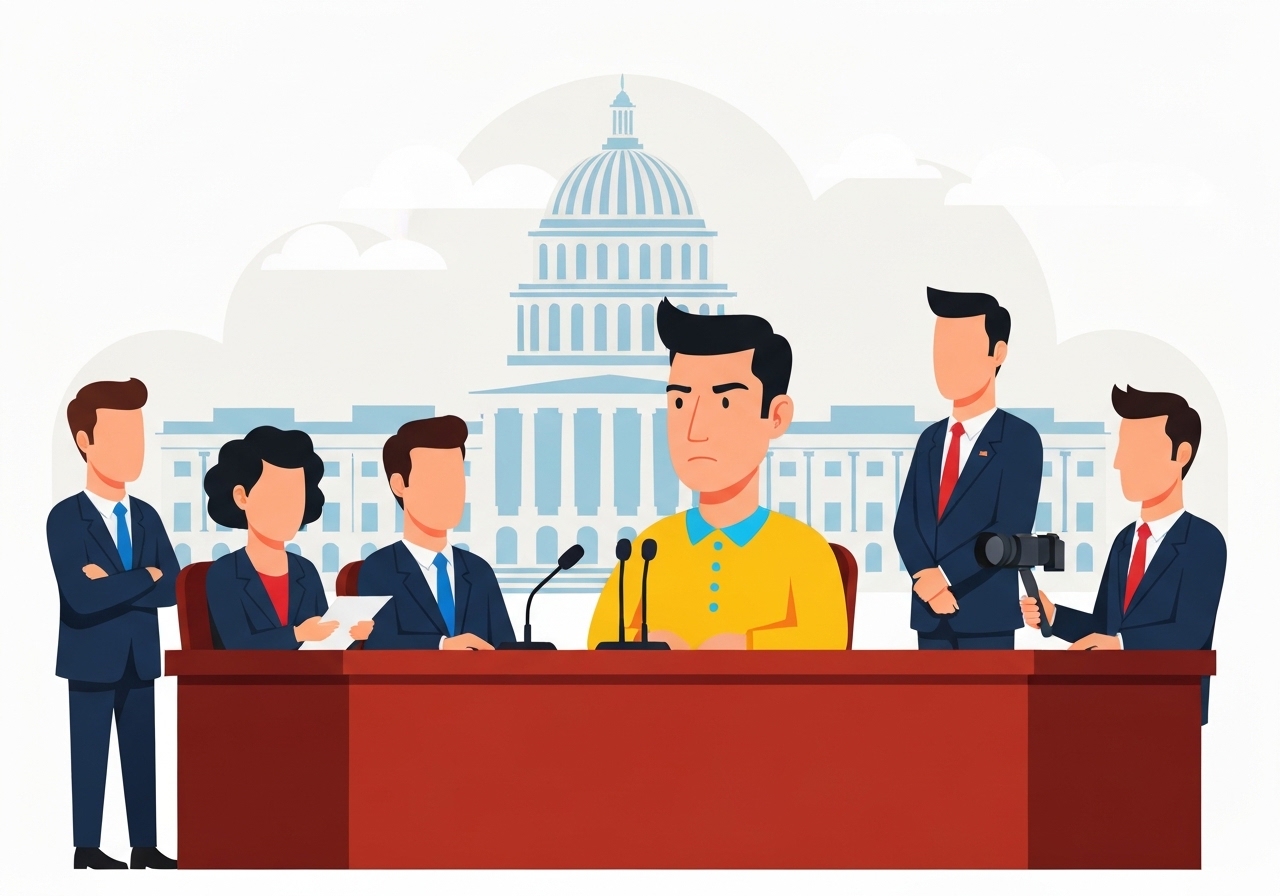
Lead: Special counsel Jack Smith is set to appear before the House Judiciary Committee on Thursday, Jan. 22, 2026, to explain the legal basis for two separate indictments of former President Donald J. Trump. The public hearing gives Smith a rare platform to present a three-page opening statement he says summarizes evidence and legal reasoning he could not present in court. The session pits Mr. Smith against congressional defenders of Mr. Trump and carries political as well as legal risks for both sides.
Key Takeaways
- Jack Smith, the special counsel who twice indicted Donald J. Trump, will testify publicly before the House Judiciary Committee on Jan. 22, 2026.
- Smith plans to present a three-page opening statement that concludes Mr. Trump “engaged in criminal activity” related to the Jan. 6, 2021, attack and the effort to delay certification of Joseph R. Biden Jr.’s victory.
- The hearing is intended to be held by the House Judiciary Committee and is expected to draw intense partisan scrutiny and media attention.
- Smith has warned that any procedural misstep could prompt retaliatory investigations or political reprisals from Mr. Trump and his allies.
- The appearance is described by Smith’s team as the closest equivalent to the full account he sought to deliver in court.
Background
Jack Smith was appointed to lead high-profile federal investigations into the conduct of Donald J. Trump; according to public reporting, he has brought two indictments against the former president. Those prosecutions, pursued under his role as special counsel, have been central to a broader national debate over accountability for actions surrounding the 2020 election and the Jan. 6 Capitol attack. Prosecutors and defenders have repeatedly clashed over procedure, evidentiary thresholds and the scope of criminal statutes applicable to a sitting or former president.
The House Judiciary Committee hearing occurs against a fraught political backdrop: congressional Republicans who support Mr. Trump have criticized the Justice Department probes as politically motivated, while Democrats and some legal scholars argue the indictments are legally justified by documented actions. Smith’s public remarks aim to translate prosecutorial findings into a narrative for lawmakers and the public, a role prosecutors rarely assume outside courtrooms. The hearing also reflects congressional interest in the Justice Department’s decisions as well as the political calculation of parties ahead of upcoming national elections.
Main Event
The hearing will open with Smith’s prepared remarks, a three-page statement that, according to a copy circulated to lawmakers, summarizes his view that Mr. Trump directed an angry mob toward the Capitol and then sought to exploit the ensuing violence to obstruct certification of the 2020 election. Smith frames these conclusions as the product of an investigation that led to two federal indictments.
Committee members will have the opportunity to question Smith after his opening statement; Republican members are expected to challenge prosecutorial choices, timing and alleged partisan bias, while Democrats are likely to press Smith on the evidentiary basis for key allegations. Legal advisers for the committee will manage time and procedural objections, and the hearing format may limit extended cross-examination like that seen in a courtroom.
Smith’s team has signaled caution: they view the forum as risky because every answer can be seized upon by defenders of Mr. Trump to allege misconduct or to justify congressional oversight and potential referrals. Nonetheless, the session gives Smith a prominent forum to rebut the claim that the indictments were politically motivated rather than rooted in alleged criminal conduct.
Analysis & Implications
The testimony will operate on two planes: legal explanation and public persuasion. On the legal side, Smith must translate complex investigative steps—grand-jury evidence, witness cooperation, and statutory analysis—into clear claims that a lay audience and lawmakers can evaluate. That translation matters because the Justice Department’s internal decisions are typically reviewed on legal grounds, not political ones; a convincing public presentation could blunt claims of partisan prosecution.
Politically, the hearing is likely to intensify polarization. For supporters of Mr. Trump, the session may reinforce narratives of persecution and fuel calls for congressional investigations into the Justice Department. For opponents, Smith’s remarks could underscore the seriousness of the indictments and shape media coverage and voter perceptions ahead of elections. Either outcome could alter the incentives around further criminal or congressional actions.
Institutionally, the hearing tests norms around prosecutorial independence. If Congress uses testimony to scrutinize prosecutorial choices narrowly or to seek internal documents, it could set precedents affecting future special counsel work. Conversely, a focused hearing that clarifies legal reasoning without overreaching may strengthen public confidence in the institutions that handle politically sensitive investigations.
Comparison & Data
| Item | Detail |
|---|---|
| Special counsel indictments | 2 federal indictments filed by Jack Smith |
| Opening statement | Three-page prepared remarks to be delivered Jan. 22, 2026 |
This simple comparison highlights the factual anchors Smith brings to the hearing: the number of indictments he filed and the summary document he prepared for public delivery. Those facts structure both legal argument and media narratives following the session.
Reactions & Quotes
Officials and legal observers are already framing the hearing in contrasting terms. The following excerpts come from Smith’s prepared remarks and public reporting on expected committee exchanges.
No one should be above the law in our country, and the law required that he be held to account.
Jack Smith (special counsel)
He engaged in criminal activity that undermined democracy and the rule of law.
Jack Smith (special counsel)
Outside the hearing, allies of President Trump have signaled they will treat the testimony as political theater and scrutinize any perceived factual or procedural errors. Legal scholars say the effectiveness of Smith’s appearance will depend on his ability to remain precise, avoid legal overreach in public remarks, and anticipate lines of attack that Republicans will use to contest the Justice Department’s conduct.
Unconfirmed
- No public record yet verifies whether Smith’s full evidentiary files will be released to Congress beyond his opening statement.
- It is unconfirmed whether the hearing will lead to any formal congressional referrals for disciplinary or criminal action against Smith.
- The precise scope of questioning and whether new, previously undisclosed evidence will be presented remain unconfirmed.
Bottom Line
The Jan. 22, 2026 hearing gives Jack Smith a high-profile opportunity to present a concise, public account of why he brought two indictments against Donald J. Trump and to counter the narrative that those charges were politically motivated. The three-page statement functions as a distilled version of prosecutorial reasoning Smith says he could not deliver in court, and it will shape immediate media coverage and political responses.
But the forum is risky: constrained time, partisan questioning and the absence of courtroom evidence rules mean Smith must be disciplined in language and careful about what he reveals. The hearing will not substitute for a trial, but it may influence public understanding, congressional oversight choices and the broader debate about accountability and the rule of law in American politics.
Sources
- The New York Times (news)
- U.S. Department of Justice (official government site)
- House Judiciary Committee (official congressional site)