
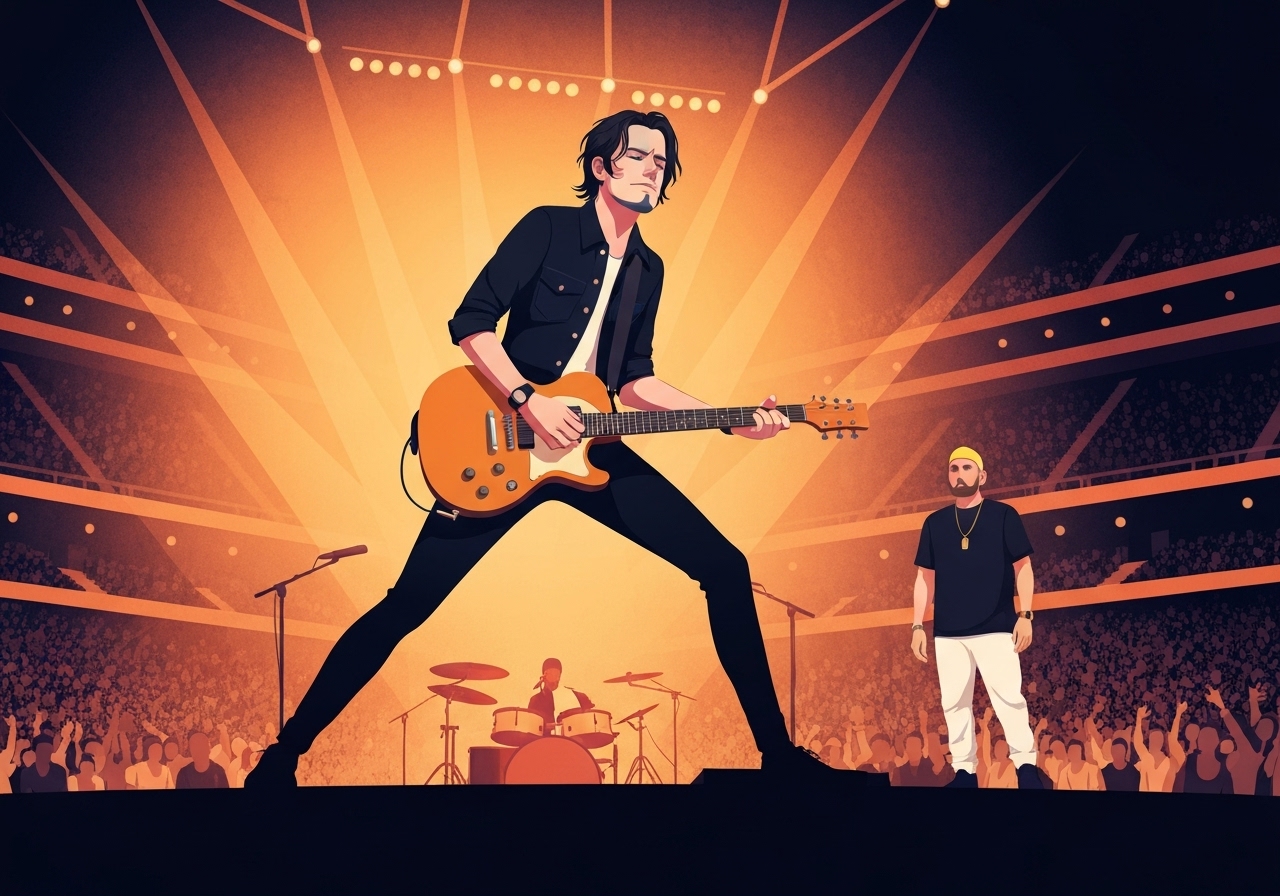
On November 27, 2025, at Ford Field in Detroit, Jack White headlined the NFL Thanksgiving Day halftime show during the Detroit Lions–Green Bay Packers game, delivering a blistering rock set that opened with “That’s How I’m Feeling” from his new album No Name. Eminem, credited as the show’s producer and the artist who selected White to headline, made a surprise stage appearance for a mashup of his “’Till I Collapse” with The White Stripes’ “Hello Operator.” White closed with the stadium staple “Seven Nation Army,” capping a hometown performance that combined garage rock intensity with a high-profile hip-hop cameo.
Key Takeaways
- Performance date and place: November 27, 2025, halftime at the Detroit Lions vs. Green Bay Packers Thanksgiving game at Ford Field in Detroit.
- Set opening and finale: White opened with “That’s How I’m Feeling” from No Name and concluded with “Seven Nation Army,” the widely used NFL stadium anthem.
- Eminem’s role: Eminem is reported to have produced the halftime show and surprised the crowd by joining White for a live mashup of “’Till I Collapse” and “Hello Operator.”
- Local resonance: The billing highlighted Detroit ties—White is a native and Eminem’s involvement underscored local cultural influence on the broadcast.
- Public visibility: The surprise collaboration generated immediate social-media traction, with video clips and posts circulating within minutes of the performance.
Background
The NFL Thanksgiving halftime slot has increasingly featured legacy and crossover acts aimed at broad, multigenerational audiences. Jack White, known for The White Stripes and his solo work, returns to his hometown stage at a moment when NFL halftime programming blends spectacle with targeted, culturally resonant choices. Detroit’s music history—spanning Motown through garage rock and hip-hop—makes the city a logical backdrop for a show that paired rock and rap elements.
Eminem’s connection to Detroit and his status as an influential figure in popular music positioned him as both a producer figure and a draw for viewers beyond typical rock audiences. The choice of White, whose catalog includes arena-ready anthems like “Seven Nation Army,” reflected an intent to merge raw rock energy with mass-appeal singalongs. The NFL and broadcast partners have in recent years leaned into hometown pairings to generate local goodwill and national buzz.
Main Event
White’s set began with a direct plug for his latest solo record No Name, opening with “That’s How I’m Feeling,” which set a brisk, guitar-forward tone. Production elements emphasized live instrumentation and minimal theatrical excess, foregrounding White’s guitar work and the band’s dynamics over elaborate pyrotechnics. Midway through the short set, Eminem appeared unexpectedly and joined White onstage for a live fusion of Eminem’s “’Till I Collapse” and The White Stripes’ “Hello Operator,” creating a cross-genre moment that drew loud reactions from the Ford Field crowd.
Visuals and staging were designed to feel rooted rather than ostentatious, with camera work highlighting the stadium’s home crowd and close-ups of the performers’ interplay. The mashup was arranged to let both artists’ signatures shine—Eminem supplied his rhythmic cadence and rap vocals while White supplied the distorted guitar hooks of the Stripes-era composition. The set’s closer, “Seven Nation Army,” tapped into an established NFL tradition: the song’s riff functions as a communal chant and has been used as a stadium anthem across the league for over a decade.
Broadcast reaction was immediate: social platforms filled with clips of the surprise collaboration, and commentators noted the symbolic pairing of two Detroit icons. The short runtime of NFL halftimes means such moments must be sharply staged; this appearance relied on quick, high-impact switches between songs to maximize audience recall during a constrained window.
Analysis & Implications
The pairing of White and Eminem at a Thanksgiving halftime offers multiple layers of significance. Culturally, it reinforced Detroit’s image as a musical melting pot capable of producing artists who resonate across genre boundaries. For the NFL and broadcasters, the move embedded local authenticity—an artist from the city and a famed hometown producer—into programming that often seeks viral potential as much as broad demographic reach.
Economically, surprise collaborations like this can drive streaming and catalog sales for both artists and generate licensing opportunities for NFL broadcasts. White’s No Name album could see a measurable streaming bump in the days following a high-profile televised slot, while Eminem’s involvement likely broadened the halftime’s appeal to hip-hop audiences and younger viewers who track social media trends.
Politically and socially, the show avoided overt messaging and focused on performance value; nevertheless, hometown acts on a national stage can serve as soft power for municipal branding, reminding audiences of Detroit’s cultural capital. For the artists, the appearance functions as both a celebration of local roots and a strategic publicity moment amid touring and release cycles.
Reactions & Quotes
“Seeing two Detroit artists share that stage felt like the city was on the field.”
Local fan interviewed at Ford Field
“We wanted something that felt immediate and true to Detroit — music that moves people live.”
Statement attributed to production team representative
“The reaction online has been electric; cross-genre surprise moments drive engagement for live broadcasts.”
Music industry analyst
Unconfirmed
- Details of Eminem’s exact production role—while widely reported as producer and selector of White, full contractual or creative credit lines have not been publicly disclosed in a production press release.
- The planning timeline for the surprise appearance—reports confirm the onstage cameo, but internal scheduling and rehearsal specifics were not publicly released at time of writing.
Bottom Line
Jack White’s Thanksgiving halftime performance, augmented by Eminem’s surprise appearance, was a tightly staged hometown statement that combined rock intensity with hip-hop star power. The show leaned on Detroit resonance and a tried-and-true stadium anthem to create broad, immediate audience response during a limited broadcast window.
In the short term, expect heightened streaming attention for White’s No Name and renewed conversation about halftime programming strategies that prioritize local authenticity and social-media-friendly surprises. Longer term, the pairing underscores a trend: live-sport halftime slots are increasingly curated as cultural showcases that reward cross-genre collaboration and hometown narratives.