
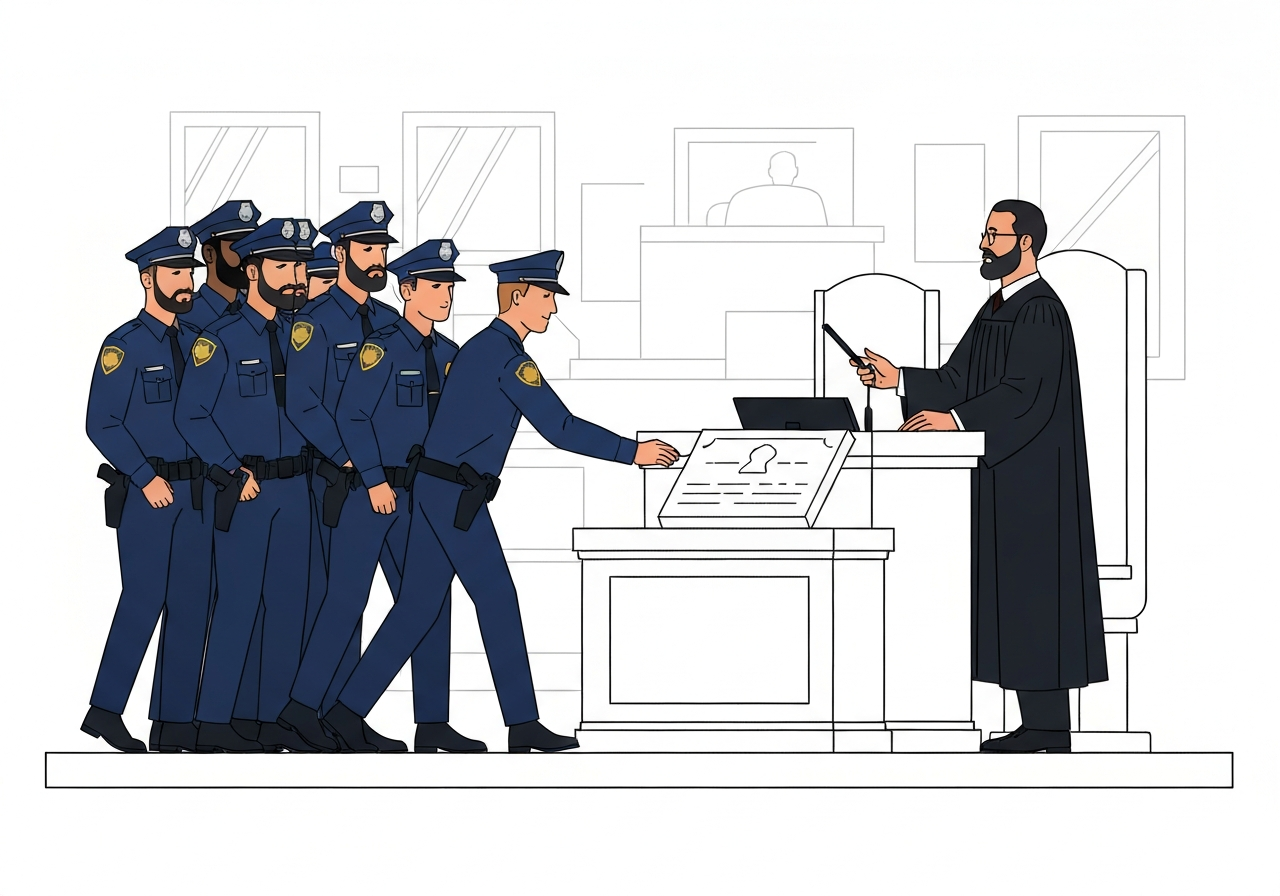
Two officers who defended the U.S. Capitol on Jan. 6, 2021, have asked a federal judge to allow their civil lawsuit over a commemorative plaque to move forward. Former U.S. Capitol Police Officer Harry Dunn and D.C. Police Officer Danny Hodges contend the plaque’s unannounced placement inside a pair of doors on the Capitol’s west front undermines a statute that required public, exterior display by March 2023. The plaque was installed early on the Saturday before March 10, 2026, at about 4 a.m., prompting the officers to renew their request that a court resolve whether the placement complies with law. The plaintiffs name the Architect of the Capitol as a defendant and seek relief that would require a publicly accessible installation.
Key Takeaways
- Plaintiffs: Former Capitol Police Officer Harry Dunn and D.C. Officer Danny Hodges filed to let their suit proceed, arguing placement violates the memorial statute.
- Installation timing: The plaque was hung inside a pair of doors along the Capitol’s west front at about 4 a.m. on the Saturday preceding March 10, 2026.
- Statutory deadline: The law required the memorial to be installed by March 2023 and to be displayed on the Capitol’s ‘western front,’ language the plaintiffs interpret as requiring exterior, public placement.
- Defendant: The suit names the Architect of the Capitol, the agency responsible for Capitol grounds and displays.
- Political context: Senator Thom Tillis (R-NC) supported installation but reportedly suggested the placement might not be permanent; Democrats have publicly criticized delays.
Background
The Jan. 6, 2021, attack on the Capitol prompted longstanding calls to honor law-enforcement personnel who defended the building. Families and many responders have urged a visible public marker to recognize those officers’ actions, and Congress enacted a statutory requirement directing placement of a memorial on the Capitol’s western front. That statute included a March 2023 installation deadline intended to ensure timely, public acknowledgement.
Implementation of memorials on the Capitol has moved through multiple bureaucratic and political layers, with the Architect of the Capitol overseeing placement and Congress weighing design and location. Partisan disputes have complicated the process: some lawmakers pushed for a prominent exterior display, while others raised objections to text or symbolism, contributing to delays that frustrated responders and their advocates.
Main Event
In a court filing tied to litigation over the plaque, Dunn and Hodges argued the recent placement inside doors on the west front is effectively hidden from typical public view and therefore inconsistent with the statutory goal of public recognition. The plaintiffs emphasized that the placement was unannounced and carried out before dawn, which they say echoes prior storage of the plaque in a basement location.
The complaint seeks judicial clarification and relief, asking the judge to allow the suit to proceed toward a ruling that would compel a public, exterior installation in line with the law. The filing quotes the plaintiffs’ view of honor as inherently public, arguing temporary or concealed placement defeats the memorial’s purpose. The suit invokes the statutory language specifying display on the Capitol’s western front and names the Architect of the Capitol as the responsible party.
Senator Thom Tillis, who advocated for the plaque’s installation, has publicly pushed for recognition of Jan. 6 responders, and some reporting indicates he suggested the recent placement might not be permanent. Meanwhile, House and Senate Democrats have criticized what they describe as partisan foot-dragging and delays in delivering a visible memorial for officers and families affected by the Jan. 6 events.
Analysis & Implications
Legally, the dispute will turn on statutory interpretation: whether the phrase ‘western front’ requires an exterior, publicly accessible display or allows an interior placement adjacent to the west frontage. Courts interpreting memorial statutes typically weigh plain language, legislative intent, and administrative discretion; here, plaintiffs argue plain text and Congress’s March 2023 deadline support their reading.
If the court allows the suit to proceed and ultimately rules for the plaintiffs, the Architect of the Capitol could be ordered to relocate the plaque to a clearly public exterior site, setting a precedent for how Congress’s memorial directives are enforced. A contrary ruling or settlement could preserve broader administrative latitude over placement and timing of commemorative displays on the Capitol grounds.
Politically, the case underscores the continuing partisan contention surrounding Jan. 6 commemoration, with symbolic gestures becoming proxy fights over memory and recognition. For officers and families, a public, permanent marker carries emotional and civic significance; legally enforced relocation would signal that statutory memorial requirements are not merely advisory.
Comparison & Data
| Requirement | What Happened |
|---|---|
| Statutory deadline | Install memorial by March 2023 |
| Recent action | Plaque hung inside west-front doors at ~4 a.m. on the Saturday before March 10, 2026 |
The table highlights a nearly three-year gap between the statutory deadline and the recent placement. Plaintiffs argue that timing and location together undercut the law’s intent to produce a visible, exterior public memorial.
Reactions & Quotes
The plaintiffs framed their legal argument around the public nature of honor and memorials, and they included a pointed line in court papers:
‘Honor is a social – that is, public – recognition.’
Court filing by Dunn and Hodges
Advocates for the plaque’s installation, including Sen. Thom Tillis, urged recognition for responders but indicated the placement could be temporary, a point plaintiffs have highlighted as underscoring administrative ambivalence. Democrats in Congress criticized delays and described the installation as insufficient pending a more accessible display.
‘Supporters say the plaque should be in a place that families and visitors can easily see.’
House and Senate Democrats (summary of public statements)
Unconfirmed
- Whether the Architect of the Capitol intended the current placement as a temporary measure remains publicly unconfirmed.
- Whether the interior placement satisfies the statute’s requirement that the memorial be displayed on the ‘western front’ is a contested legal question awaiting court resolution.
- The full administrative record explaining the timing and location decisions has not been publicly released in complete form.
Bottom Line
The dispute over the Jan. 6 responders’ plaque is both legal and symbolic: plaintiffs argue the delayed, low-profile placement defeats Congress’s directive for a public memorial and seek judicial enforcement of the statute. How a court resolves the statutory language about the ‘western front’ and the factual question of public accessibility will determine whether the plaque must be relocated to a clearly exterior, visitor-accessible site.
Beyond the immediate outcome, the case may shape future enforcement of congressional memorial directives and deepen discussion about how the nation honors those who served during Jan. 6. Observers should watch for the judge’s decision on whether to let the lawsuit proceed and for any additional administrative disclosures about placement rationale.
Sources
- CBS News (national news reporting)