
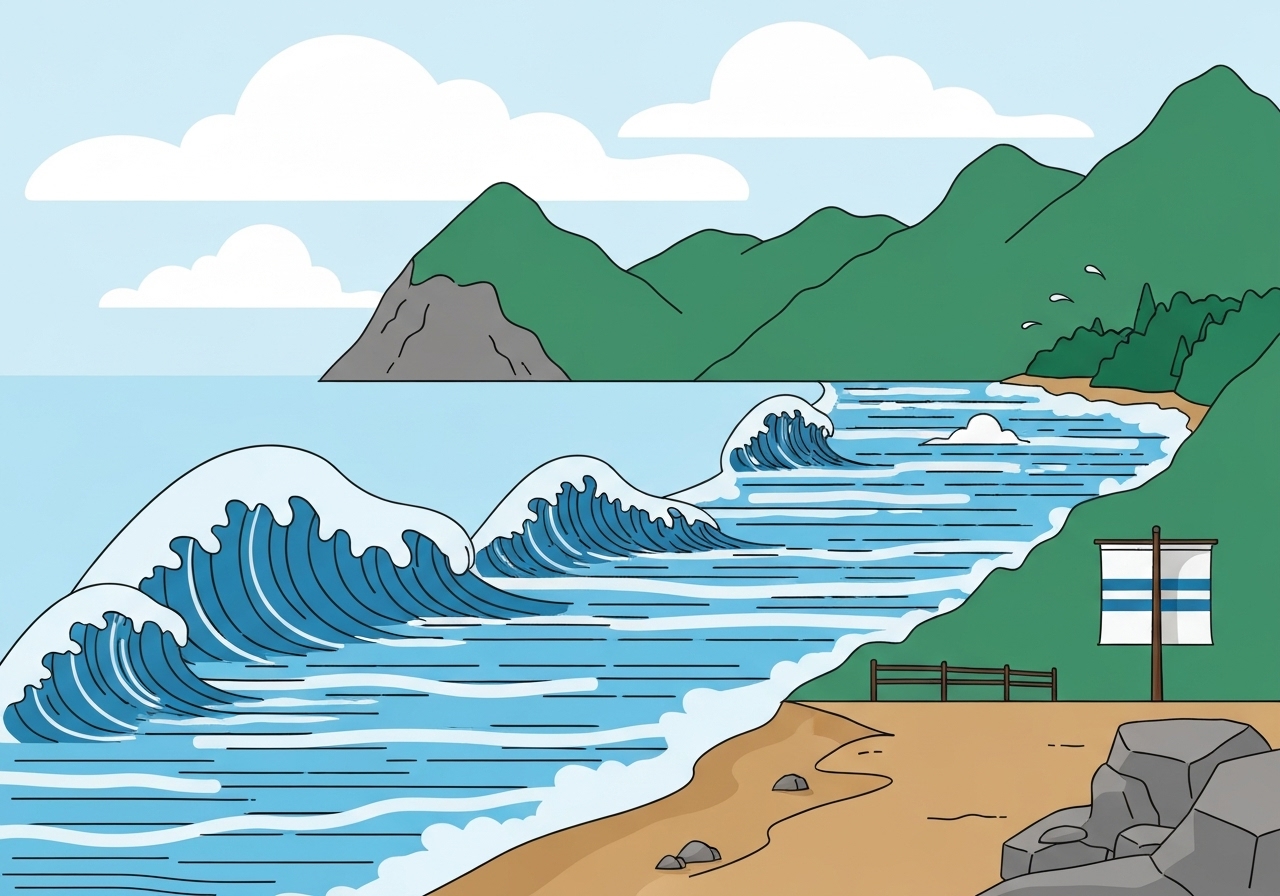
On the evening of 9 November 2025, a magnitude 6.9 earthquake struck off the coast of Iwate Prefecture, Japan, at roughly 5:00 p.m. JST, according to the Japan Meteorological Agency (JMA). The temblor occurred about 10 kilometres below the sea surface and was followed by multiple smaller quakes. Authorities briefly issued a tsunami advisory that was later cancelled after only minor waves were recorded; some coastal stations measured about 20 centimetres and authorities had initially warned of waves up to 1 metre. Early reports indicated no immediate casualties, no confirmed structural damage and no abnormalities at nearby nuclear facilities.
Key Takeaways
- The JMA recorded a 6.9 magnitude earthquake on 9 November 2025 at ~17:00 JST, depth ~10 km off Iwate Prefecture.
- A tsunami advisory was issued and remained in force for about an hour before being cancelled; local tide gauges recorded waves near 20 cm.
- Initial forecasts had warned of tsunami waves up to 1 metre along the northern coast, but those larger waves did not materialise.
- No immediate reports of injuries or widespread infrastructural damage were confirmed in initial official checks.
- Train services were briefly disrupted: JR East reported temporary suspensions and a power interruption on the Tohoku Shinkansen between Sendai and Shin-Aomori.
- Local media reported power outages in parts of the affected region; extent and duration were being assessed.
- The Onagawa nuclear power plant in Miyagi Prefecture reported no abnormalities; JMA noted there are two nuclear plants in the broader area with no initial reports of issues.
- JMA warned that similar or stronger earthquakes could occur in the coming days and urged continued vigilance for aftershocks and tsunami waves.
Background
Northeastern Japan sits along the Pacific ‘‘Ring of Fire,’’ where the Pacific Plate meets the Okhotsk and Eurasian plates, producing frequent seismic activity. Iwate and neighbouring prefectures experienced some of the strongest impacts in the 2011 Tohoku sequence, which underlines why authorities maintain a cautious posture after offshore quakes. Coastal communities in Tohoku keep robust tsunami-response systems in place: automated advisories, public sirens and evacuation routes are regularly exercised and updated.
Japan’s nuclear facilities, particularly those along the northeastern coastline, remain subject to strict post-2011 safety reviews and monitoring. Operators and regulators routinely publish rapid-status checks after seismic events; the prompt confirmations of ‘‘no abnormalities’’ are part of that standardized protocol. Rail operators, including East Japan Railway Company (JR East), also run automatic safety checks and may suspend services to inspect tracks and power systems after significant quakes.
Main Event
The main quake, measured at magnitude 6.9 by the JMA, struck off Iwate Prefecture at about 5:00 p.m. JST on 9 November 2025, with a reported hypocentre roughly 10 km beneath the seabed. Multiple aftershocks followed into the evening, prompting local emergency centres to activate monitoring and public-alert channels. The JMA issued a tsunami advisory soon after the quake for parts of the northern coast, anticipating waves up to 1 metre.
Within an hour, the tsunami advisory was downgraded and then lifted after tide gauges and coastal observations recorded only minor surges—about 20 cm in some locations. Local governments kept evacuation centres and emergency teams on standby while conducting reconnaissance of low-lying coastal areas. No immediate large-scale flooding was reported in initial situation updates.
Transport disruptions were among the first operational impacts. JR East said services on the Tohoku Shinkansen were temporarily suspended between Sendai and Shin-Aomori after the line experienced a brief loss of power; operations were restored after safety inspections. Local news outlets reported pockets of power outages in affected municipalities as crews worked to stabilise the grid.
Analysis & Implications
Technically, a shallow offshore quake of magnitude 6.9 at 10 km depth can generate noticeable shaking onshore and a small tsunami if seabed displacement occurs. In this instance, the recorded wave heights were limited, which reduced immediate coastal damage risk. However, the initial forecast of up to 1 metre reflects standard JMA precautionary modelling that assumes worst‑case near‑field displacement until observational data are available.
For emergency management, the event highlights the importance of rapid automated alerts combined with human confirmation. The one-hour advisory window demonstrates the balance Japanese authorities strike between prompt warning and the need to avoid unnecessary prolonged evacuations. That balance affects local economies and public trust: frequent short advisories can create alert fatigue but failing to warn would risk lives.
Economically, brief transport interruptions—especially on the Tohoku Shinkansen—have localized ripple effects for commuters and supply chains, though a single short suspension rarely causes long-term disruption. The lack of immediate damage and the prompt ‘‘no abnormalities’’ checks at regional nuclear plants will help limit market and public-confidence impacts if the situation remains stable.
Comparison & Data
| Metric | This Event (9 Nov 2025) | 2011 Tohoku Mw 9.0 (for context) |
|---|---|---|
| Magnitude | 6.9 (JMA) | 9.0 |
| Reported depth | ~10 km | ~29 km |
| Maximum expected wave (initial) | Up to 1.0 m (advisory) | Up to 40 m+ in some locations |
| Recorded local wave | ~20 cm in some stations | Metres to tens of metres |
The table contrasts the November 2025 event with the 2011 disaster to clarify scale: a 6.9 quake is orders of magnitude smaller than a 9.0 event in terms of energy release. The shallower hypocentre increased onshore shaking potential, but observed tsunami heights and the rapid advisory cancellation limited coastal impacts. Emergency systems exercised during this event will inform readiness adjustments for future near‑field quakes.
Reactions & Quotes
Residents were urged to keep clear of the coastline and stay alert for aftershocks and further tsunami waves.
Prime Minister Sanae Takaichi (social media statement)
The Prime Minister used social channels to echo JMA guidance, highlighting government readiness and encouraging coastal residents to follow local evacuation instructions.
Similar or stronger earthquakes could occur in the next few days, so remain vigilant.
Japan Meteorological Agency (official briefing)
JMA officials emphasised the statistical likelihood of aftershocks and advised continued monitoring of coastal and seismic alerts rather than interpreting the advisory cancellation as an all-clear for complacency.
Services were temporarily suspended between Sendai and Shin-Aomori while safety checks were completed after a brief power loss.
East Japan Railway Company (JR East statement)
JR East framed the suspension as a safety-first response; services resumed after inspections and power restoration, with operators conducting further checks on affected infrastructure.
Unconfirmed
- Comprehensive damage assessments across rural coastal communities remain incomplete; reports of minor structural damage were not yet confirmed by municipal authorities.
- Media reports of the full geographic extent and duration of power outages were still being verified by utility operators at the time of initial reporting.
Bottom Line
The November 9, 2025, magnitude 6.9 offshore quake near Iwate produced strong shaking but, according to initial observations, only minor tsunami activity and no immediately confirmed casualties or major infrastructure failures. Rapid advisory protocols and safety checks—at rail operators, utilities and nuclear facilities—limited immediate public risk and helped authorities provide transparent situational updates.
Nonetheless, JMA’s warning of possible similar or stronger shocks in the coming days means residents and responders should remain prepared. Officials will continue to monitor seismicity and coastal conditions; follow-up assessments over the next 48–72 hours will determine whether any delayed damage or secondary impacts emerge.
Sources
- Euronews (news media) — initial reporting summarising JMA and local updates.
- Japan Meteorological Agency (JMA) (official) — seismic and tsunami advisories and official briefings.
- East Japan Railway Company (JR East) (rail operator) — service suspension and safety checks statement.
- Tohoku Electric Power (Onagawa plant operator) (official) — rapid-status checks for regional nuclear facilities.