
Lead
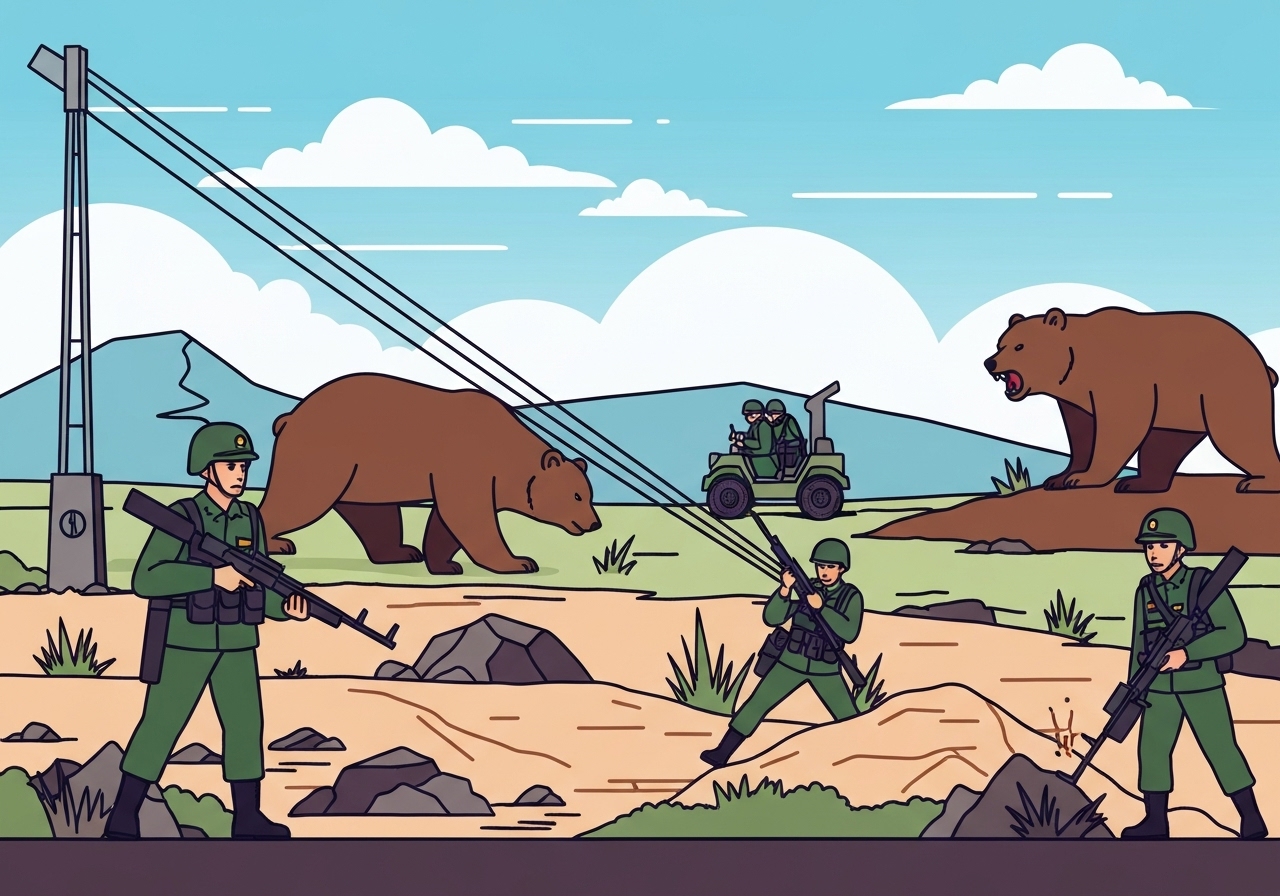
Japan has dispatched military personnel to Akita prefecture in early November 2025 to assist local authorities responding to a spike in brown and Asiatic black bear incidents. Since April, national data show at least 12 people killed and more than 100 injured in bear-related attacks across Japan, concentrated in northern, mountainous areas. The Defense Ministry’s limited support — setting box traps, transporting hunters and helping remove carcasses — aims to reduce immediate risks ahead of hibernation season. Officials stress the deployment is temporary and complementary to civilian wildlife control measures.
Key Takeaways
- At least 12 fatalities and over 100 injuries from bear attacks nationwide have been recorded between April and the end of October 2025, per Ministry of the Environment statistics.
- The government estimates Japan’s overall bear population at more than 54,000, contributing to increased human-bear encounters in rural areas.
- Akita prefecture, population ~880,000, reported more than 50 attacks and at least four deaths since May; many incidents occurred in residential zones.
- On 6 November 2025, the Defense Ministry and Akita prefecture signed an agreement for troops to deploy non‑lethal measures: placing baited box traps, transporting licensed hunters and assisting carcass disposal.
- Soldiers will not open fire on bears; their stated role is support, not primary wildlife management, and national defence remains the military’s core mission.
- Local officials link the rise in incursions to an ageing, shrinking rural population and fewer people available or trained to hunt and manage wildlife.
- Farmers and businesses report economic loss: one orchard operator said more than 200 harvest-ready apples were consumed by bears.
Background
Human-bear clashes have increased in recent years across Japan as brown bears and Asiatic black bears expand into areas where people live and work. Rural prefectures with declining populations and aging residents have fewer active hunters and less capacity for traditional wildlife control, weakening local deterrence. Bears are drawn into lowland settlements in late summer and autumn while foraging to build fat stores before hibernation, a seasonal pattern that intensifies encounters around farms, stations and other human activity hubs.
The Ministry of the Environment compiles national incident data and estimates a bear population exceeding 54,000. Regional differences matter: the concentration of sightings and attacks in northern prefectures such as Akita reflects both suitable habitat and demographic factors that limit human surveillance and rapid response. Japan’s legal and institutional frameworks assign wildlife control primarily to prefectural governments, but limited budgets and workforce shortages constrain large-scale culling or sustained deterrent campaigns.
Main Event
The deployment began in a forested zone near Kazuno city after repeated reports of sightings and injuries. Soldiers in protective gear set up baited box traps near orchards and forest edges, using bear spray and net-launching devices as non-lethal tools while coordinating with local hunters to process captured or euthanized animals. Field teams also assisted in transporting specialist hunters to remote locations and in disposing of animal remains to prevent secondary public-health risks.
Local authorities said the decision followed mounting pressure from communities alarmed by bears appearing near schools, train stations, supermarkets and a hot springs resort. Deputy Chief Cabinet Secretary Fumitoshi Sato characterized the problem as urgent, saying bears now intrude into residential areas daily in parts of Akita. Defense Minister Shinjiro Koizumi emphasized the military’s supportive role, noting service members’ primary duty remains national defence and the assistance is constrained by that priority.
Incidents cited by prefectural officials include an elderly woman found dead after mushroom foraging in Yuzawa city, and another older resident killed while working on a farm in Akita city in late October. A newspaper delivery worker was also attacked and injured in Akita city in early November. Farmers report repeated crop losses; one orchard operator told NHK that more than 200 apples ready for harvest were eaten, underscoring economic as well as safety impacts.
Analysis & Implications
The military’s involvement marks a notable step for Japan, reflecting a policy choice to mobilize state resources beyond conventional emergency responses for wildlife management. In the short term, troop assistance can expedite trap deployment, bring logistical capacity to remote areas and offer immediate relief to communities with limited hunting manpower. However, this approach is a stopgap: it does not substitute for sustained, long-term measures such as coordinated population control, habitat management and community education programs.
Demographically driven vulnerability is central to the crisis. Rural depopulation and ageing reduce active land use — abandoned rice paddies and orchards can increase food sources and corridors for bears — while fewer hunters reduce legal culling capacity. These structural trends mean that unless prefectural governments and central agencies invest in organized wildlife management (funding, trained staff, and preventive infrastructure), episodic interventions will likely recur each pre-hibernation season.
Economically, repeated incursions impose costs on agriculture, forestry and tourism in affected towns. Direct losses like damaged crops and indirect costs such as reduced visitor confidence at hot springs or outdoor attractions can compound local fiscal strain. Politically, visible attacks and deaths create pressure on regional and national leaders to act decisively, but responses must balance animal conservation law, public safety and ethical concerns over culling methods.
Comparison & Data
| Scope | Incidents (Apr–Oct 2025) | Fatalities | Population |
|---|---|---|---|
| Japan (national) | >100 injuries | 12 | Estimated >54,000 bears |
| Akita prefecture | >50 attacks | At least 4 | ~880,000 people |
The table summarizes official counts through the end of October 2025. National figures come from the Ministry of the Environment; prefectural counts are from Akita local government reports. Direct comparisons highlight that Akita, while a small share of Japan’s population, accounts for a disproportionate share of recent severe incidents, underscoring regional vulnerability driven by habitat and demographic conditions.
Reactions & Quotes
Government officials framed the military role as targeted and temporary, aimed at protecting residents while preserving the Defence Self-Defense Forces’ primary mission.
“Every day, bears intrude into residential areas in the region and their impact is expanding.”
Fumitoshi Sato, Deputy Chief Cabinet Secretary (official statement)
Defense leadership reiterated limits on engagement and emphasized coordination with civilian agencies.
“Our mission is national defence; this assistance is to help secure daily life but cannot be unlimited.”
Shinjiro Koizumi, Defense Minister (press remarks)
Local residents and farmers described distress and economic loss from repeated encounters.
“They ate more than 200 apples that were ready for harvest. My heart is broken.”
Takahiro Ikeda, orchard operator (interview)
Unconfirmed
- Exact numbers and locations of military personnel and trap sites beyond public statements have not been fully disclosed by authorities and remain unspecified.
- The degree to which climate-related changes in food availability have directly driven the 2025 surge in encounters has not been confirmed by peer-reviewed studies for this season.
- Claims that culling alone will resolve the problem lack consensus among wildlife ecologists and have not been validated as a singular long-term solution in Akita.
Bottom Line
The immediate deployment of troops to Akita is intended to reduce acute risk as bears move widely in the pre-hibernation period, but it is not a substitute for durable wildlife management. Japan faces a structural challenge where demographic decline in rural areas interacts with abundant bear populations, creating recurring public-safety and economic risks unless addressed through coordinated, long-term measures.
Policymakers will need to weigh investments in sustained hunter training, organized culling where legally appropriate, habitat and waste management, and community preparedness. How authorities balance animal conservation, public sentiment and practical prevention will determine whether the current spike is an episodic emergency or a harbinger of a recurring pattern.
Sources
- Al Jazeera — International news outlet reporting on the deployment and local incidents (news)
- Ministry of the Environment, Japan — National statistics on bear incidents and population estimates (official government)
- Akita Prefectural Government — Local reports on attacks, fatalities and prefectural measures (official government)