
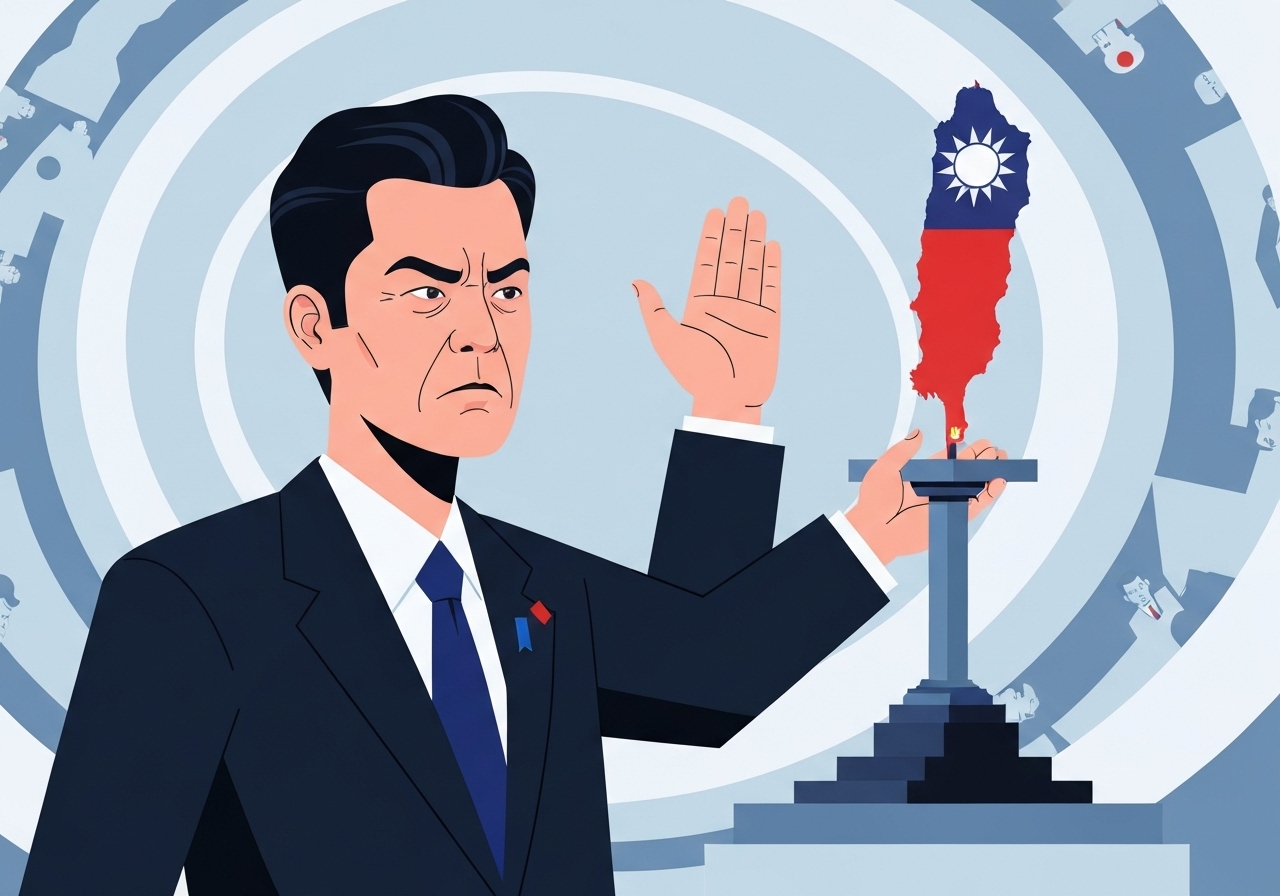
Japan’s new prime minister, Sanae Takaichi, has found herself at the center of a diplomatic spat with Beijing after remarks about defending Taiwan, less than a month into her tenure. The exchange followed a largely cordial meeting with China’s leader, Xi Jinping, in Gyeongju, South Korea, in October, but Beijing has since responded with a series of punitive measures. The dispute tests Ms. Takaichi’s ability to balance domestic expectations for firmness with the need to avoid escalation between two of East Asia’s largest powers. Observers say how Tokyo manages this episode will shape bilateral ties and regional security dynamics in the months ahead.
Key Takeaways
- Sanae Takaichi became Japan’s prime minister in October 2025 and is the first woman to hold the office; her early comment on defending Taiwan triggered Beijing’s reaction.
- She met Xi Jinping in Gyeongju, South Korea, in October 2025; the meeting initially showed a brief thaw but was followed by diplomatic and economic reprisals from China.
- Beijing’s measures include targeted economic and diplomatic steps directed at Japanese firms and exchanges, signaling calibrated pressure rather than a full trade embargo.
- As a former lawmaker, Takaichi has previously criticized China’s military actions in the South China Sea and visited Taiwan, positioning her as more hawkish than some predecessors.
- Analysts emphasize Tokyo must de-escalate tensions to protect trade links worth tens of billions of dollars while maintaining domestic credibility on security.
- Regional governments and businesses are watching for secondary effects on supply chains and security cooperation in the Indo-Pacific.
Background
Japan and China have long maintained a complex mix of deep economic ties and strategic rivalry. Bilateral trade runs into the hundreds of billions of dollars annually, even as territorial disputes and maritime militarization have fueled mistrust. Recent years have seen periodic flare-ups — from ship encounters to diplomatic protests — that test crisis-management channels between Tokyo and Beijing.
Sanae Takaichi’s rise to the premiership in October 2025 came amid domestic debates over security policy and Japan’s role in an increasingly contested Indo-Pacific. During her time as a lawmaker she criticized China’s South China Sea activities and made a high-profile visit to Taiwan to signal solidarity with Taiwan’s leaders. Those past actions shaped expectations in Beijing, Tokyo, and Washington about how she might approach cross-strait and bilateral issues.
Main Event
In October 2025 Ms. Takaichi met Xi Jinping at a multilateral gathering in Gyeongju, a meeting that observers described as unusually warm on the surface. State photographs captured smiles and a staged cordiality, suggesting both sides were willing to keep channels open. Within weeks, however, tensions rose after Ms. Takaichi publicly said Japan would be prepared to help defend Taiwan under certain circumstances, a remark that Beijing called unacceptable.
Beijing responded with a sequence of reprisals aimed at signaling displeasure without triggering a full-blown rupture. These measures reportedly included restrictions on some Japanese cultural exchanges, increased inspections of Japanese goods, and rhetoric from state media and official channels criticizing Tokyo’s stance. Chinese officials framed the actions as defensive steps to protect sovereignty and deter interference.
Tokyo’s immediate response sought to walk a narrow line: reiterating Japan’s support for regional stability and the status quo across the Taiwan Strait while defending the prime minister’s comments as aligned with Japan’s security interests. Government spokespeople emphasized the need to preserve economic ties and diplomatic channels even as they stressed Japan’s commitment to its security partnerships.
Analysis & Implications
The dispute exposes a strategic dilemma for Japan: domestic political incentives reward firm language on Taiwan and Chinese assertiveness, but Japan’s economy remains deeply integrated with China. Firms in sectors from automotive to electronics could face elevated inspection regimes or unofficial pressure that raises costs and delays. Policymakers must weigh near-term domestic political gains against medium-term economic and supply-chain risks.
For the region, the episode may sharpen debates about crisis management and deterrence. If Beijing continues calibrated pressure, other U.S. allies and partners may feel compelled to clarify their positions on Taiwan and defense cooperation. Washington will likely monitor Tokyo’s messaging closely, balancing support for partners with avoidance of actions that could accelerate a security spiral.
Politically, Ms. Takaichi faces a test of credibility. Appearing weak after a high-profile statement would risk domestic political backlash from conservatives who favor stronger posture toward China. At the same time, overreaction could harm Japan’s economic recovery and risk escalation that neither Tokyo nor Beijing seeks. How she frames concessions or de-escalatory steps will be critical to maintaining both domestic support and regional stability.
Comparison & Data
| Date | Event |
|---|---|
| October 2025 | Takaichi meets Xi Jinping in Gyeongju; initial cordial exchange |
| Late October–November 2025 | Beijing announces targeted reprisals following Takaichi’s Taiwan remarks |
| November 21, 2025 | Major international coverage highlights escalating diplomatic tensions |
The sequence above shows a rapid shift from diplomatic engagement to punitive signaling over a few weeks. Economically, Japan-China bilateral trade remains one of Japan’s largest, accounting for a substantial share of exports and imports; any prolonged disruption would disproportionately affect sectors relying on integrated supply chains. Policymakers are therefore likely to prefer measured responses to avoid widespread economic fallout while preserving deterrent credibility.
Reactions & Quotes
Domestic and international voices reacted quickly, reflecting divergent priorities. Tokyo officials stressed the need to keep dialogue open, while analysts urged careful de-escalation to protect economic ties and regional stability.
“The incoming prime minister did not need a diplomatic crisis this early; the key now is to defuse tension without appearing to surrender on policy.”
Mireya Solís, Brookings Institution (policy analyst)
Solís framed the dilemma as a classic test of crisis management for a new administration: balancing domestic expectations and international stability. Her assessment highlighted the political costs of either backing down or escalating the dispute.
“We will use appropriate measures to defend our territorial claims and sovereignty; external interference will not be tolerated.”
Chinese official statement (paraphrased)
Chinese officials framed their actions as defensive and proportional, aiming to deter what Beijing views as external meddling in matters it considers core national interests.
“Japan seeks to defend its security interests while preserving vital economic ties—both objectives are on the line in this episode.”
Independent security analyst (paraphrased)
Security experts warned that mixed messaging could complicate coordination with allies and partners in the region, underscoring the importance of clear crisis-management channels.
Unconfirmed
- Whether Beijing will escalate to broad trade sanctions against Japan remains unconfirmed; current measures appear targeted and calibrated.
- Reports that specific Japanese companies have been formally blacklisted are not independently verified at this time.
- The extent to which Ms. Takaichi’s statement was coordinated with allied capitals, including Washington, has not been publicly confirmed.
Bottom Line
The confrontation surrounding Sanae Takaichi’s Taiwan comments is an early and significant foreign-policy test for her new government. It highlights the tightrope Tokyo must walk: projecting resolve to domestic audiences while managing practical dependencies on China. How the administration chooses to de-escalate, and the messages it uses to do so, will determine whether this episode becomes a contained diplomatic row or a deeper, more damaging split.
For regional actors and businesses, the episode is a reminder that leaders’ rhetoric can have swift real-world consequences. Observers should watch for signals of restraint from both sides, concrete steps to reopen communication channels, and any economic measures that could extend beyond symbolic reprisals into sustained pressure.
Sources
- The New York Times — international media coverage reporting on the incident and timeline.
- Brookings Institution (Expert profile) — background on commentary from Mireya Solís and regional analysis.
- Ministry of Foreign Affairs of Japan — official statements and diplomatic posture (official government).
- Ministry of Foreign Affairs of the People’s Republic of China — official Chinese statements and positions (official government).