
Lead
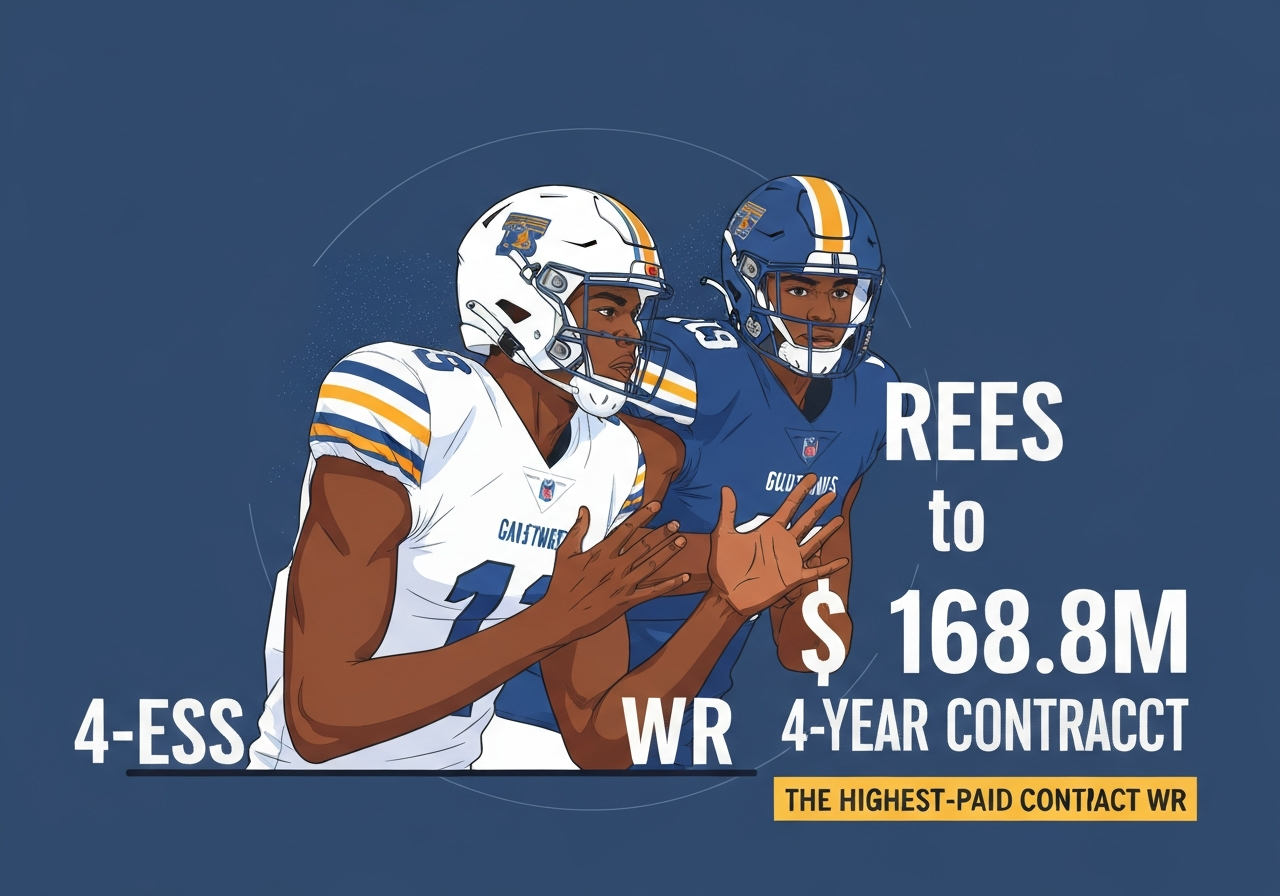
On Monday, the Seattle Seahawks reached a reported agreement with wide receiver Jaxon Smith-Njigba on a four-year extension worth roughly $168.8 million, a deal that would make him the highest-paid wide receiver in NFL history by average annual value. The 24-year-old’s contract reportedly averages $42.15 million per season and keeps him under club control through the 2031 season. The move follows Seattle’s decision to exercise Smith-Njigba’s fifth-year option and comes amid a noisy free agency window and active trade chatter across the league. Reports differ slightly on the exact total, but all sources agree the extension sets a new benchmark for wide receiver pay.
Key Takeaways
- Contract: Reported four-year deal of approximately $168.8 million, with an average annual value of $42.15 million, keeping Smith-Njigba under contract through the 2031 season.
- Record: The extension would make Smith-Njigba the highest-paid wide receiver by AAV in NFL history, surpassing previous markholders.
- Recent performance: Smith-Njigba led the league with 1,793 receiving yards in the 2025 season on 119 catches and recorded 10 touchdowns.
- Team moves: The Seahawks exercised Smith-Njigba’s fifth-year option the week before the reported extension and also picked up defensive back Devon Witherspoon’s fifth-year option.
- Market ripple: The deal has prompted immediate discussion about new market comps for other young stars, including Puka Nacua and potential extensions for top receivers.
- Outstanding free agents: Several high-profile players remain unsigned among Yahoo Sports’ Top 25 list, including Aaron Rodgers, Jauan Jennings, Tyreek Hill, Kirk Cousins and George Pickens (non-exclusive franchise tag applied).
- Trade watch: League-wide trade speculation continues, notably around A.J. Brown and whether recent draft-day deals (including the Dolphins–Broncos movement tied to Jaylen Waddle) change market dynamics.
Background
The NFL’s 2026 free agency period opened amid intense roster churn, with teams balancing aggressive spending and cap management. Salary inflation at premium skill positions — most visibly at wide receiver and tight end — has accelerated in recent seasons as teams prize elite pass-catchers in pass-heavy offenses. Smith-Njigba’s rise came on that backdrop: after entering the league with high draft expectations, he delivered a breakout 2025 season that elevated his market value and made him central to Seattle’s offensive identity.
Teams now commonly pair fifth-year option decisions with long-term extensions to lock down young cornerstones while managing short-term cap consequences. Seattle’s decision to pick up the receiver’s option and then negotiate an extension follows a familiar blueprint used by franchises aiming to avoid another year of uncertainty around primary playmakers. At the same time, competing clubs are weighing how such record contracts shift trade and extension benchmarks for comparable players.
Main Event
Reporting on Monday indicated that Seattle and Smith-Njigba agreed to a four-year, roughly $168.8 million extension, with multiple outlets identifying an average annual value near $42.15 million. ESPN’s reporting offered a slightly different headline figure ($168.6 million), reflecting small discrepancies between outlets as final paperwork and guarantee structures were still being sorted. The Seahawks had earlier exercised Smith-Njigba’s fifth-year option, signaling a willingness to invest long-term in the 24-year-old after his breakout campaign.
Smith-Njigba’s 2025 season established him as one of the league’s most productive receivers: 119 receptions, a league-leading 1,793 yards and 10 touchdowns. Those numbers earned him Offensive Player of the Year recognition and a substantial bargaining position entering extension talks. Seattle moved quickly to translate that production into long-term security for both player and club, aiming to lock in an ascending star before the open market could push the price higher.
Behind the scenes, the negotiation likely weighed guaranteed money, signing bonus timing, and cap smoothing across seasons — standard elements in any megadeal. Seahawks front-office moves around the same time, including the Witherspoon option pickup and retention of other offensive pieces, suggest the team is prioritizing continuity while accommodating the new financial commitment. League sources simultaneously tracked ripple effects, with other clubs evaluating their own extension timelines for young receivers.
Analysis & Implications
Financially, a $42.15 million AAV at wide receiver reshapes the market for top-tier pass-catchers and creates a new benchmark for future negotiations. Teams will compare guaranteed structures and cap distribution when valuing comparable targets; AAV alone does not capture the full guarantee and cash-flow picture that determines real roster flexibility. For Seattle, the challenge is to integrate the cap hit into broader roster planning without hamstringing investments at other positions, especially on the offensive line and in the pass rush.
Strategically, the deal signals Seattle’s commitment to a Smith-Njigba–centered passing attack for the next half-decade. Locking a premier receiver can boost offensive continuity and aid the development of quarterbacks and supporting receivers, but it also concentrates financial risk. Injuries or a drop in production would create pressure on the Seahawks to justify the allocation, so contract design elements — such as guarantees, roster bonuses and injury protections — will matter materially.
Leaguewide, other young stars now have clearer comparators. Players like Puka Nacua, who posted 129 receptions for 1,715 yards last season and remains on a low-cost rookie deal (earning $5,828,244 in his final rookie season), will likely see their teams revisit timelines for extensions. The contract market could accelerate, especially for clubs that view a long-term receiving anchor as essential to contending. Conversely, teams with limited cap room may pursue trades or draft-and-develop strategies rather than chase top-market extensions.
Comparison & Data
| Player | 2025 Receptions | 2025 Receiving Yards | 2025 TDs | 2026 Contract/Salary |
|---|---|---|---|---|
| Jaxon Smith-Njigba | 119 | 1,793 | 10 | Reported 4-yr, ~$168.8M; AAV ~$42.15M |
| Puka Nacua | 129 | 1,715 | 10 | Final rookie-year salary: $5,828,244 (no extension reported) |
The table highlights why Smith-Njigba commanded a market-resetting extension: his league-leading yardage and high catch total closely matched or exceeded other recent statistical leaders, while younger peers like Nacua remain on team-friendly rookie deals. That gap between production and contract status is the core driver of this offseason’s extension activity.
Reactions & Quotes
Reportedly a record-setting extension for a wide receiver, the agreement immediately became the standard by which other top young receivers will be measured.
Adam Schefter / ESPN (media report)
Multiple league sources confirmed Seattle moved quickly after exercising the fifth-year option, a signal the club wanted to lock in its primary playmaker.
Ian Rapoport / NFL Network (media report)
Fans and analysts on social channels quickly compared Smith-Njigba’s numbers to contemporaries, noting the contract’s likely ripple effects across the market.
Public reaction (social media sampling)
Unconfirmed
- Reported totals vary slightly across outlets (some reports list $168.8 million, others $168.6 million); full guarantee and guarantee timing have not been publicly disclosed.
- Precise guarantee/void language and incentive structure for the extension remain unreported and are necessary to evaluate the deal’s long-term cap risk.
- Trade scenarios involving A.J. Brown and other marquee receivers are still speculative and depend on separate team decisions and offers.
Bottom Line
Seattle’s reported extension with Jaxon Smith-Njigba signals a clear investment in the receiver as a foundational offensive piece and establishes a new market benchmark for elite young wideouts. The agreement rewards elite production — a league-leading 1,793 yards in 2025 — and will reverberate across extension strategies for comparable players and teams evaluating whether to retain or trade their stars.
Key follow-ups to watch include the finalized guarantee structure, how Seattle allocates cap space around the new hit, and whether other teams accelerate extensions for players like Puka Nacua. For fans and front offices alike, the contract alters both the financial landscape at wide receiver and the strategic calculus for roster construction heading into the 2026 season.