
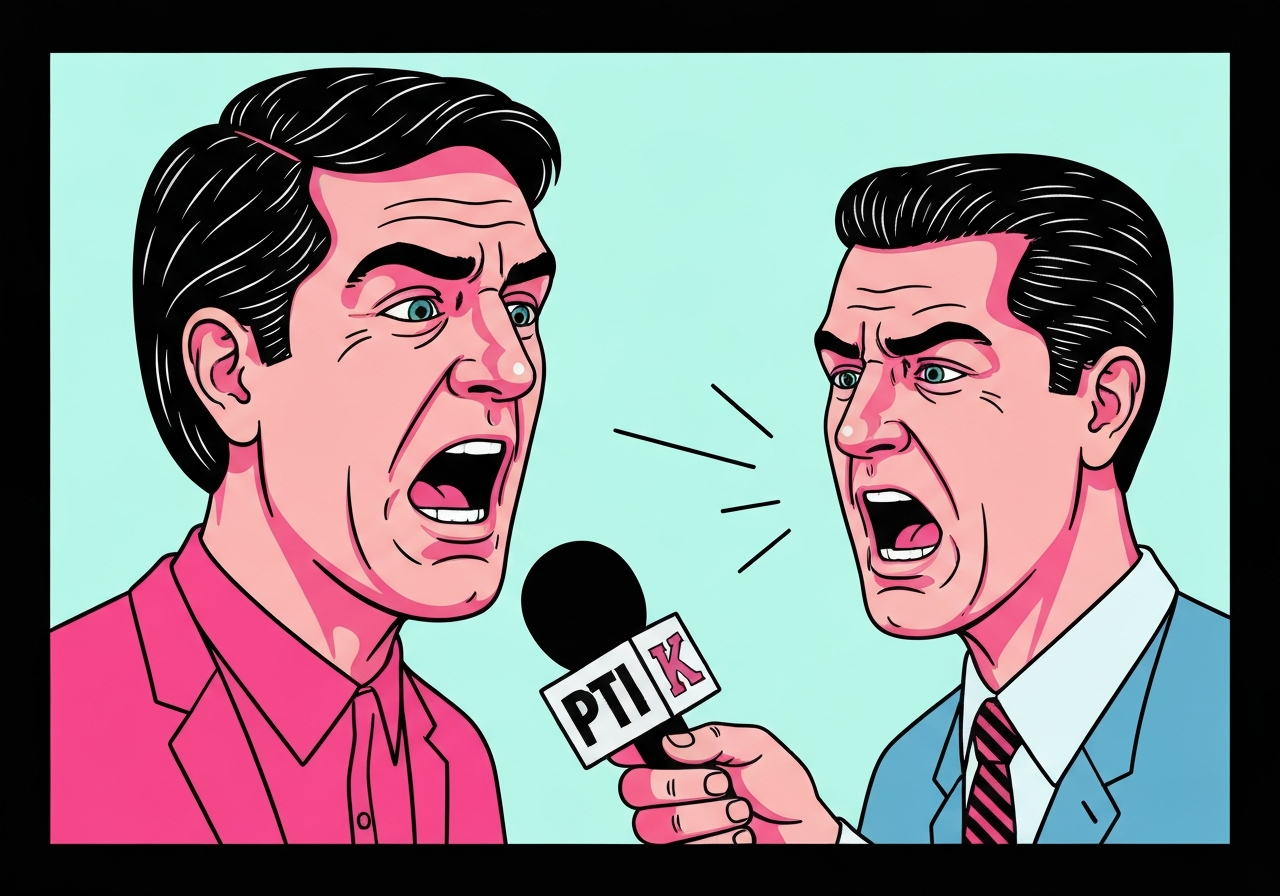
Lead: Kansas State head coach Jerome Tang sharply criticized his players after the Wildcats’ 91-62 home loss to Cincinnati on Wednesday night in Manhattan, Kansas. Tang said several players “do not deserve to wear this uniform” and warned that few would remain on the roster next season. The comments drew immediate national attention and a blistering response on ESPN’s Pardon the Interruption (PTI) the following day. Hosts Tony Kornheiser and Michael Wilbon questioned Tang’s judgment and urged the coach to publicly retract or clarify his remarks.
Key Takeaways
- Kansas State lost 91-62 to Cincinnati in Manhattan, KS on Wednesday night; Tang delivered an angry postgame press conference.
- Tang said “these dudes do not deserve to wear this uniform” and suggested few players would return next season, remarks that became widely circulated.
- PTI hosts Tony Kornheiser and Michael Wilbon criticized Tang on Thursday, citing his role as the coach who recruited the current roster and questioning his leadership.
- Kansas State is 10-14 overall and 1-10 in Big 12 play this season, tied for last in the conference.
- Discussion on PTI referenced a potential buyout figure for Tang’s contract (Kornheiser cited roughly $18 million; Wilbon referenced about $18,675,000), framing the financial and personnel trade-offs for the university.
- Some Kansas State students visibly demonstrated displeasure during the loss, wearing paper bags — one reportedly referencing Tang’s buyout.
Background
Jerome Tang is in his fourth season as Kansas State’s men’s basketball coach. His first season included a 26-win campaign and an Elite Eight appearance, achievements that helped raise expectations for the program. Since then, the landscape of college basketball has shifted: the transfer portal and NIL deals have altered roster stability and recruiting strategy, making roster turnover more common and coaching demands more complex. Kansas State’s current slump—10-14 overall and 1-10 in Big 12 play—has amplified scrutiny of Tang’s decisions on recruiting, roster management and in-game coaching.
The university, program boosters and a vocal segment of the fan base now face a choice between carrying out a high-cost coaching change or attempting roster rebuilds within the constraints of contracts, buyouts and NCAA/contractual rules. Public confrontations between coaches and players are particularly sensitive in college athletics, where athletes remain students and the university’s public image is a central concern. The immediate fallout after the Cincinnati loss made Tang’s postgame language a flashpoint in that larger debate.
Main Event
After the 91-62 defeat, Tang used the postgame press conference to sharply rebuke his roster, saying some players did not merit wearing Kansas State’s uniform and foretelling that only a few would remain next season. Those remarks were captured by multiple outlets and quickly circulated on social platforms and sports shows. Tang framed his criticism around perceived lack of commitment and effort during a season that has produced far fewer wins than his first year.
On Thursday’s Pardon the Interruption, Tony Kornheiser and Michael Wilbon read Tang’s comments and pressed the coach’s accountability. Kornheiser emphasized that Tang has been in Manhattan long enough to have recruited the current players, and therefore bears responsibility for the roster makeup. Wilbon focused on the human aspect of public criticism, urging Tang to consider the players’ status as students and the reputational risk to the university.
The campus reaction had already been visible during the game: some students wore paper bags over their heads in protest, and social media users amplified both Tang’s remarks and PTI’s response. The situation quickly moved from a single postgame outburst to a broader conversation about leadership, program direction and the personal cost of public reprimands in college athletics.
Analysis & Implications
Tang’s comments highlight the tension between coaching authority and the modern realities of college basketball. With the transfer portal and NIL creating more player mobility and autonomy, coaches face higher stakes when publicly chastising athletes—an action that can accelerate transfers or damage recruiting. Tang’s reference to roster changes for next year, if followed by significant roster movement, could be attributed either to natural turnover or to a direct consequence of his remarks.
The financial calculus is also central. Kornheiser and Wilbon discussed buyout figures on air, framing a decision to replace Tang as costly relative to other fixes. Universities weighing a coaching change must consider contractual buyouts, replacement salaries, and the potential short-term disruption to recruiting and roster continuity. Conversely, attempting to reset the roster through buyouts or mass transfers presents its own costs and uncertainties.
From a public-relations standpoint, the university must balance defending a coach’s right to demand standards with protecting students’ welfare and institutional reputation. Wilbon’s point about treating players as “somebody’s children” underscores the ethical dimension: even when performance is poor, public demeaning language can carry lasting consequences for individuals and the program’s brand.
Comparison & Data
| Season | Noted Wins | Conference Record | Notable |
|---|---|---|---|
| Tang’s first season | 26 wins (total) | Not specified in source | Reached Elite Eight |
| 2025–26 (current) | 10 wins | 1–10 (Big 12) | Tied for last in Big 12 |
The table contrasts the program’s high-water mark under Tang (26 wins and an Elite Eight run) with the current season’s struggles (10–14 overall, 1–10 in conference). That swing highlights both the volatility of college rosters and the narrow margin for error for coaching staffs in the NIL era. The data suggest the program has moved from national relevance to a rebuilding phase within a relatively short time.
Reactions & Quotes
“Who recruited these people? He’s in his fourth season…if mistakes are made, they are his errors of judgment,”
Tony Kornheiser, PTI (ESPN)
Kornheiser argued that Tang, having led the program for multiple seasons, cannot easily disown the current roster and must accept responsibility for personnel decisions.
“These are somebody’s children…Tang has to remember that, or he might have to go,”
Michael Wilbon, PTI (ESPN)
Wilbon emphasized the ethical and reputational risks of public scolding and suggested the university should demand a prompt clarification or retraction to mitigate damage.
“These dudes do not deserve to wear this uniform. There will be very few of them in it next year,”
Jerome Tang, postgame press conference (Kansas State Athletics)
Tang’s own words framed his dissatisfaction in stark terms; whether they lead to tangible roster moves will depend on subsequent university and player actions.
Unconfirmed
- Whether Kansas State will remove specific players or pursue mass roster changes based on Tang’s comments remains unconfirmed by the university.
- The practical enforceability of terminating Tang “for cause” and avoiding a buyout has not been confirmed and would depend on contractual language and legal review.
- Any internal disciplinary or personnel moves tied directly to this press conference have not been publicly disclosed by Kansas State Athletics as of publication.
Bottom Line
The episode crystallizes several ongoing tensions in college basketball: coaching accountability, player autonomy, and the reputational risks of public discipline. Tang’s blunt criticism has already shifted a single game’s fallout into a program-level debate about leadership and costs. How Kansas State responds—whether through a public clarification, internal discipline, roster adjustments, or a search for new leadership—will shape recruiting and public trust in the coming months.
Observers should watch for an official statement from Kansas State Athletics, any follow-up comments from Tang, and movement in the transfer portal involving Wildcats players. The university’s next steps will determine whether this remains a momentary controversy or the start of a broader program reset.
Sources
- Awful Announcing (sports news report)
- ESPN / Pardon the Interruption (national sports broadcast – PTI)
- Kansas State Athletics (official athletics site)