
Lead
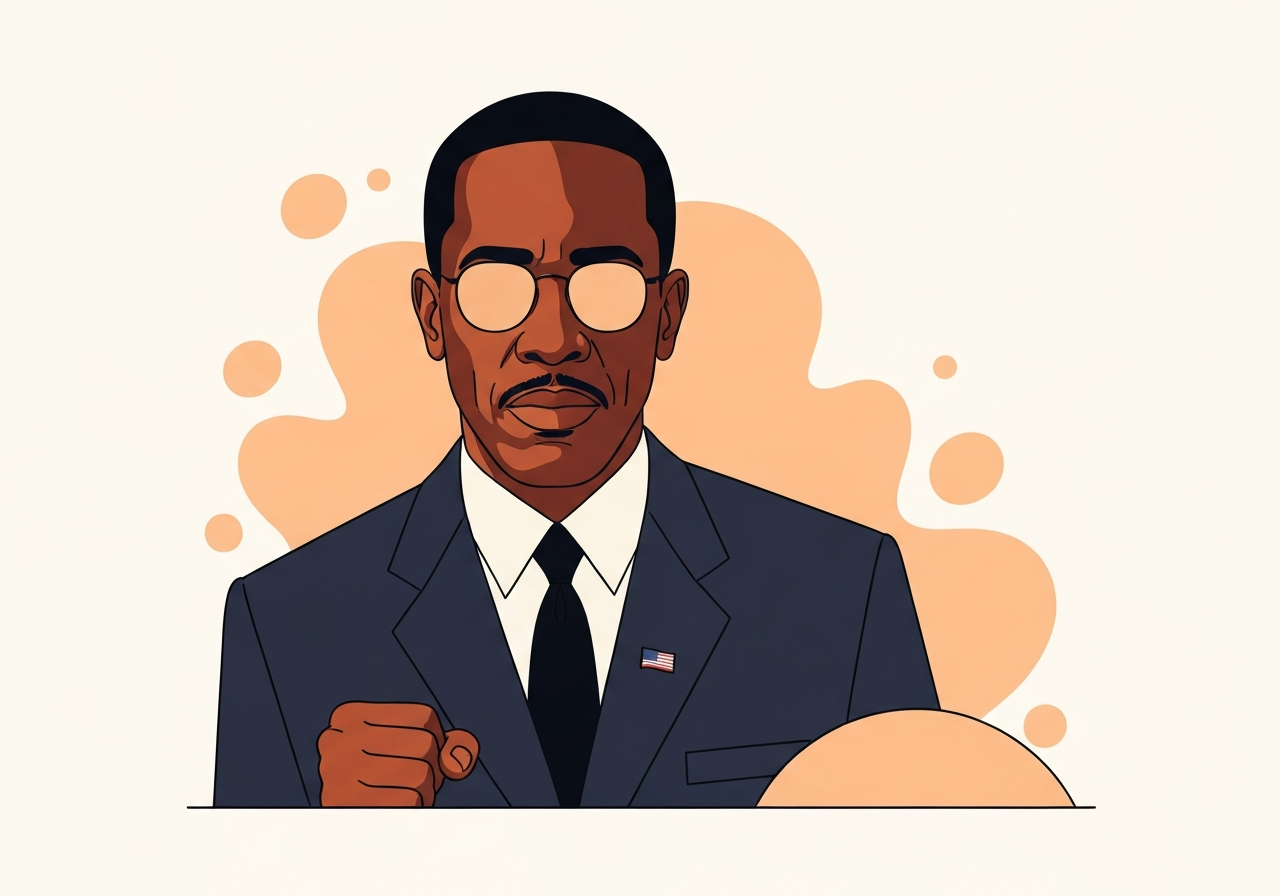
The Rev. Jesse Jackson, a towering figure in the American civil-rights movement and the architect of a modern “rainbow coalition” that mobilized poor and working-class voters, died on Feb. 17, 2026, at age 84. His family confirmed he “died peacefully” in a brief statement but did not specify a cause. Jackson had been hospitalized in November for treatment of progressive supranuclear palsy (PSP), and in 2017 he had announced a diagnosis of Parkinson’s disease. Over four decades he combined oratory, organizing and electoral ambition to push racial justice and economic inclusion into national politics.
Key Takeaways
- Jesse Jackson died on Feb. 17, 2026, at the age of 84; his family said he “died peacefully.”
- He was hospitalized in November 2025 for progressive supranuclear palsy (PSP), a rare neurodegenerative disorder; he had previously disclosed a Parkinson’s diagnosis in 2017.
- Jackson founded the Rainbow PUSH Coalition and built a “rainbow coalition” that sought to unite poor and working-class voters across racial lines.
- He ran for the Democratic presidential nomination twice (1984 and 1988), altering the party’s approach to Black voters and issues of economic justice.
- Jackson rose to national prominence after the assassination of Dr. Martin Luther King Jr. in 1968 and was widely seen as a leading Black political voice in the decades before Barack Obama’s 2008 victory.
- Family and the Rainbow PUSH Coalition provided the main public statements about his death; no official medical cause was released by the family.
Background
Jesse Jackson emerged from the civil-rights era as one of the movement’s most visible organizers and communicators. A protege of the Rev. Dr. Martin Luther King Jr., Jackson moved from grassroots activism into politics, blending moral rhetoric with pragmatic organizing to build multi-racial electoral coalitions. He created institutions—most prominently the Rainbow PUSH Coalition—that combined advocacy, voter registration and economic campaigns aimed at corporations and governments.
Jackson ran for the Democratic presidential nomination in 1984 and again in 1988, campaigns that expanded Black political influence within the party and forced major-party contenders to address issues of poverty, race and economic fairness. Although he never secured the nomination, his runs produced measurable shifts in party platforms and candidate priorities. Through public demonstrations, negotiations with corporate leaders and repeated calls for economic inclusion, Jackson sought to convert civil-rights gains into long-term political power.
Main Event
The family confirmed Jackson’s death on Feb. 17, 2026, in a concise statement noting he “died peacefully.” The Rainbow PUSH Coalition had disclosed his November hospitalization for treatment of progressive supranuclear palsy (PSP), describing the condition as a rare and particularly severe neurodegenerative disorder. Earlier, in 2017, Jackson had announced a Parkinson’s disease diagnosis; some symptoms of early Parkinson’s and PSP can overlap, complicating public understanding of his health trajectory.
Jackson’s public life combined street-level activism with national politics. He leveraged mass rallies, high-profile negotiations and electoral campaigns to press for employment, voting rights and corporate accountability measures. His rhetoric emphasized dignity for marginalized Americans, and his organizing sought to translate that rhetoric into votes, appointments and policy attention.
In recent years Jackson remained a symbolic leader for many progressive and civil-rights causes even as his public appearances declined amid health struggles. The Rainbow PUSH Coalition continued his programmatic work—voter mobilization, economic campaigns and advocacy for social justice—while a network of allies and former aides maintained his public legacy.
Analysis & Implications
Jackson’s death closes a chapter in post‑1960s American politics: he bridged the era of nonviolent civil-rights direct action and the electoral efforts to institutionalize Black political power. His campaigns and organizing helped shift Democratic politics by placing economic justice and multicultural coalitions at the center of national debate. That legacy persists in how parties court diverse coalitions and in policy discussions about inequality.
Electorally, Jackson forced major-party candidates to respond to issues—unemployment, corporate discrimination and urban policy—that were previously marginalized. His presidential bids, although unsuccessful in securing the nomination, demonstrated the capacity of Black-led coalitions to influence primary calendars, delegate math and platform commitments. Future candidates and movements continue to draw on the organizational templates he popularized.
On policy and institutional fronts, Jackson’s combined use of advocacy and negotiation—pressing corporations, pressuring public agencies, and litigating where necessary—left a mixed but durable record. Some of his economic campaigns won concessions and set precedents for corporate diversity agreements; other efforts fell short of structural change, underscoring the limits of outsider pressure without sustained political majorities.
Comparison & Data
| Year | Campaign | Outcome |
|---|---|---|
| 1984 | Democratic presidential primary (first major run) | Influenced party debate; did not secure nomination |
| 1988 | Democratic presidential primary (second run) | Expanded coalition-building; again failed to win nomination |
Jackson’s two presidential campaigns are often measured less by delegate totals than by their durable shifts in party messaging and the activation of new voter blocs. While he did not achieve the nomination, his campaigns institutionalized campaign practices—targeted outreach, coalition building and message discipline—that subsequent Black candidates and progressive coalitions adapted.
Reactions & Quotes
Family and organizational statements were the first official responses to Jackson’s death, followed by tributes from politicians, activists and community leaders recognizing his decades of public service. Many commentators emphasized both his moral rhetoric and his practical organizing, noting that his life combined sermon-like appeals with shrewd political maneuvering.
“He died peacefully,”
Family statement
The Rainbow PUSH Coalition, which Jackson founded and led for decades, publicly noted his recent hospitalization and partnered health disclosures that traced his diagnoses and treatments. Leaders within the coalition highlighted Jackson’s role as a strategist who blended protest, negotiation and electoral engagement to advance civil-rights aims.
“He was hospitalized in November for treatment of progressive supranuclear palsy (PSP),”
Rainbow PUSH Coalition
Outside the family and his organization, civic leaders and analysts praised Jackson’s ability to merge moral urgency with political tactics. Observers stressed that his approach—targeted pressure on business and government alongside grassroots voter work—remains influential among contemporary social movements and political campaigns.
Unconfirmed
- No official medical cause of death has been published by the family; specifics beyond the family’s statement remain unconfirmed.
- Details about the timeline and progression of Jackson’s condition between the 2017 Parkinson’s announcement and the November 2025 hospitalization are not fully documented in public statements.
Bottom Line
Jesse Jackson’s passing marks the end of a public life that reshaped American politics by insisting that race, class and economic dignity be central to national debate. While he did not attain the highest political offices he sought, his organizing and rhetoric changed how candidates and parties engage diverse constituencies.
Looking ahead, Jackson’s institutional legacies—the Rainbow PUSH Coalition and the model of coalition-driven politics—will continue to inform movement strategies and party outreach. His life offers lessons about the interplay of moral leadership and electoral strategy for those seeking long-term political change.
Sources
- The New York Times — U.S. national newspaper (obituary and reporting)
- Rainbow PUSH Coalition — Organization founded by Jesse Jackson (official statements)