
Lead
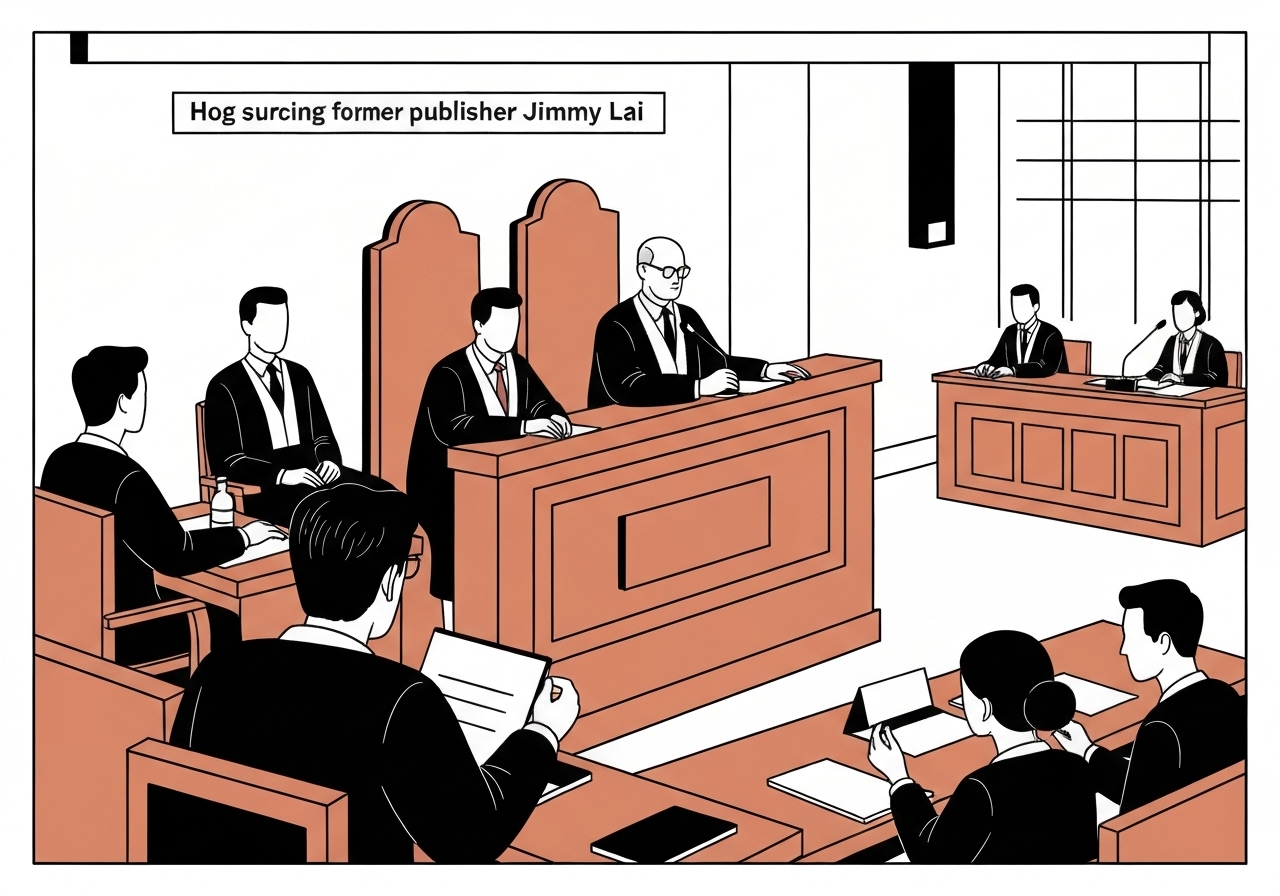
On Monday a Hong Kong court heard mitigation arguments in the sentencing phase for 78-year-old publisher and democracy advocate Jimmy Lai, convicted under the national security law. Lai, founder of the now-defunct Apple Daily, faces two counts of conspiracy to collude with foreign forces and one count of conspiracy to publish seditious materials; the maximum penalty is life imprisonment. Four days of mitigation hearings for Lai and several co-defendants began as judges weigh health, age and cooperation factors before a later sentencing decision. The proceedings have drawn attention from foreign governments and rights groups concerned about press freedom in Hong Kong.
Key Takeaways
- Jimmy Lai, 78, was convicted in December of two counts of colluding with foreign forces and one count of conspiracy to publish seditious articles; sentencing has not yet been handed down.
- The mitigation hearing opened Monday and is scheduled as a four-day process for Lai and co-defendants, with a maximum statutory penalty of life imprisonment under the national security law.
- Court discussion included Lai’s health: prosecutors recorded a recent weight of 79.2 kg and a 0.8 kg loss over five years, while defense lawyers cited prior drops of 11 kg and conditions including hypertension and diabetes.
- Six former Apple Daily executives and two activists pleaded guilty earlier and are expected to seek reduced sentences for cooperation; one related editor was previously jailed 21 months in a separate sedition case.
- Judges who convicted Lai said he led a conspiracy to solicit foreign intervention and continued intent after the security law took effect; his lawyers argued freedom of expression defenses and compliance after the law’s enactment.
- Public interest remains high: supporters queued outside court for days to secure gallery seats, and foreign leaders including U.S. and U.K. officials publicly commented on the case.
Background
The charges stem from actions before and after the 2019 mass protests in Hong Kong and the national security law that Beijing imposed in 2020. Apple Daily, the tabloid Lai founded, was a prominent pro-democracy voice and closed after pressure on independent media intensified under the new security regime. The security law criminalizes activities Beijing deems collusion with foreign forces and has been applied to a range of activists, politicians and journalists since 2020.
Lai’s trial was lengthy and complex: the main trial spanned 156 days and included testimony from several co-defendants who later pleaded guilty and cooperated with prosecutors. International observers and some governments have framed the case as a test of Hong Kong’s remaining press freedoms after the 1997 handover and of Beijing’s broader diplomatic posture. Hong Kong authorities defend their judicial process as being conducted under the rule of law.
Main Event
On the first day of mitigation hearings, defense counsel emphasized Lai’s age, preexisting health issues and time in solitary confinement as factors that should reduce a sentence’s severity. Robert Pang told the court that Lai’s solitary conditions and medical vulnerabilities mean a long term would be exceptionally burdensome for a 78-year-old detainee.
Prosecutor Anthony Chau countered that medical records indicate Lai’s health has been stable, noting a measured weight of 79.2 kg and a 0.8 kg loss over five years. Chau also noted that Lai remains classified as obese by Asian adult standards and disputed some defense claims about sustained weight loss.
Inside the courtroom Lai greeted supporters and other defendants; outside the building, dozens queued for hours to watch proceedings from the public gallery. The court reiterated that the sentencing phase will consider both individual mitigation and aggravating factors, with judges reserving the final sentence for a later date after the four-day hearing window.
Judges in December found Lai to be the mastermind behind conspiracies to solicit foreign forces’ involvement and to disseminate seditious material. The judgment said Lai’s actions, including prior calls for sanctions, indicated an intent to destabilize Beijing’s authority—an assessment his lawyers disputed while asserting free-expression claims and post-law compliance.
Analysis & Implications
The sentencing will have legal and diplomatic consequences. A lengthy sentence or life term would underline the national security law’s reach and likely intensify international concern about Hong Kong’s autonomy and press freedom. Governments that have spoken out, including officials in Washington and London, may use any severe penalty to justify tightening bilateral relations or imposing new diplomatic measures.
Domestically, a harsh sentence could create a chilling effect across Hong Kong’s media and civil society sectors, signaling to journalists and publishers the potential personal costs of outspoken criticism. Conversely, lighter penalties for cooperating co-defendants illustrate how the law’s sentencing mechanics incentivize plea and witness cooperation, reshaping incentives in politically sensitive prosecutions.
Legally, the case highlights how Hong Kong courts interpret intent and conduct under the national security law: judges assessed both pre-law advocacy for foreign sanctions and post-law behavior when determining culpability. Future defendants and lawyers will likely study the court’s reasoning closely to understand boundaries of expression and permissible advocacy under the statute.
Comparison & Data
| Item | Detail |
|---|---|
| Age of defendant | 78 |
| Measured weight (recent) | 79.2 kg (≈175 lb) |
| Weight change claimed | 0.8 kg lost over five years; earlier drop of 11 kg reported |
| Trial duration | 156 days |
| Maximum penalty under law | Life imprisonment |
The table summarizes figures discussed during mitigation. Those statistics—age, weight measures, trial length and statutory maximum—were central to both the defense’s plea for leniency and the prosecution’s rebuttals about fitness and culpability.
Reactions & Quotes
Defense counsel framed Lai’s advanced age and medical conditions as central to mitigation, asking judges to factor in the likely physical toll of long incarceration.
“Every day he spends in prison brings him closer to the end of his life.”
Robert Pang, defense lawyer
The prosecution stressed that official medical checks showed relative stability, using recent measurements to counter claims of severe deterioration.
“His health is stable, and recent records show minimal weight loss over five years.”
Anthony Chau, prosecutor
Supporters outside court have presented a different perspective, emphasizing solidarity and the political dimensions they see in the case.
“I want to let him know that he’s not alone. Many people support him.”
Simon Ng, former Apple Daily reader
Unconfirmed
- Any direct diplomatic outcome tied immediately to Lai’s eventual sentence remains unconfirmed; governments have expressed concern but concrete policy moves are not yet announced.
- Claims about the precise severity of Lai’s health deterioration beyond court-cited measurements are not independently verified in open records.
Bottom Line
The mitigation hearings for Jimmy Lai focus on age, health and cooperation as mitigating factors while judges must weigh the gravity of convictions under a law that carries life terms. The case will be closely watched for its legal reasoning on intent and for the sentence’s domestic and international reverberations.
Sentencing has been reserved until after the four-day mitigation window; whatever the outcome, it will likely shape perceptions of Hong Kong’s legal boundaries for media and dissent and could influence diplomatic rhetoric from Western capitals in the weeks ahead.