
Lead
On the evening of 25 February 2026, President Donald Trump delivered the longest State of the Union address in U.S. history, making sweeping declarations about jobs, foreign investment, energy costs and wartime diplomacy. Many assertions in the more-than-100-minute speech were definitive, but several conflict with official data or rely on disputed counting methods. This factcheck parses the main economic and foreign-policy claims and compares them with publicly available statistics and contemporaneous reporting. Where evidence is limited or evolving, we flag those items as unconfirmed.
Key takeaways
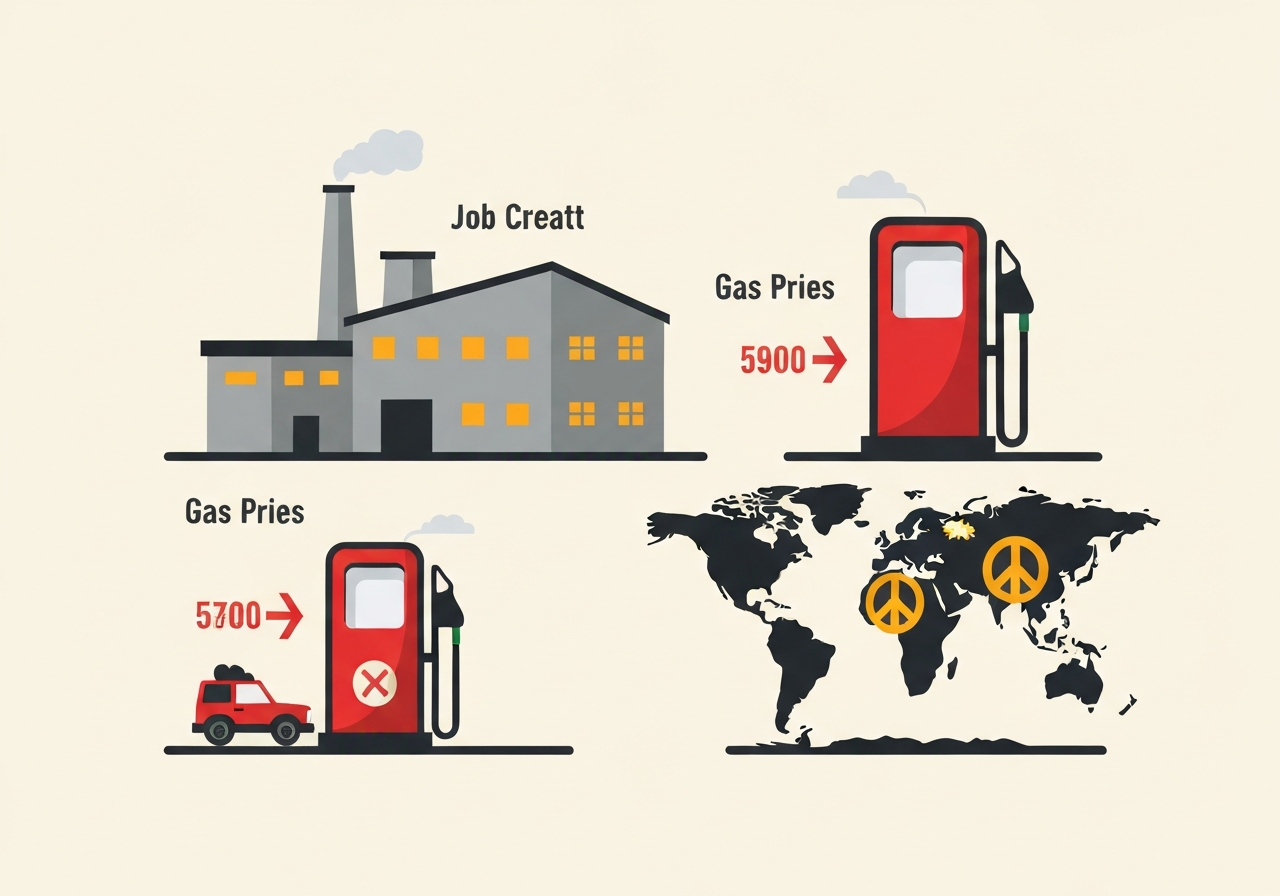
- The Bureau of Labor Statistics’ revised data show the U.S. added 181,000 jobs in 2025, well below the 1.5–2.5 million typical for full non-pandemic years of recent administrations.
- The White House cited $18 trillion in global investment pledges; public tallies of actual commitments and realized investment are substantially lower, with the administration’s own website listing about $9.7 trillion.
- Average household energy bills rose by 6.7% from 2024 to 2025, contrary to a broad claim of falling energy costs nationwide.
- Utility actions and policy shifts since the administration resumed office are linked to proposed or approved rate increases affecting about 112 million electric and 52 million gas customers and roughly $92 billion in higher utility costs.
- AAA national station data show Oklahoma as the only state near $2.30 per gallon (reported at $2.374); many states report average prices above $4.60, contradicting claims of $1.99–$2.30 widespread gasoline.
- The man charged with the murder of Iryna Zarutska, DeCarlos Brown Jr., has been described in reporting as U.S.-born, not an immigrant; broader crime-data comparisons show U.S.-born citizens are arrested for violent and drug offenses at higher rates than undocumented immigrants.
- The administration claims to have ended eight wars in its first 10 months; public records show the United States was party to six peace agreements or ceasefires in that span, and some of those deals are not durable or do not credit U.S. action as sole cause.
Background
State of the Union addresses are a traditional platform for presidents to present achievements and set priorities. This year’s address — delivered 25 February 2026 — included a mix of domestic economic claims and a catalogue of foreign-policy wins. Presidents often compress complex policy outcomes into concise lines for rhetorical effect; factchecks require unpacking those lines against detailed datasets and contemporary reporting.
Economic indicators such as payroll job gains, household energy expenditures and corporate investment are tracked by independent agencies or private aggregators and are updated periodically. The Bureau of Labor Statistics (BLS) issues revisions that can change year totals; policy observers and fact-checkers compare presidential statements to revised data when available. Similarly, investment tallies can blur the line between nonbinding pledges and actual capital flows — a distinction central to evaluating claims of large-scale inward investment.
Main event
In his address, the president asserted the U.S. is “the hottest country anywhere in the world” economically and said the nation has “more jobs, more people working today than ever before in the history of our country.” Those statements were presented as fact without the contextual qualifiers that would align them with BLS measures. The revised BLS figure for 2025 shows 181,000 payroll jobs added for the year, a pace well beneath the multi-hundred-thousand to million-level expansions recorded in some prior years.
The speech also touted $18 trillion in investments pouring into the United States from abroad. Reporting and watchdog work since then shows the administration’s count relied heavily on pledges and announcements rather than on completed and tracked capital flows. The White House’s own investment summary lists roughly $9.7 trillion when measured by the administration’s public dataset, a figure materially lower than $18 trillion.
Turning to energy, the president told the chamber that energy prices were falling and cited specific low gas prices in many states. Yet federal and private data indicate average household energy costs rose 6.7% from 2024 to 2025, and AAA’s state-by-state pump-price logs show only isolated locations with average gasoline near $2.30 per gallon. Policy changes enacted by the administration — including a recent rollback of the endangerment finding underpinning greenhouse-gas rules — have been projected by government analyses and independent researchers to push some fuel and electricity prices higher over time.
On foreign policy, the president claimed he had ended eight wars in his first 10 months. Public records show the U.S. participated in six agreements or ceasefires during the period; however, the extent to which U.S. pressure or diplomacy was decisive varies by case. Some agreements were short-lived or did not settle the underlying disputes, as illustrated by a ceasefire between Thailand and Cambodia that collapsed within weeks and led to renewed fighting and mass displacement.
Analysis & implications
Economic rhetoric in a State of the Union is intended to convey momentum, but the data present a more mixed picture. A total of 181,000 payroll jobs in 2025 is consistent with much slower growth than prior full years of recovery-era labor markets. That slowdown has consequences: slower job creation affects wage pressures, tax receipts and the administration’s ability to claim a broad-based boom. Policymakers and markets will likely treat single-year job totals as one input among many, but the gap between the president’s language and the BLS figure is notable.
The distinction between investment pledges and realized capital matters for economic planning and political accountability. Pledges can signal intent but do not guarantee deployment of capital, job creation, or taxable activity. If policymakers tout headline pledge totals without tracking conversions to actual investment — construction starts, hiring, cross-border mergers, and recorded foreign direct investment flows — the public can be misled about near-term economic benefits.
On energy, a 6.7% rise in average household bills contradicts a broad claim of falling costs. Policy rollbacks and deregulation can have both short-run and long-run price effects; utilities’ regulatory filings, independent modeling from groups like Energy Innovation, and the Center for American Progress’ analyses together suggest that the administration’s moves are likely to put upward pressure on rates for many consumers. That dynamic should temper claims that regulatory rollbacks will yield immediate, across-the-board savings for households.
Claims of resolving multiple wars are politically potent but legally and diplomatically complex. Ceasefires and signed agreements do not always equate to durable peace; many conflicts have deep structural causes and local spoilers. When an administration claims credit for multiple ends to hostilities, objective assessment should examine which agreements were brokered directly by U.S. diplomats, which merely had U.S. encouragement, and which outcomes were temporary.
Comparison & data
| Claim | President’s statement | Public data / reality |
|---|---|---|
| Jobs (2025) | “More people working today than ever” | BLS revised payroll gain: 181,000 jobs in 2025 |
| Investment | $18 trillion in global investments “pouring in” | Administration lists ~$9.7 trillion in its public investment tally; many figures are pledges rather than realized flows |
| Household energy bills | Energy prices decreasing | Average household energy bill rose 6.7% from 2024 to 2025 |
| Gasoline prices | “Below $2.30 in most states, some $1.99” | AAA: Oklahoma ~ $2.374; several states average above $4.60 |
| Wars ended | Ended eight wars in first 10 months | U.S. party to six agreements/ceasefires; several deals not durable or not solely attributable to U.S. action |
The table contrasts high-level claims with contemporaneous public data. Differences arise from measurement choices (e.g., counting pledges vs. investments realized), timing of revisions (BLS updates), and selective snapshots (state-level gas prices vary widely). Readers should treat single-sentence claims as starting points rather than conclusive proof of broad trends.
Reactions & quotes
Official and expert responses quickly addressed several of the president’s assertions. Fact-checking outlets and economists highlighted the gap between the speech’s rhetoric and underlying statistics, especially on jobs and pledges.
“The 181,000 payroll jobs recorded for 2025 are substantially lower than the typical yearly gains seen in recent non-pandemic years.”
U.S. Bureau of Labor Statistics (analysis cited by independent fact-checkers)
Reporting on the Zarutska case and immigration rhetoric prompted immediate pushback from local law enforcement reports and crime-data researchers who noted the accused’s citizenship status and broader arrest-rate comparisons.
“Public reporting indicates the suspect in the Charlotte murder was not an immigrant as presented in the speech.”
Local law enforcement reporting / regional media
Energy policy groups and consumer advocates warned that deregulatory steps could raise costs for households over the medium term, countering claims of rapid nationwide savings.
“Rolling back the endangerment finding removes the legal basis for many greenhouse-gas rules and is projected to increase energy costs for consumers.”
Energy policy researchers
Unconfirmed
- Whether all $18 trillion the White House cited will be realized as productive, taxable investment: the figure mixes pledges and announced plans and lacks full public line-item reconciliation.
- The precise causal role of U.S. pressure in each reported ceasefire or agreement: attribution varies by case and, for several deals, multiple actors and regional dynamics played decisive roles.
Bottom line
The president’s State of the Union offered sweeping claims about jobs, investment, energy costs and ending conflicts; when checked against public data, several assertions are overstated or rely on contested definitions. Notably, the 181,000 payroll jobs reported for 2025 and the discrepancy between $18 trillion in announced pledges and roughly $9.7 trillion listed in the administration’s public tally are concrete examples where nuance changes the public takeaway.
Readers should treat headline statements as starting points and consult primary sources — BLS releases, investment-tracking databases, utility filings and reporting on specific diplomatic agreements — for a full accounting. As several items remain subject to revision or further transparency (pledge conversion, ongoing conflict dynamics), watchdogs and journalists will need to monitor whether announced gains convert into durable economic or policy outcomes.
Sources
- The Guardian — news/analysis (original report summarizing claims)
- Bureau of Labor Statistics — official labor statistics and revised payroll counts
- PolitiFact — fact-checking analysis of job gains and comparative context
- CNN — media review of White House investment counting (pledges vs realized flows)
- White House (investments page) — administration’s investment tallies (official)
- Center for American Progress — think-tank analysis of utility rate impacts
- Energy Innovation — independent modeling on energy policy and rate effects
- AAA Gas Prices — state-by-state gasoline price data
- Associated Press — regional reporting on the Iryna Zarutska case and related law-enforcement records