
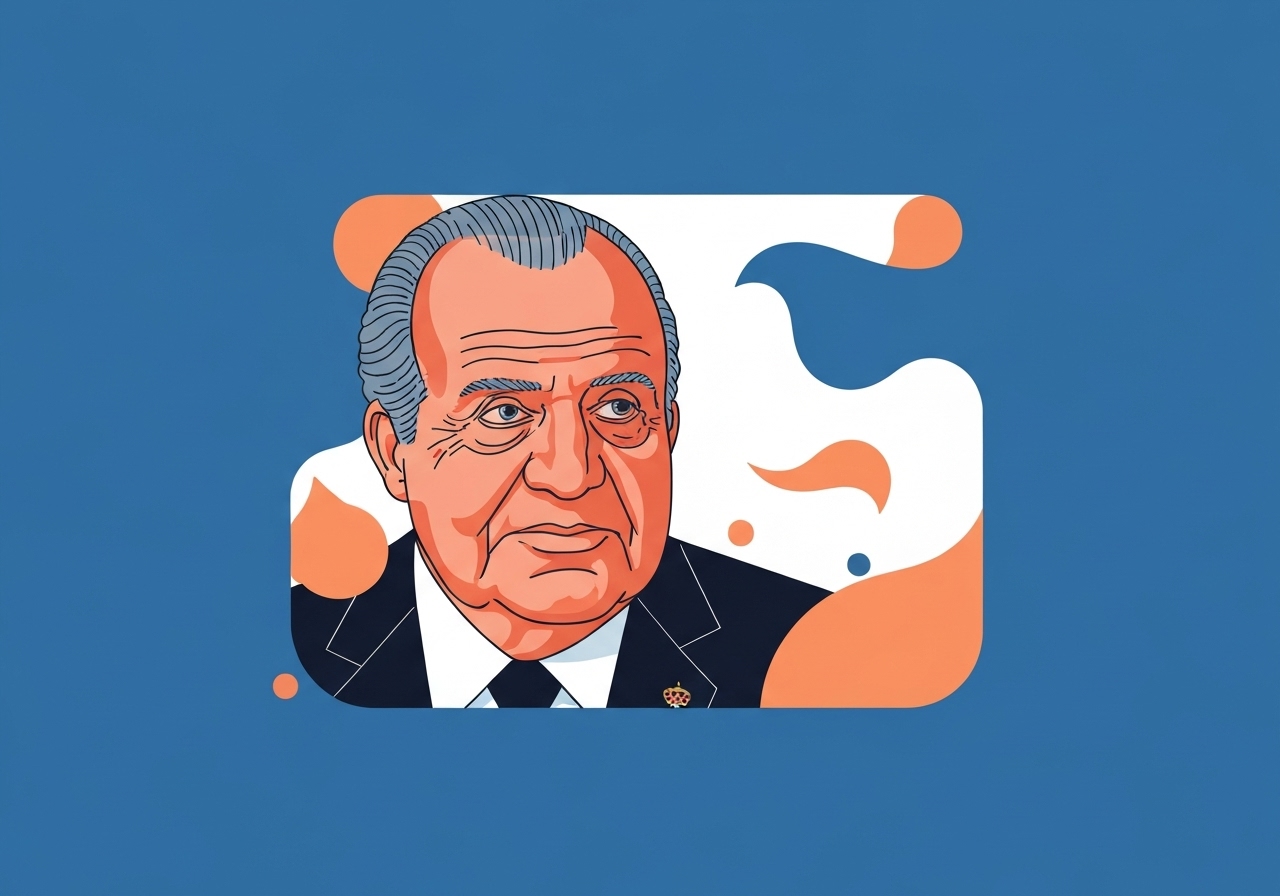
Lead: On Dec. 11, 2025, former King Juan Carlos I of Spain published a memoir titled Reconciliation as he seeks to reassert his public role after years in self-imposed exile in Abu Dhabi. The 87-year-old author frames the book as a reflection on Spain’s democratic transition and a response to scandals that led to his 2014 abdication and, later, his move abroad. Authorities and many public commemorations kept him at arm’s length during the 50th anniversary of Spain’s transition; his involvement was limited to a brief family lunch at the palace. The memoir mixes apology, historical claims and personal grievance as Juan Carlos attempts to shape his legacy.
Key Takeaways
- Juan Carlos I, age 87, published a memoir titled Reconciliation on Dec. 11, 2025, aiming to explain his role in Spain’s democratic transition and recent controversies.
- The book comes amid the 50th anniversary commemorations of Spain’s transition to democracy, from which he was largely excluded from official ceremonies.
- His 2014 abdication and subsequent self-exile (he relocated to Abu Dhabi in 2020) followed scandals involving alleged financial misconduct, sexual allegations and a high-profile elephant-hunting controversy.
- The memoir is co-authored with Laurence Debray, who says Juan Carlos was motivated to speak about rising political polarization and renewed youth interest in authoritarian ideas.
- The text includes a disputed personal account of his younger brother’s accidental death and passages that praise aspects of Franco’s political skill, alongside self-attributed claims such as “I gave freedom to the Spanish people.”
- At the 2025 anniversary events the former king attended only a private family lunch at the palace and left early, underscoring his diminished public standing.
Background
Juan Carlos ascended to the throne after the death of dictator Francisco Franco and is widely credited with facilitating Spain’s transition to a parliamentary monarchy in the mid-1970s. The 1978 constitution and the subsequent democratization process positioned the monarchy as a stabilizing, symbolic institution rather than a source of executive power. For decades his role was central to Spain’s post-Franco political order.
That institutional role eroded after allegations and investigations into the former king’s private life and finances. In 2014 Juan Carlos abdicated in favor of his son, Felipe VI, and in 2020 he moved to Abu Dhabi amid ongoing scrutiny. The confluence of legal probes, press exposés and public criticism has reshaped how Spaniards view the monarchy and prompted internal debates within the royal household about transparency and institutional survival.
Main Event
The memoir Reconciliation was released on Dec. 11, 2025, and is presented as both a personal account and a plea for reconsideration. In it, Juan Carlos revisits his role during Spain’s transition, offers mea culpas for aspects of his conduct and sets out grievances about being sidelined in national commemorations. The book’s tone alternates between contrition and assertion of historical importance.
During the 50th-anniversary observances marking the transition to democracy, the former king was not invited to the main public commemoration and participated only in a private family lunch at the palace, arriving and departing early. That limited presence has been widely interpreted as symbolic of his unsettled status: legally free in many respects, but politically and socially marginalized.
Co-author Laurence Debray told reporters that Juan Carlos sought to address worries about Spain’s polarization and a worrying resurgence of interest among some young people in authoritarian models. The memoir also contains personal anecdotes, including an account of the death of his younger brother in their youth; that episode is described in dramatic terms but is drawn from the book rather than independent public records.
Analysis & Implications
Domestically, the memoir is likely to reopen conversations about the monarchy’s role and the household’s ability to manage reputational damage. Felipe VI has spent his reign attempting to distance the crown from old scandals and to present a modern, constitutional image; his father’s renewed public intervention complicates those efforts and could force the royal family and political leaders to recalibrate messaging or governance safeguards.
Politically, the release may fuel debate among parties that already question the monarchy’s future. Republican and anti-monarchy groups may use the memoir’s contentious passages to argue for deeper institutional reform, while royalists may emphasize Juan Carlos’s historical contributions. Either dynamic could influence parliamentary discussion, media coverage and public opinion in the months ahead.
Internationally, the book and the surrounding coverage affect Spain’s image abroad—particularly among European partners that monitor governance and rule-of-law issues. While few foreign governments will change formal relations over a memoir, the episode could alter diplomatic conversations about transparency, accountability and the symbolic standing of the Spanish crown.
Comparison & Data
| Year | Event |
|---|---|
| 1975 | Death of Francisco Franco; start of Spain’s transition to democracy |
| 1978 | Spanish Constitution establishes parliamentary monarchy |
| 2014 | Juan Carlos abdicates in favor of Felipe VI |
| 2020 | Juan Carlos relocates to Abu Dhabi amid scrutiny |
| 2025 | 50th anniversary of the transition; publication of Reconciliation |
The timeline highlights key turning points that shape how Spaniards contextualize Juan Carlos’s memoir. The juxtaposition of foundational democratic milestones with recent controversies helps explain why his attempt to re-enter public debate elicits strong, mixed reactions.
Reactions & Quotes
Royal household officials and public commentators offered measured responses emphasizing the complexity of legacy and procedure. Below are representative passages from the memoir and its co-author, framed by short explanations of who spoke and why the lines matter.
“It’s ridiculous that the child doesn’t appear at his baptism.”
Laurence Debray, co-author
Debray used this phrase in describing how Juan Carlos has framed his exclusion from national ceremonies: as a personal affront that understates his historical role. The comment was offered to illustrate the former king’s sense of being unfairly omitted from events marking the transition he helped steer.
“I gave freedom to the Spanish people.”
Juan Carlos I (from Reconciliation)
This declarative sentence from the memoir exemplifies the memoir’s self-assertive passages, where Juan Carlos reiterates his central narrative about the transition. Critics say such statements gloss over later controversies; supporters see them as a reminder of his historical contribution.
Unconfirmed
- Reports that the memoir is primarily a bid for liquidity or to bolster legal defenses are asserted by commentators but not independently verified.
- The detailed account of his younger brother’s death appears in the memoir and has not been independently corroborated in public records cited here.
- The extent to which the memoir will change official royal-household policy or legal exposures for Juan Carlos remains uncertain and depends on responses from institutions and prosecutors.
Bottom Line
Juan Carlos’s Reconciliation is both a personal testament and a deliberately public maneuver: it revisits Spain’s democratic origins while attempting to rebut or contextualize the scandals that have defined his later life. For many Spaniards the book will reopen old wounds; for others it is a chance to reappraise a complex historical figure.
Practically, the memoir is unlikely to reverse longstanding institutional decisions about the former king’s role or to erase legal questions that persist in public debate. What it does accomplish is to put Juan Carlos back at the center of a national conversation about memory, accountability and the monarchy’s future—one that political leaders, civic groups and courts will continue to shape in the months to come.
Sources
- The New York Times (news media reporting; primary article on the memoir and public reaction)