
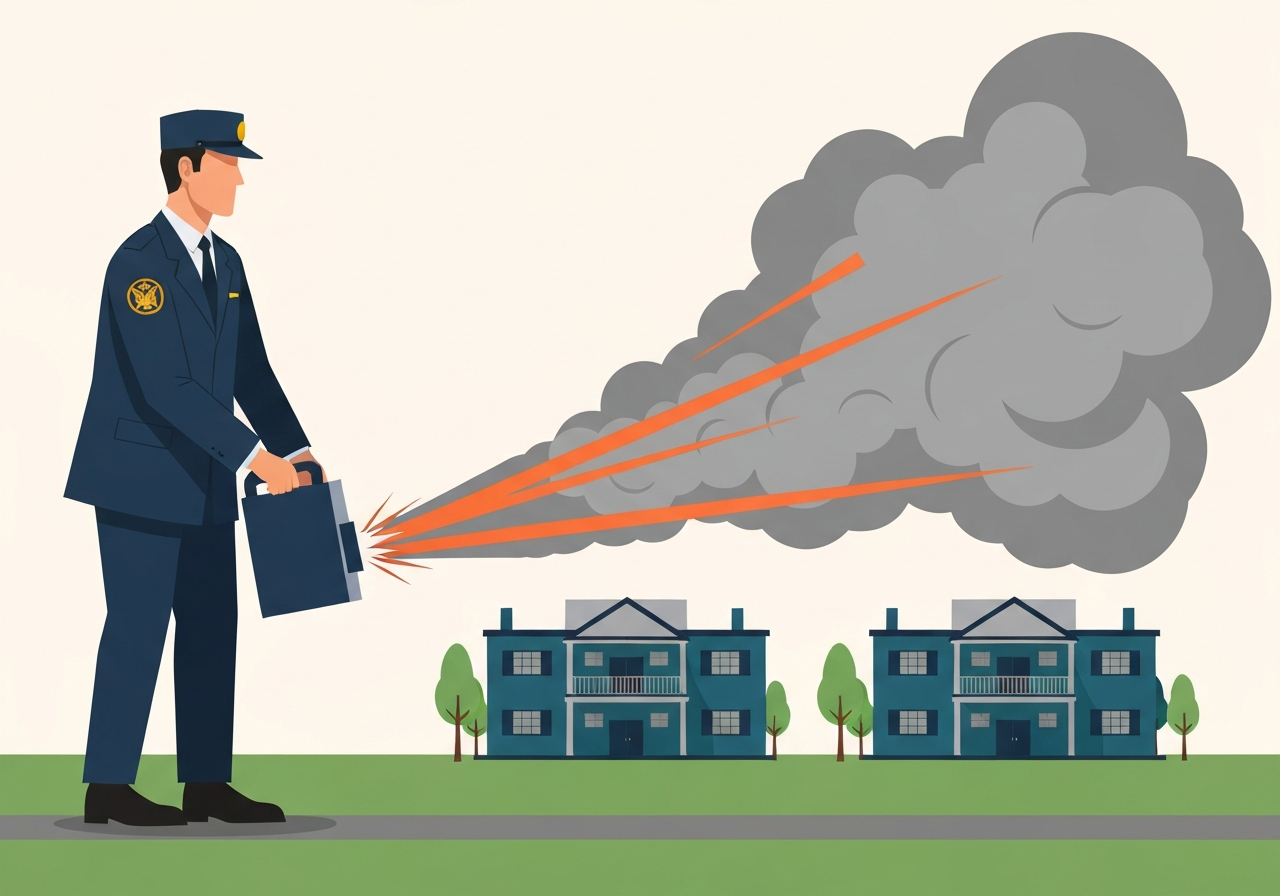
Lead: A federal judge on Friday issued a preliminary injunction barring federal officers from deploying tear gas or similar chemical munitions in quantities likely to seep into Gray’s Landing, a 209-unit low-income apartment complex across from Portland’s ICE field office, unless an imminent threat to life exists. U.S. District Judge Amy Baggio, in a 57-page opinion, found evidence the agencies used large-scale chemical force repeatedly and showed “deliberate indifference” to documented harms. The order, entered after a suit by 12 residents and property manager REACH Community Development, will remain in effect through the litigation. The government’s request to stay the injunction pending appeal was denied.
Key Takeaways
- Judge Amy Baggio issued a preliminary injunction on a 57-page opinion restricting chemical munitions that could reach Gray’s Landing unless required to avert an imminent lethal threat.
- Twelve residents of the 209-unit complex and REACH Community Development sued the U.S. Department of Homeland Security, ICE, CBP, the Federal Protective Service, the Secret Service and agency heads.
- The opinion identifies heavy deployments of tear gas, pepper balls and flash-bang smoke grenades on at least five days: Oct. 4, 2025; Jan. 24, 2026; Jan. 30, 2026; Jan. 31, 2026; and Feb. 1, 2026.
- Resident accounts and video evidence linked exposures to allergic reactions, dizziness, nausea, vomiting, inflamed eyelids, painful styes and rashes that the judge found fairly traceable to the chemical munitions.
- REACH and lead counsel emphasized the decision protects families, seniors, veterans and people with disabilities who had reported repeated harm and disruption to daily life.
- The court concluded officers’ actions often conflicted with agency use-of-force guidance and that spent munitions were discovered on the residential property.
- Federal attorneys argued future harm was speculative; the judge found continued deployment when protesters returned—sometimes on the same day as filings—undermined that claim.
Background
Protests and federal crowd-control operations outside Portland’s U.S. Immigration and Customs Enforcement field office have been ongoing since June prior to the litigation. Demonstrations opposing federal immigration enforcement drew oscillating crowd sizes, and federal protective operations expanded to include chemical munitions and projectile devices. Gray’s Landing, a 209-unit low-income complex situated across the street from the ICE facility, houses families, seniors, veterans and disabled residents; its proximity became central to the plaintiffs’ claims that chemical agents repeatedly reached living spaces.
Residents and property management say they raised complaints to federal personnel before filing suit, documenting health complaints and physical residue. The plaintiffs’ complaint and the preliminary injunction motion argued that large-scale, repeated deployments were not narrowly tailored to immediate threats and violated constitutional protections for bodily integrity. Plaintiffs framed the relief sought as necessary because nonlitigation mitigation—air purifiers, sealed windows, gas masks and HVAC adjustments—failed to eliminate exposures or health effects. The case names multiple federal agencies and their leaders and focuses on conduct in moments where the court found there was time to weigh alternatives.
Main Event
Judge Baggio’s opinion details multiple incidents when officers launched chemical munitions from the ICE facility area and nearby driveways, producing visible plumes that reached the Gray’s Landing property. On Oct. 4, 2025, the court described officers pushing protesters about a block away and deploying munitions that produced gas clouds rapidly entering the apartment complex. Resident Mindy King recorded a canister landing beneath her balcony that day, which the opinion says sent gas into her unit and adjacent apartments.
On Jan. 24, video captured “large clouds of gas and explosions” emanating from the ICE building while several hundred protesters gathered; staff later documented a burn mark on the complex’s west exterior wall where a canister lodged. The opinion records that on Jan. 31, a labor-organized march of roughly 3,000 people was enveloped by tear gas and that Gray’s Landing became saturated in a dense fog of gas. Federal officers also deployed chemical munitions on Jan. 30—the same day the residents filed for an injunction—underscoring the court’s finding of a pattern rather than an isolated error.
Baggio found that the scale and repetition of deployments, coordinated among substantial numbers of officers, were inconsistent with the agencies’ own use-of-force manuals, which advise consideration of bystanders such as children and the elderly before area saturation. She further noted that spent munitions were recovered on residential property, and that a Federal Protective Service regional deputy director, Robert Cantu, acknowledged in deposition a lack of operational reason to be on Moody Avenue, the street bordering Gray’s Landing.
Analysis & Implications
The ruling constrains federal crowd-control options near a vulnerable residential population and establishes a legal bar to non-targeted area saturation that could affect homes. Legally, the injunction rests on evidence the court interpreted as satisfying the preliminary-injunction standard: a likelihood of success on the merits as to unconstitutional bodily intrusions and a credible risk of irreparable harm to residents. Practically, the order forces agencies to recalibrate tactics when large-scale chemical munitions risk drifting into residential units, potentially shifting reliance to targeted measures or nonchemical crowd-management methods.
Politically and administratively, the decision increases scrutiny on multiagency operations around sensitive civic sites. Agencies named in the suit—DHS, ICE, CBP, the Federal Protective Service and the Secret Service—may face internal review, revised operational plans, or training updates to align actions with documented use-of-force policies. The government’s unsuccessful request for a stay signals the court’s readiness to let the injunction take effect during litigation, which could influence how quickly agency procedures change pending any appeal.
For residents and civil-rights advocates, the ruling is a concrete check on tactics that can harm people in their homes. For law enforcement and federal security leaders, it raises operational questions about balancing facility protection and constitutional limits where residential neighborhoods abut federal buildings. If appellate courts later modify or overturn the injunction, those outcomes will shape whether this decision produces lasting policy changes or is a temporary constraint during this litigation.
Comparison & Data
| Date | Reported Event | Reported Effect on Gray’s Landing |
|---|---|---|
| Oct. 4, 2025 | Officers pushed protesters ~1 block and fired chemical munitions | Visible plumes reached complex; canister landed under balcony |
| Jan. 24, 2026 | Large clouds and explosions recorded from ICE building | Burn mark on exterior wall where canister lodged |
| Jan. 30, 2026 | Chemical munitions deployed; same day injunction motion filed | Additional saturation events documented |
| Jan. 31, 2026 | Labor-organized march (~3,000) enveloped by tear gas | Complex became saturated in dense fog of gas |
| Feb. 1, 2026 | Further deployments reported | Continued complaints of health effects and residue |
The table summarizes the incidents the court highlighted as part of its record. Across these episodes the court found a pattern of repeated, large-scale deployments with documented bystander effects, rather than isolated, narrowly tailored responses to immediate life threats. Plaintiffs provided video, resident testimony and property management logs as primary evidence the court credited in finding a likelihood of future harm absent judicial relief.
Reactions & Quotes
Plaintiffs’ representatives and property managers welcomed the ruling as immediate protection for residents who had reported ongoing harm and disruption.
This ruling affirms what residents have been saying for months: families, seniors, veterans and people with disabilities experienced repeated exposure and real harm.
Margaret Salazar, CEO, REACH Community Development (statement)
Lead counsel described the order as essential relief after months of distressing conduct.
We are both thrilled and relieved that the Court has provided protection to our clients who have been suffering from the government’s shocking conduct for months.
Daniel Jacobson, plaintiff attorney (statement)
The court also cited deposition testimony from a federal official acknowledging operational limits near the residential street.
We have no business on Moody.
Robert Cantu, regional deputy director, Federal Protective Service (deposition)
Unconfirmed
- Whether internal agency reviews or operational changes were initiated by the named federal agencies before the injunction is not detailed in the public record and remains unconfirmed.
- The full extent of long-term health effects for residents exposed repeatedly to the chemical munitions has not been established in the court record and will require medical follow-up beyond the scope of the litigation to date.
- Any forthcoming appellate timetable or specific plans by the government to appeal the injunction were not disclosed in the opinion and remain uncertain.
Bottom Line
The preliminary injunction marks a judicial limit on how federal officers may deploy chemical crowd-control measures near a defined residential population. By finding deliberate indifference and crediting resident testimony and video, the court imposed a practical constraint that prioritizes protection of homes unless a clear, imminent threat to life exists. The order does not prevent all use of force near the ICE facility when officers face genuine, immediate danger; it bars large-scale chemical saturation that has demonstrably affected nearby apartments.
Practically, agencies will need to demonstrate tactics that avoid nonconsensual exposure of residents or adapt tactics to ensure any force used adheres to both policy and constitutional constraints. The litigation’s outcome on the merits and any appellate decisions will determine whether this ruling produces broader, lasting changes to federal crowd-control practices in urban residential settings.
Sources
- OregonLive (news report summarizing the court opinion and interviews)
- REACH Community Development (property manager / nonprofit statement)