
Lead
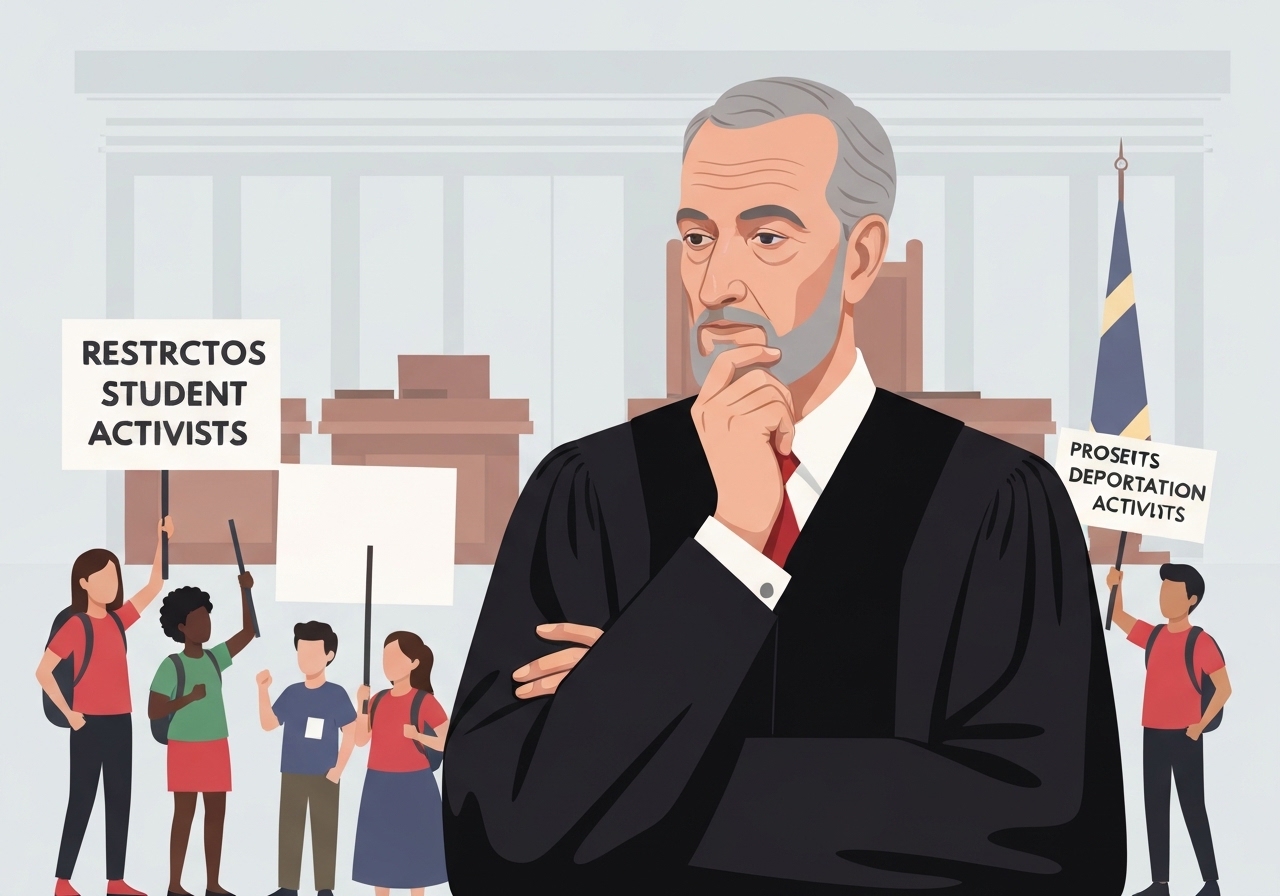
On Jan. 15, 2026, U.S. District Judge William G. Young of Boston proposed a court order aimed at limiting the Trump administration’s ability to deport noncitizen members of two academic organizations involved in litigation. At a federal hearing, Judge Young — an 85-year-old Reagan appointee — described the government’s actions as a retaliatory response to protected campus speech and said courts should scrutinize any removal that appears tied to expression. His proposal would require the government to justify in court any attempt to remove members of the two groups on grounds unrelated to their speech, creating a strong presumption of retaliation if it cannot. The judge framed the move as a narrowly targeted check on what he described as an expansive and unconstitutional use of immigration power.
Key Takeaways
- Judge William G. Young held a hearing in Boston on Jan. 15, 2026, proposing limits on deportations of noncitizen students affiliated with two academic groups named in the lawsuit.
- In September, Judge Young issued a 161-page opinion finding that the First Amendment protects political speech by noncitizen students lawfully in the United States.
- Under the proposed order, the government would need to appear in court and show non‑speech reasons before deporting any listed group member; absent such proof, enforcement would be presumed retaliatory.
- Judge Young explicitly labeled former President Trump as an “authoritarian” during the hearing and called this case the most important of his career, signaling the case’s high-profile constitutional stakes.
- The hearing comes amid heightened scrutiny from academic groups and civil‑rights advocates who have warned that immigration enforcement was being used to silence campus dissent, citing individual cases such as Mahmoud Khalil.
- A recent federal appeals-court decision earlier the same week found that an earlier district-court order releasing a cited individual had been handled improperly, underscoring ongoing legal contention over procedural steps.
Background
The dispute centers on a legal challenge by two academic organizations and several noncitizen members who say they were targeted for immigration enforcement because of participation in campus protest activity. In September, Judge Young issued a lengthy 161-page opinion concluding that the First Amendment extends to the political speech of noncitizen students lawfully present in the United States. That opinion marked a notable extension of free‑speech protections to a group often treated as more vulnerable to immigration actions.
Federal immigration authorities have pursued removal proceedings against several student activists in recent years, prompting alarm among universities, advocacy groups and some lawmakers. Academic organizations say the pattern of enforcement has chilled campus debate and deterred international students from participating in political speech. The parties in the current litigation are litigating whether enforcement across campuses constituted unconstitutional retaliation rather than neutral application of immigration law.
Main Event
At the Jan. 15 hearing in U.S. District Court in Boston, Judge Young outlined a proposed narrowly tailored order to stop the executive branch from removing members of the two named academic groups without first demonstrating legitimate non‑speech grounds. He explained that, where enforcement follows expressive conduct, removals should be presumed retaliatory unless the government proves otherwise to a judge. The judge emphasized procedural safeguards: the government would have to file a showing in federal court prior to deportation actions affecting those group members.
During oral argument, Judge Young criticized the administration’s pattern of enforcement and used stark language to characterize the political context, calling former President Trump an “authoritarian” while arguing that the executive must still uphold constitutional protections. He said the case was the most significant of his judicial tenure and described his outrage at evidence suggesting students were singled out because of their speech. The session focused both on legal standards and on how to craft an order that would restrain only those enforcement actions tied to expression rather than broadly halting immigration authority.
The hearing also unfolded against parallel appellate activity: earlier that day a federal appeals court concluded that a lower-court order releasing one individual had been handled improperly, reflecting procedural complexity that could affect how immediate relief is administered. Advocates for the students said the judge’s proposal, if entered, would inject judicial oversight into narrow sets of deportation decisions; government lawyers signaled they would defend traditional enforcement prerogatives and likely pursue appellate review.
Analysis & Implications
Legally, the judge’s proposal raises the question of how far First Amendment protections reach when the speaker is a noncitizen present under valid immigration status. If adopted and upheld on appeal, it could set a binding precedent requiring courts to treat some immigration enforcement actions as subject to constitutional scrutiny when tied to expressive conduct. That would narrow executive latitude in cases involving political speech by noncitizen students and potentially constrain how immigration officials prioritize cases arising from campus protests.
Practically, the order would increase judicial involvement in a subset of removal cases, creating an additional procedural hurdle for the government: prosecutors and immigration officials would need to present contemporaneous, non‑speech justifications in federal court before proceeding. This change could slow some removals and create a record for appellate courts to review, making rapid enforcement harder when speech is implicated. University administrators and international students may see the move as a protective signal, but it could also prompt new legal strategies on both sides.
Politically, the case is likely to deepen partisan debate. Supporters of robust immigration enforcement view judicial constraints as encroachments on executive authority; free-speech advocates see them as necessary guards against retaliatory use of immigration law. The judge’s characterization of a former president as “authoritarian” may intensify interest and could factor into appellate framing, though appellate courts decide on legal principles rather than rhetorical flourishes. Given the constitutional stakes, the dispute is poised for prolonged litigation and possible Supreme Court review.
Comparison & Data
| Date | Action | Significance |
|---|---|---|
| Sept 2025 | 161‑page district opinion | Found First Amendment covers noncitizen student speech |
| Jan 15, 2026 | Boston hearing; proposed order | Would require court review before deporting members of two academic groups |
The two entries above summarize the case’s two major judicial landmarks to date: the September opinion that articulated the constitutional baseline and the January hearing in which the judge proposed specific injunctive mechanics. Together they map how the litigation has moved from doctrinal ruling to proposed remedial steps. If appellate courts disturb either step, the ultimate practical effect for campus enforcement will depend on whether higher courts leave the district court’s protections intact.
Reactions & Quotes
Officials from the academic groups said the judge’s intervention reflected long‑standing concerns about the use of immigration mechanisms to suppress campus speech. Legal scholars noted the unusual combination of a robust First Amendment ruling followed quickly by proposed procedural protections that could be replicated in other jurisdictions. Government lawyers signaled readiness to defend enforcement authority and indicated appeals were likely.
“Authoritarian.”
Judge William G. Young, U.S. District Court
The judge used that single-word description in the hearing to underscore his view of the political backdrop; he framed the case as testing whether executive power was being used to punish dissent. The remark attracted attention for its candor but does not itself determine the legal questions before the court.
“The First Amendment covers speech by noncitizens studying lawfully in the United States.”
U.S. District Court opinion (Sept. 2025)
That concise formulation comes from the court’s 161‑page opinion and serves as the doctrinal foundation for the proposed order now under consideration.
“Academic groups have raised alarms over the government’s efforts to deport him.”
Advocacy organizations and university representatives
Advocates have pointed to individual cases like Mahmoud Khalil to illustrate the broader pattern they say the litigation seeks to correct. Their public statements emphasize chilling effects on campus speech and the need for judicial oversight.
Unconfirmed
- Whether the administration will immediately appeal any district-court order if entered is not yet confirmed; government counsel signaled likely appellate review but no filing had been made at the time of the hearing.
- Exact membership lists and the full scope of individuals who might be covered by a final order remain unclear; the judge described the order as limited to members of the two named organizations.
Bottom Line
Judge Young’s proposal, if entered and sustained, would inject judicial gatekeeping into a narrow class of deportation decisions tied to campus speech, requiring government proof of non‑speech reasons before removals proceed. The approach seeks to balance longstanding executive authority over immigration with the constitutional imperative to protect expressive activity, even by noncitizens present lawfully.
Expect intense appellate litigation: the government is likely to challenge any constraint on enforcement, and higher courts could either endorse the district court’s protective framework or curtail it. For international students, universities and civil‑rights groups, the immediate import is procedural—more judicial scrutiny before removal—and a potential check on perceived retaliatory enforcement.
Sources
- The New York Times — News report (summary of court hearing and related developments).