
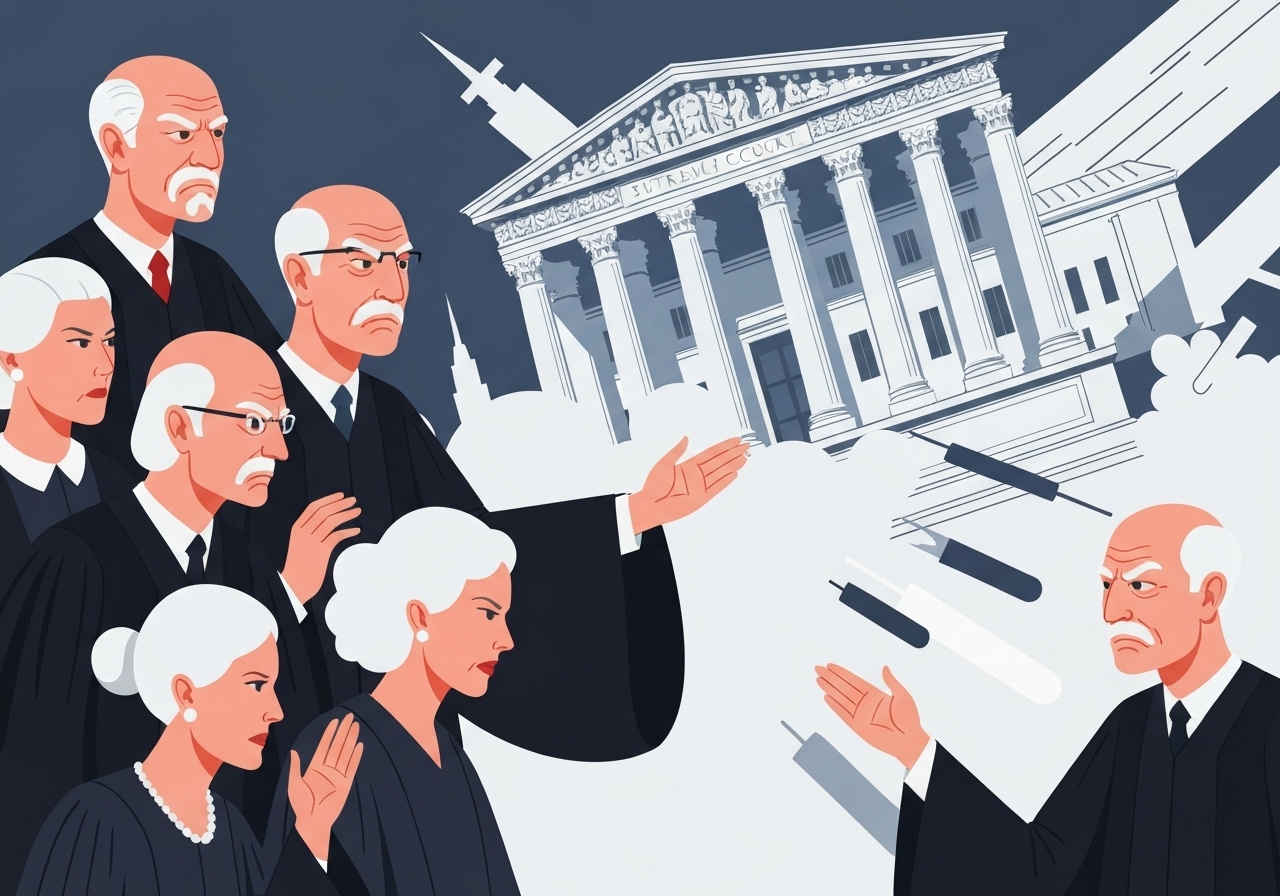
— In interviews with NBC News, a dozen federal judges across the country said the Supreme Court’s frequent, terse emergency orders in high-profile Trump administration disputes leave lower courts without clear guidance and intensify public criticism and safety risks for trial judges.
Key Takeaways
- About 12 federal judges—appointed by presidents from both parties—told NBC News they are frustrated by the Supreme Court’s short emergency orders in Trump-related cases.
- Since January, the Biden-era return of Trump to the White House has coincided with 23 emergency applications from his administration; the court granted 17, denied 2, left 3 unresolved and had 1 pending at the time of reporting.
- Judges say brief rulings on the so-called “shadow docket” leave district and circuit judges uncertain how to apply or follow the court’s direction.
- Concerns include increased public attacks on judges, a rise in threats and harassment, and a perceived lack of institutional defense for lower-court jurists.
- Some judges urged Chief Justice John Roberts to do more publicly and internally to protect the judiciary’s integrity, while others urged caution to avoid appearing biased.
Verified Facts
The judges interviewed — who requested anonymity to avoid professional and security risks — described a pattern: lower courts issue reasoned rulings after full briefing; the government appeals to the Supreme Court; the court then issues rapid emergency relief with little written explanation. Ten of the 12 judges said this lack of explanation is problematic for guidance and public perception.
Data cited by the judges and legal scholars show an increase in emergency applications. The Trump administration sought emergency relief from the Supreme Court 23 times since January, and the court granted 17 of those requests, according to a review cited by NBC News. By comparison, the Biden administration filed 19 such applications over its four-year term, and the court granted 10.
Judicial safety concerns were highlighted. The U.S. Marshals Service reported more than 400 threat investigations in the current year as of June. Congress was told the number of threat investigations rose from 224 in fiscal 2021 to 457 in fiscal 2023, reflecting a steady upward trend in threats and harassment directed at judges.
The judges discussed concrete examples. In one dispute over the president’s authority to remove members of independent agencies, Maryland U.S. District Judge Matthew Maddox relied on the 1935 precedent Humphrey’s Executor. After the Supreme Court issued a short emergency order in late May allowing similar removals, the court later issued a one-page order overturning Maddox’s decision; the court’s conservative majority and three liberal justices dissented in the sequence of orders.
Context & Impact
The contested practice centers on the “shadow docket,” the Supreme Court’s expedited track for emergency applications that often lacks oral argument and extended written opinions. The term gained currency in 2015 and has been applied more widely in consequential policy fights in recent years.
Lower-court judges said brief emergency dispositions create two problems. First, they provide little doctrinal instruction for subsequent litigation. Second, terse reversals can be portrayed publicly as evidence that lower-court judges issued hurried or biased rulings, fueling partisan attacks and threats against individual judges.
Some judges urged stronger institutional pushback. Four interviewees specifically suggested Chief Justice Roberts could do more — either through clearer, public statements defending the judiciary or by encouraging fuller explanations in emergency orders. Other judges disagreed, saying Roberts must balance public statements with the need to avoid comments that could be seen as prejudging pending cases or prompting recusal demands.
- Potential institutional responses suggested by judges: more explanatory emergency orders; targeted public statements defending the judiciary; increased security resources for vulnerable judges.
- Potential downsides raised: fuller emergency opinions might constrain the court’s later, fuller review and could be used as grounds to accuse the court of bias in pending matters.
Official Statements
“For more than two centuries, it has been established that impeachment is not an appropriate response to disagreement concerning a judicial decision.”
Chief Justice John G. Roberts Jr., March statement
“Lower court judges may sometimes disagree with this court’s decisions, but they are never free to defy them.”
Justice Neil Gorsuch, concurring opinion
Explainer
Unconfirmed
- Whether Chief Justice Roberts will change his public posture or internal practices in response to these criticisms is not confirmed.
- Updated U.S. Marshals Service totals after June 2025 were not available at the time of reporting.
- Claims about internal Supreme Court deliberations and private discussions among justices were not independently verified.
Bottom Line
Lower-court judges from across the political spectrum say the Supreme Court’s growing reliance on short emergency orders in high-profile Trump-era disputes is producing confusion and heightening personal risk for trial judges. The debate pits two institutional priorities against each other: the court’s need to manage an expanding emergency docket and lower courts’ need for clear legal guidance and institutional protection.