
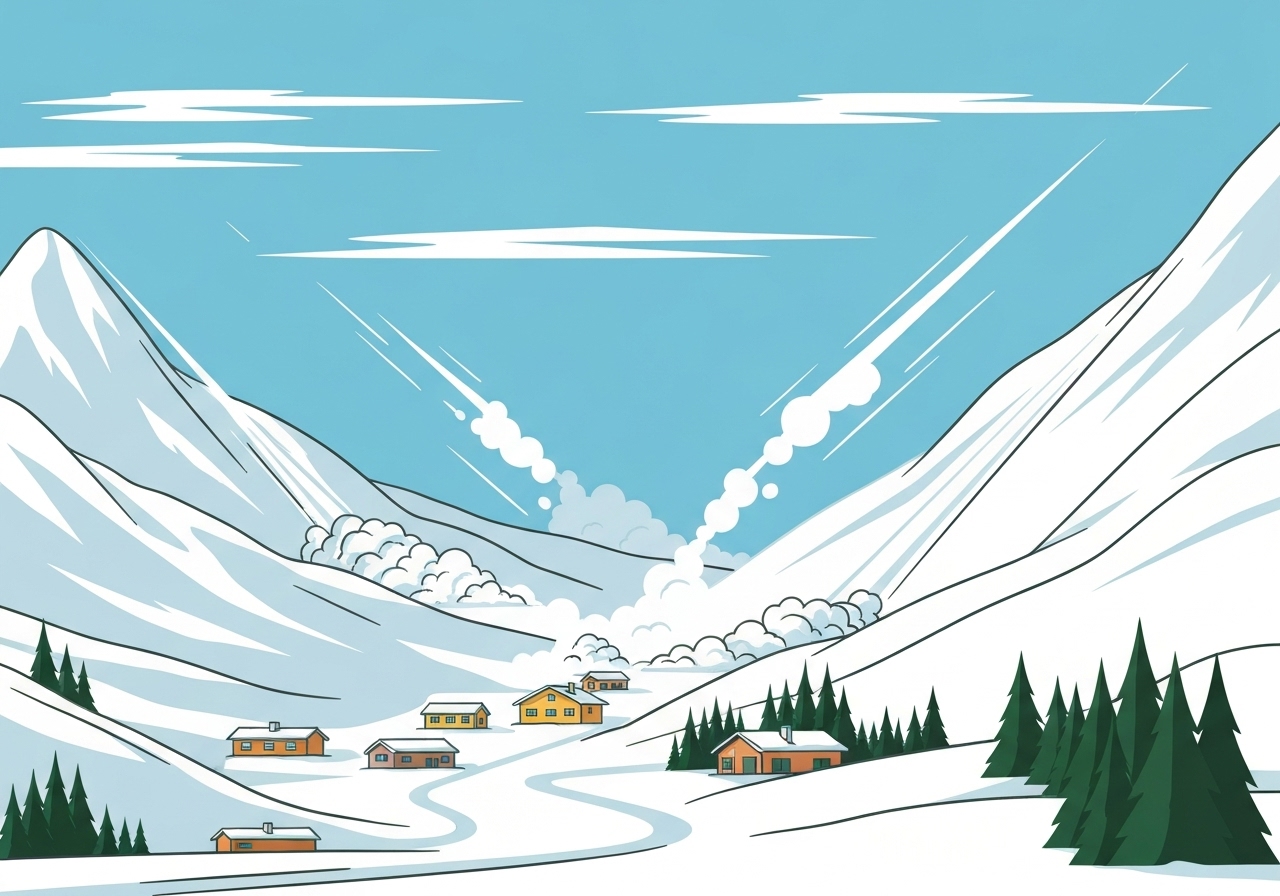
Lead: On Friday, Jan. 9, 2026, multiple small avalanches released on Mount Juneau above the Behrends neighborhood after the City & Borough of Juneau issued an evacuation advisory for known downtown and Thane Road slide paths. Two small slides were observed on the Behrends slide path while residents were preparing to leave and some sheltered at Centennial Hall. Local authorities and the Alaska Department of Transportation and Public Facilities reported numerous small releases along Thane Road and above the Flume Trail. Officials warned that heavy rain, strong winds and warming temperatures could produce further avalanches and extend road closures.
Key Takeaways
- The city issued an evacuation advisory for residents in known downtown slide paths and along Thane Road about one hour before avalanches were observed on Jan. 9, 2026.
- Two small avalanches released on the Behrends slide path above the neighborhood while resident Ezra Strong was walking nearby during heavy rain.
- The Alaska Department of Transportation and Public Facilities confirmed numerous small avalanches along Thane Road and above the Flume Trail; officials expect more events as weather worsens.
- Centennial Hall was opened as a shelter by the City & Borough of Juneau and the American Red Cross; the shelter is prepared for 150 people and about 30 had signed in by early afternoon.
- City Avalanche Advisor John Bressette said small, repeated releases can reduce the total snow load available for a larger avalanche, but the combination of rain, wind and warming still raises short-term hazard.
- Thane Road was closed and the department warned the closure could be extended for multiple days depending on forecasted conditions and additional slides.
Background
Juneau sits at the base of steep glaciated terrain where slide paths intersect developed neighborhoods and key transportation corridors. The Behrends slide path descends toward downtown and residential streets such as Gruening Avenue; Thane Road follows a narrow coastal route that is vulnerable to slope failures above the roadway. In recent years Southeast Alaska has recorded multiple fatal landslides and avalanches, prompting local agencies and the Red Cross to build evacuation planning and congregate-shelter capacity.
Local emergency management uses a mix of observational reports, avalanche advisors and transportation-agency assessments to decide advisories and road closures. The City & Borough of Juneau has an appointed Avalanche Advisor who provides real-time hazard guidance; the Alaska Department of Transportation and Public Facilities (DOT&PF) monitors slide activity on state-maintained corridors such as Thane Road. Shelter planning is coordinated in advance with the American Red Cross to receive residents who choose or are advised to leave slide-prone areas.
Main Event
On the morning of Jan. 9, 2026, the city issued an evacuation advisory for residents in known slide paths downtown and along Thane Road. Around an hour after the advisory, two small avalanches released on a primary slide path above the Behrends neighborhood while resident Ezra Strong and his wife were out walking in heavy rain; Strong reported they decided not to evacuate because of perceived protection from a nearby rock wall and historical slide behavior.
The Alaska DOT&PF confirmed numerous small avalanches along Thane Road and reported additional releases above the Flume Trail and Chop Gully in the Basin Road area. Officials warned that the forecasted combination of heavy rainfall, strong winds and rising temperatures during the day increased the likelihood of more slides into the evening, prompting a precautionary closure of Thane Road and the possibility of extending that closure for multiple days.
City staff and the American Red Cross opened Centennial Hall as an emergency shelter; Red Cross coordinators had been preparing for a possible activation for the prior week. By early afternoon roughly 30 people had signed in, but the shelter is prepared to support up to 150 residents. Some neighbors evacuated to friends’ homes while others used the congregate shelter, and several families reported leaving quickly with prepacked go-bags and vehicles staged to depart.
Analysis & Implications
Small, repeated releases can have a complex effect on hazard. As City Avalanche Advisor John Bressette noted, localized small slides can reduce the amount of unconsolidated snow on a slope and thereby lower the immediate potential for a single, very large avalanche. That process—natural stabilizing through small releases—can lessen some near-term load, but it does not eliminate the risk posed by persistent rain, wind-driven loading, or warm temperatures that can mobilize deeper layers.
Transportation and access implications are immediate: Thane Road is a key connector for residents and any multi-day closure would disrupt commuting, emergency response times and deliveries. DOT&PF must balance the risk of additional slides against the social and economic costs of keeping the road closed; real-time mitigation, monitoring and clearing operations are likely to continue until the watershed and road corridor stabilize.
For residents, roof load and secondary hazards matter as much as slope failure: sustained rainfall and melting snow increase rooftop and drainage loads that can lead to structural damage or localized collapses. The shelter activation and prepositioned volunteer capacity reduced immediate humanitarian risk, but strains on local volunteer resources could grow if the event prolongs or expands to multiple neighborhoods.
Comparison & Data
| Metric | Reported |
|---|---|
| Behrends slide path releases | 2 small avalanches observed |
| Thane Road slides | Numerous small avalanches confirmed by DOT&PF |
| Shelter capacity (Centennial Hall) | 150 people |
| Signed into shelter (early afternoon) | ~30 people |
| Advisory timing | Issued ~1 hour before observed slides |
The table summarizes the publicly reported figures from the event. While two small slides were observed directly on the Behrends path, DOT&PF descriptions of “numerous” slides along Thane Road are qualitative; field assessments and further counts may refine the total number and size categories of releases. Shelter usage remained well below capacity in the first hours, indicating many residents either sheltered elsewhere or chose to remain in place when conditions permitted.
Reactions & Quotes
City officials framed the advisory and shelter activation as precautionary measures intended to reduce risk while monitoring weather-driven slope instability.
“So it’s actually a good thing that we’re seeing smaller slides reducing the total snow load that is capable of producing an avalanche.”
John Bressette, City & Borough of Juneau Avalanche Advisor (official)
A local resident described his decision not to evacuate, citing specific local features and past slide behavior as reasons for staying.
“I’m not heeding the advisory. We’re a little bit protected by a rock wall and some other things behind us.”
Ezra Strong, Behrends resident
Residents who did evacuate and Red Cross staff emphasized preparedness and community supports available at the shelter.
“We’ve seen multiple fatal landslides and avalanches in the past decade. Evacuating to a congregate shelter is not people’s dream idea. It’s a safe place to go.”
Britt Tonnessen, Red Cross of Alaska, Southeast (humanitarian/volunteer)
Unconfirmed
- The full count and size distribution of avalanches across the Juneau area on Jan. 9, 2026, remain incomplete pending field surveys by DOT&PF and city crews.
- The exact duration of the Thane Road closure is uncertain; officials said it could be extended multiple days but had not provided a firm re-open date.
- There were no confirmed reports of injuries or major property damage in initial public briefings, but official damage assessments were still pending at the time of reporting.
Bottom Line
Friday’s small avalanches in the Behrends slide path and multiple releases along Thane Road prompted a precautionary evacuation advisory and shelter activation in Juneau. City and transportation officials are treating the events as both a short-term operational challenge for road access and a public-safety situation requiring continued monitoring as the weather worsens.
Residents in slide-prone areas should treat advisories seriously, consider evacuation when advised or when roof and slope loads feel unsafe, and take advantage of established shelter resources. Over the coming days, agencies will combine field assessments, forecasts and mitigation actions to determine when travel corridors can safely reopen and whether additional community support will be necessary.
Sources
- KTOO — local public media report with on-scene reporting and official statements
- Alaska Department of Transportation & Public Facilities — state transportation agency (official)
- City & Borough of Juneau — local government (official)
- American Red Cross (Alaska, Southeast) — humanitarian/volunteer organization (official)