
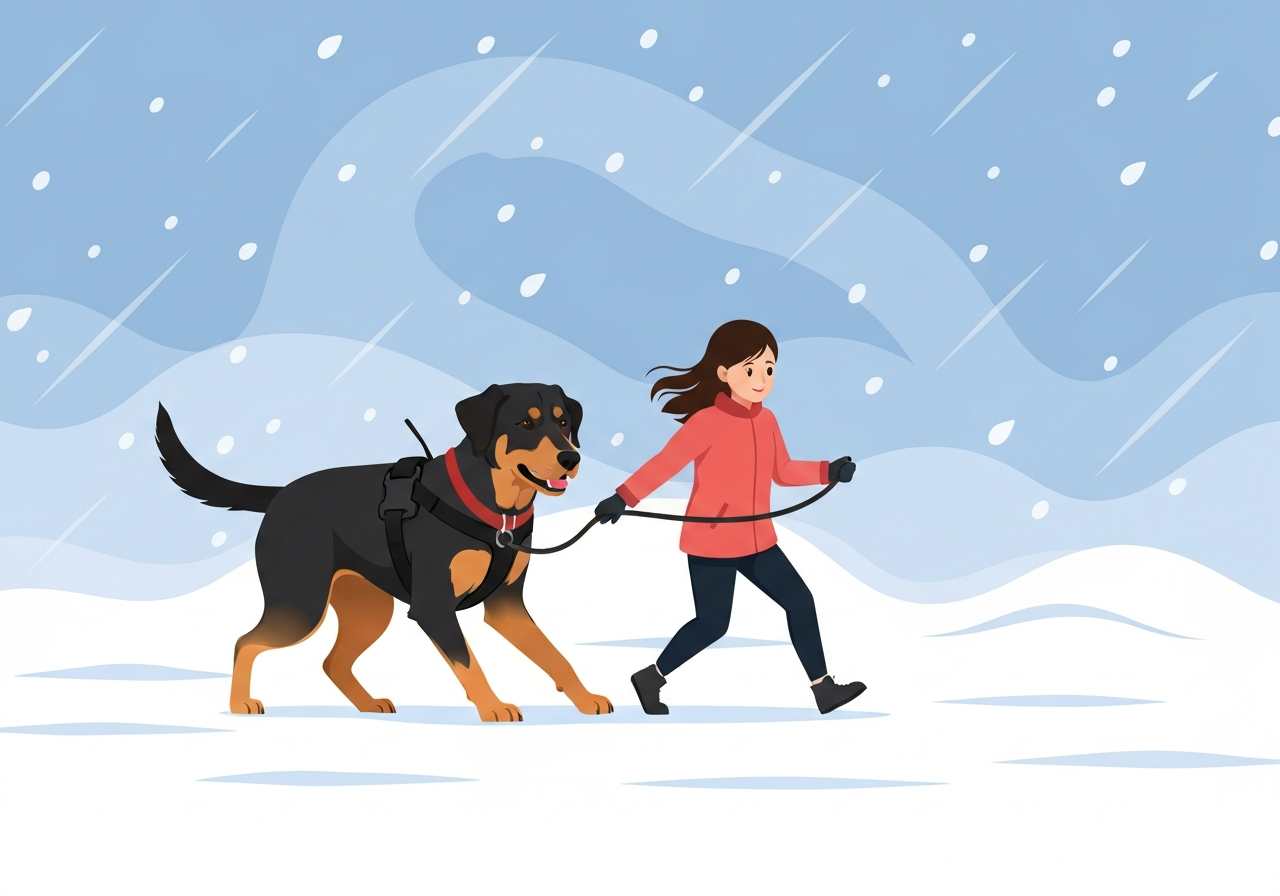
A 13-year-old boy with special needs was found safe after he walked away from his home in Gastonia, North Carolina, during a major snowstorm on Saturday night, police said. Temperatures dropped below freezing while Gastonia received several inches of new snow on top of earlier accumulations, placing the child at serious risk. Multiple agencies responded and a Gastonia Police Department K-9 named Bo was used to track the boy’s scent after being given a personal item. Emergency medical services located and recovered the child; he was cold but unharmed, officials said.
Key takeaways
- The missing child was a 13-year-old boy with special needs who left his Gastonia home on Saturday night during the peak of the storm.
- Temperatures were below freezing and Gastonia received several inches of additional snow, compounding existing ice and snow from the prior week.
- Gastonia Police Department, the county sheriff’s office and EMS established a secured search perimeter and coordinated the response.
- K-9 officer Bo was given an item belonging to the boy, tracked his scent, and led responders to the perimeter area where EMS spotted the child.
- The boy was recovered cold but unharmed; authorities attributed the outcome to rapid interagency coordination and the K-9’s tracking performance.
- Gastonia has roughly 80,000 residents and lies about 20 miles from Charlotte, a factor in regional mutual‑aid planning for weather emergencies.
Background
Gastonia, North Carolina, experienced a significant winter storm that dropped several inches of new snow on top of earlier accumulations from the week before. Authorities reported temperatures below freezing the night the boy left his home, elevating the risk of hypothermia and exposure for anyone outdoors without proper clothing. Children and adults with special needs are particularly vulnerable in extreme weather because of mobility, communication or sensory challenges that can complicate timely self-rescue or signaling for help. Local emergency services routinely train for winter incidents, but severe conditions can still complicate searches, slow travel and strain resources.
Police K-9 units are commonly used in missing-person searches because dogs can follow scent trails that are difficult for humans to trace, even in adverse conditions. Gastonia’s public safety agencies regularly coordinate responses across police, sheriff and EMS teams; the city’s proximity to Charlotte means mutual‑aid and regional planning are part of preparedness efforts. The rescue was publicly described by the Gastonia Police Department on social platforms and in a press notice that emphasized teamwork and the role of the K-9, Bo.
Main event
According to the Gastonia Police Department, the 13-year-old left his home Saturday night “during the height of the snowstorm” and was not wearing appropriate cold-weather clothing. Multiple agencies — Gastonia police, the county sheriff’s office and EMS — were called to search once the child was reported missing. Responders established a secured perimeter to structure the search and reduce the area that teams had to sweep on foot and by vehicle.
Investigators provided an item belonging to the boy to K-9 Bo so the dog could pick up the scent and begin tracking. Bo initiated the trail quickly despite heavy snowfall, according to the department. While the dog tracked, officers and EMS maintained the perimeter, searching systematically and communicating locations and findings between teams.
EMS personnel observed the child after he wandered into the secured perimeter; they were able to reach him and carry out an immediate assessment. The department reported the boy was “cold, but unharmed,” and he was returned to the care of family members. Police praised the combined effort of the agencies and singled out Bo’s performance in severe weather conditions as a key factor in the swift recovery.
Analysis & implications
The incident highlights the continued value of trained K-9 units in missing‑person cases, even in challenging weather. Dogs can follow scent trails that degrade more slowly than humans might expect, and a properly handled canine team can narrow search areas quickly, saving precious time in exposure scenarios. In this case, that speed was likely decisive given below-freezing temperatures and heavy snowfall.
Interagency coordination mattered as well: establishing a secured perimeter focused search resources and reduced duplication of effort. For municipalities, the event underscores the need to maintain regular cross-agency drills, winter-response plans and clear command-and-control protocols that account for limited visibility and hazardous ground conditions. Budgetary and staffing pressures can erode preparedness over time; this rescue illustrates why investments in training, K-9 programs and EMS readiness have operational payoff.
The rescue also calls attention to household readiness for families with special-needs members. Simple mitigation — visible identification, up‑to‑date contact information for caregivers, door and window alarms, dedicated winter clothing layers — can reduce search complexity. At a public-policy level, local governments may review notification practices and shelter/transport access for vulnerable populations during severe-weather advisories.
Comparison & data
| Metric | Reported value |
|---|---|
| Child’s age | 13 years |
| City population (approx.) | 80,000 |
| Distance to Charlotte | ~20 miles |
| Weather | Below freezing; several inches of new snow |
| Responding units | Gastonia Police, sheriff’s office, EMS, K-9 unit |
The table summarizes verifiable facts provided by authorities. While precise snowfall totals were described as “several inches,” the department and local media reported layered accumulations from separate storm systems earlier in the week. Those layered conditions often increase hazards: compacted ice and wind-driven snow can limit mobility and obscure scent trails for both humans and dogs, making coordinated searches more complex.
Reactions & quotes
Officials framed the outcome as the result of quick coordination and canine capability; their public statements emphasized teamwork and the K-9’s role in locating the child.
“[The child] was at serious risk due to the dangerously cold and snowy conditions.”
Gastonia Police Department (official statement)
This quote framed the urgency of the response and explained why multiple agencies were mobilized. It also sets the context for why canine tracking was prioritized despite harsh conditions.
“Quick action, strong teamwork and the dedication of everyone involved” made the operation successful, and Bo “performed well in the midst of severe weather.”
Gastonia Police Department (official statement)
The department used those phrases to credit interagency coordination and the K-9. Public recognition of responders can bolster trust and reinforce the value of continued training and equipment investment.
Unconfirmed
- The exact duration the boy spent outside before being located has not been detailed in official releases.
- Officials have not publicly released whether the boy left intentionally, wandered due to medical reasons related to his special needs, or how he exited the home.
- No detailed health assessment beyond “cold, but unharmed” has been published; longer-term follow-up information has not been disclosed.
Bottom line
The quick recovery of the 13-year-old in Gastonia demonstrates how trained K-9 units and coordinated interagency responses can be decisive in time-sensitive, weather-complicated searches. Below-freezing temperatures and several inches of snow created a high-risk environment, making the successful outcome notable for both responders and the family.
For communities and caregivers the episode is a reminder to review preparedness: identify vulnerable household members, ensure visible identification and layered clothing are accessible, and keep local emergency contacts and procedures updated. Municipalities should continue to invest in training, K-9 programs and winter-response planning to reduce risk in future storms.
Sources
- CBS News — news report (primary article)
- Gastonia Police Department — official source / department statements
- KCNC (CBS affiliate) — local affiliate cited for temperature reporting