
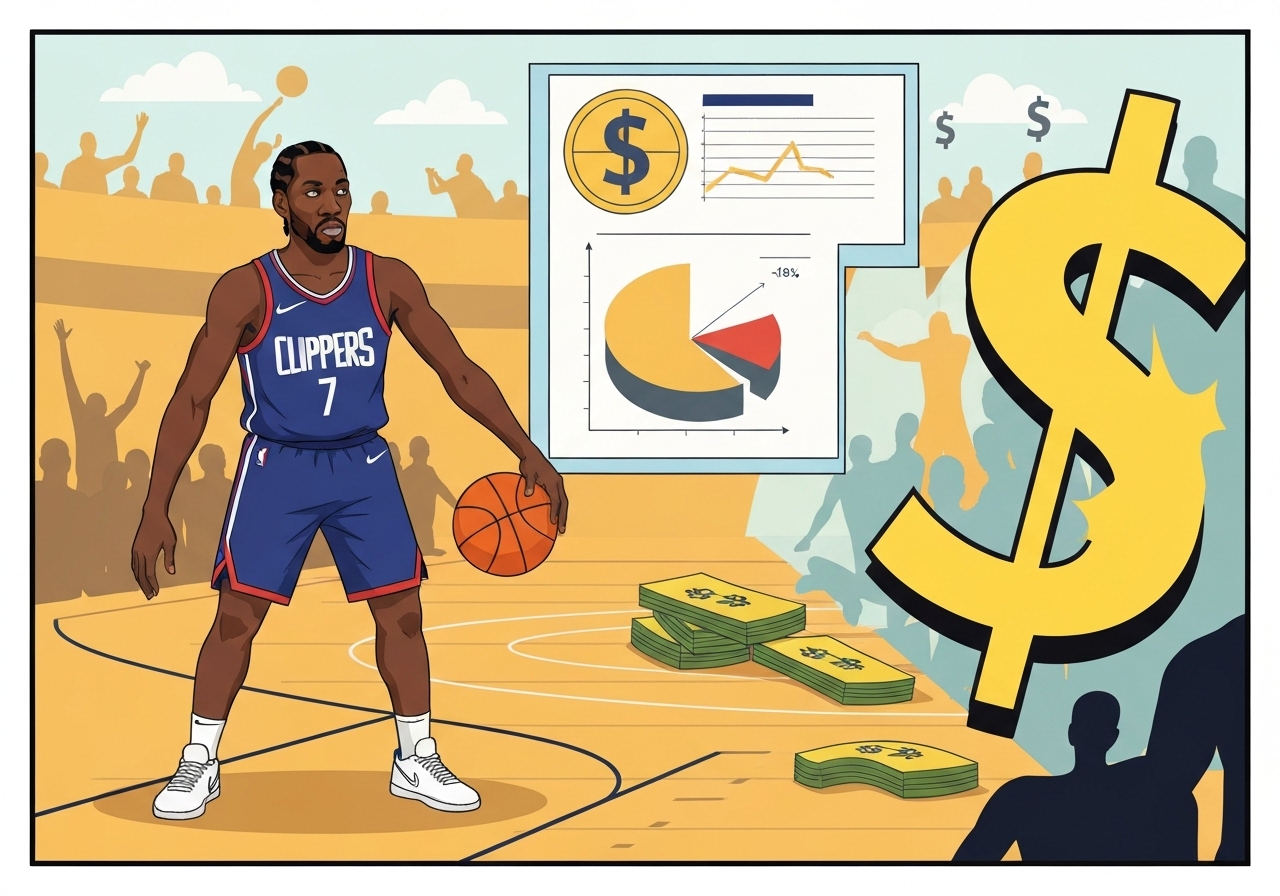
On Sept. 4, 2025, reporting tied to Boston Sports Journal and other outlets revealed that Kawhi Leonard may have received an additional $20 million in Aspiration stock on top of a $28 million endorsement agreement, while Clippers owner Steve Ballmer invested $50 million in the company — facts that have prompted fresh questions about whether the arrangements could skirt NBA salary-cap rules.
Key Takeaways
- Reporters say Leonard obtained a $20M stock side deal from Aspiration in addition to a $28M endorsement agreement.
- Aspiration co‑founder Andrei Cherny reportedly signed the endorsement despite management objections.
- Steve Ballmer invested $50M in Aspiration at $11 per share, a price noted as higher than a prior investor’s.
- Leonard apparently performed no promotional work for the company, raising scrutiny.
- Rival executives and league observers call the combination of facts a potential red flag for cap circumvention.
- The NBA’s CBA permits circumstantial evidence to be used when deal terms lack a rational explanation.
Verified Facts
According to reporting that cites a high‑level source, Aspiration agreed to a $28 million endorsement with Kawhi Leonard and separately granted him about $20 million in company stock as a side arrangement. The disclosure appears in coverage following earlier reporting about the Clippers and possible salary‑cap concerns.
Boston Sports Journal reporting names Aspiration co‑founder Andrei Cherny as the signatory of the endorsement and notes that Aspiration’s executive team was reportedly not involved in negotiating the $28M deal and would have advised against it. Company marketing staff were said to see little brand alignment with Leonard and therefore did not use him in campaigns.
Sources quoted in reporting say Steve Ballmer invested $50 million in Aspiration at $11 per share. That per‑share price was described as one dollar higher than what another investor, Oak Tree Capital Management, paid in earlier rounds, and the Ballmer investment was reportedly completed with limited diligence.
Multiple outlets also report that Leonard did not perform promotional activities for Aspiration after the agreements were made. Team spokespeople have emphasized that team sponsors can sign endorsement deals with players, but some rival executives told reporters the totality of these transactions warrants scrutiny.
Context & Impact
Under the NBA’s Collective Bargaining Agreement, arrangements that effectively move compensation to a player while evading team salary rules can constitute cap circumvention. The CBA allows the league to rely on circumstantial evidence when contract terms cannot be reasonably explained another way.
If the league determines the deals were structured to avoid cap constraints, potential consequences include fines, voided contracts, and other remedies against the team, player, or third parties. League discipline would also carry reputational harm for the Clippers and for Aspiration, and could prompt renewed scrutiny of owner‑sponsored investments tied to players.
Observers note the matter is complicated by plausible deniability: endorsements and third‑party investments happen frequently in sports, and proving an illicit quid pro quo requires clear factual links or patterns that show intent to manipulate cap accounting.
Official Statements
“There is nothing unusual or untoward about team sponsors doing endorsement deals with players at the same time,”
Los Angeles Clippers (team statement)
Unconfirmed
- Whether the reported $20M stock grant was executed exactly as described and how it was documented.
- Any direct communications or coordination between the Clippers, Ballmer, and Aspiration that would prove a quid pro quo.
- Whether the NBA has opened a formal investigation into these specific transactions (no league action publicly confirmed at time of reporting).
Bottom Line
The combination of a large owner investment in Aspiration, an unusually large player endorsement, and reportedly minimal promotional activity has raised legitimate compliance questions. Absent documentary proof of intent, the case may hinge on circumstantial inconsistencies and how the NBA interprets them under the CBA. Expect further reporting and possible league inquiries as sources and documents are reviewed.
Sources
- HoopsRumors – coverage summarizing developments (Sept. 4, 2025)
- Boston Sports Journal – reporting from John Karalis
- The Athletic – reporting by Sam Amick on league reactions
- Sports Illustrated – reporting by Chris Mannix
- NBC Sports – context on CBA and circumstantial evidence
- The Toronto Star – past reporting on related 2019 matters