
Lead
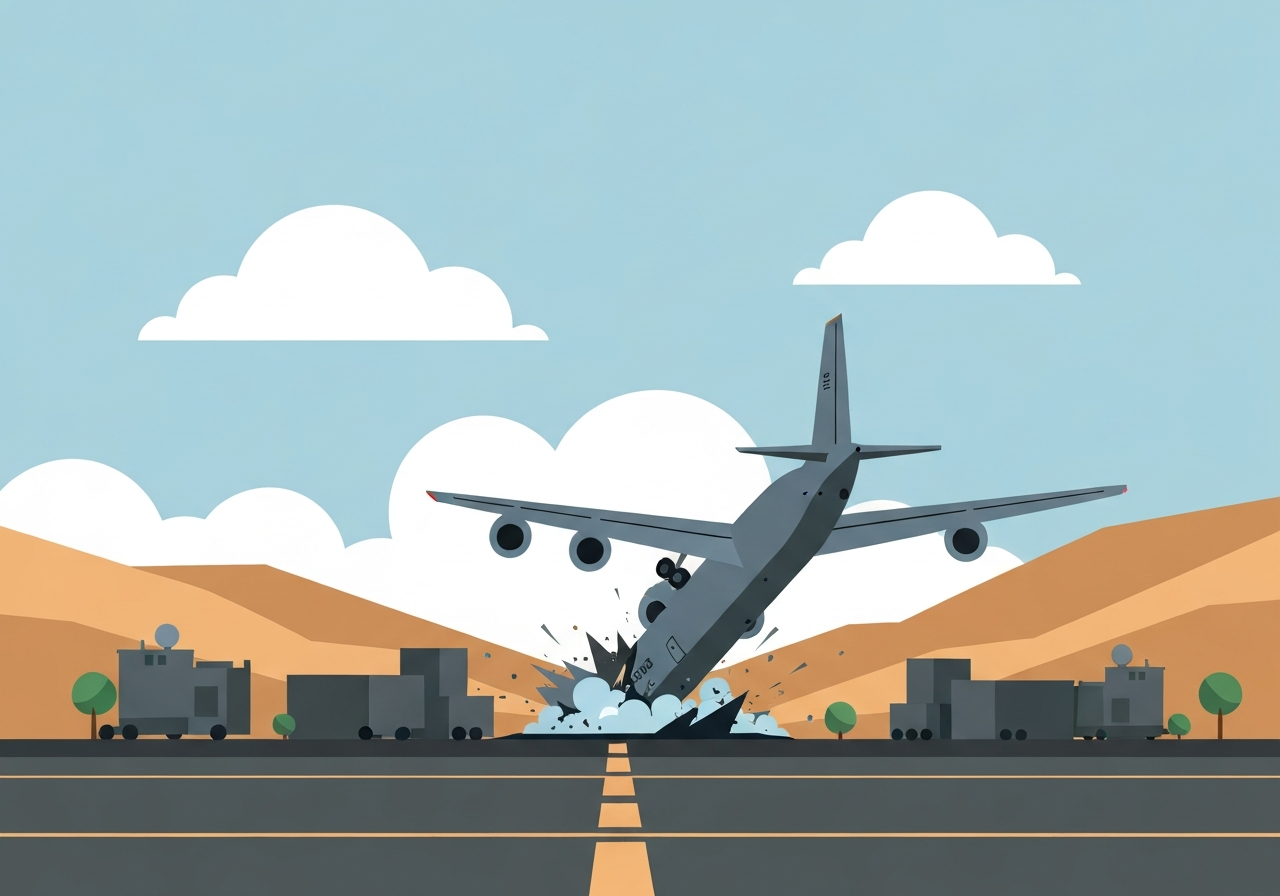
On March 12, 2026, US Central Command confirmed that a US KC-135 refuelling aircraft was lost over western Iraq during Operation Epic Fury and that search-and-rescue operations were underway. The command said the incident happened in friendly airspace and that a second US aircraft involved landed safely. Officials stated the crash was “not due to hostile fire or friendly fire,” and no immediate casualty figures were released. The announcement comes amid a wider US-Israel campaign against Iran that has already produced multiple aircraft losses and dozens of deaths.
Key Takeaways
- US Central Command acknowledged the loss of a KC-135 tanker on March 12, 2026, over western Iraq; rescue efforts remain active.
- The incident occurred during Operation Epic Fury in what CENTCOM described as friendly airspace; a second US plane landed safely.
- CENTCOM explicitly said the crash was not caused by hostile fire or friendly fire.
- Prior to this crash, US forces reported seven service members killed in the campaign and about 140 wounded; eight of those wounded were described as severely injured.
- On March 1, 2026, three F-15E Strike Eagles were downed in an apparent friendly-fire episode involving Kuwaiti air defences; all six crew ejected and were recovered in stable condition.
- Since the start of hostilities on February 28, 2026, reported fatalities include roughly 1,348 Iranians, 15 Israelis and 17 people in neighboring Gulf states.
- Public opinion in the United States is largely negative toward the offensive: a March 9 Quinnipiac poll found 53% opposed, while an Ipsos survey showed 43% disapproval versus 29% approval.
Background
US military operations against Iran began on February 28, 2026, following a period of escalating strikes and counterstrikes across the Middle East. Washington has framed the campaign, called Operation Epic Fury, as necessary to deter and degrade Iranian capabilities; critics argue the campaign risks wider regional escalation. The United States is operating in a complex environment of allied forces, regional air-defence networks and contested airspace that increases the risk of accidents and misidentification.
Earlier incidents have underscored those hazards. On March 1, three F-15E jets were downed after Kuwaiti air-defence systems fired on coalition aircraft during active combat; all six crew members ejected and were recovered. Those events prompted heightened scrutiny of coalition deconfliction procedures and the rules of engagement among partner air-defence operators in the Gulf region.
Main Event
On Thursday, March 12, US Central Command issued a concise statement confirming the loss of a KC-135 aerial refueller over western Iraq. The statement said the aircraft went down in “friendly airspace” during Operation Epic Fury and that search-and-rescue teams were deployed to the area. CENTCOM added that a second US aircraft associated with the incident touched down safely, implying close manoeuvring or an in-flight interaction between two coalition planes.
The command’s statement also sought to pre-empt speculation by noting the incident was not the result of hostile fire or “friendly fire.” That language mirrors earlier US communications intended to distinguish accident or mechanical failure from enemy action. No further operational details—such as the tanker’s mission profile, exact crash coordinates or the number of personnel aboard—were released immediately.
US officials have so far refrained from confirming fatalities or survivors connected to the tanker. Rescue and recovery efforts typically involve coalition search-and-rescue assets, airlift and medical teams; CENTCOM said those efforts were ongoing and that updates would follow as more information becomes available.
Analysis & Implications
The loss of a KC-135 has both immediate tactical and broader operational implications. Tankers are force-multipliers, enabling long-range strike and surveillance missions by extending aircraft time on station; losing a refueller can constrain sortie generation rates and complicate mission planning across the theatre. If the tanker was supporting offensive strikes, its absence could reduce the tempo of operations until air-refuelling capacity is adjusted or replacement assets arrive.
Beyond operational impacts, the incident raises questions about safety, coordination and airspace management among coalition and host-nation defence systems. The March 1 friendly-fire shootdown of three F-15Es by Kuwaiti air defences highlighted existing frictions; this tanker loss will likely intensify demands for clearer deconfliction measures, a review of identification protocols and additional liaison arrangements with partner militaries.
Politically, the crash arrives as US public support for the campaign is weak. Polling from early March indicated majority opposition to the offensive and especially to any ground invasion. This dynamic constrains the administration’s political room for escalation, pressures military leaders to limit additional casualties, and may accelerate diplomatic efforts to reduce hostilities if further high-profile incidents occur.
Comparison & Data
| Category | Count / Date |
|---|---|
| US service members reported killed | 7 (as reported before March 12) |
| US wounded | ~140 total; 8 severely |
| Iranian fatalities | ~1,348 since Feb 28 |
| Israeli fatalities | 15 since Feb 28 |
| Deaths in Gulf states | 17 since Feb 28 |
| Downed F-15E jets (Mar 1) | 3 (crew ejected, recovered) |
| KC-135 tanker lost | 1 (Mar 12, 2026) |
The table places the tanker loss within a series of recent incidents that have already produced significant casualties and aircraft losses. Operational planners will use such aggregates to reassess risk, reallocate assets and consider changes to flight routes, refuelling schedules and partner coordination mechanisms to reduce future accidents.
Reactions & Quotes
US Central Command issued the formal notification and provided the principal operational details. Officials emphasized ongoing rescue work while denying enemy involvement.
“The incident occurred in friendly airspace during Operation Epic Fury, and rescue efforts are ongoing.”
US Central Command (official statement)
Domestic political figures and media personalities have been sharply divided about the broader campaign. Some critics have questioned the wisdom of the operation and the administration’s public case for it.
“MAGA is America first, and Tucker is none of those things.”
President Donald Trump (as quoted in an ABC News interview)
Commentators outside the administration have called for clearer explanations of how allied air-defence systems are being coordinated to prevent further mishaps.
“This kind of environment raises the risk of accidental engagements unless deconfliction is tightened.”
Independent defence analyst (commentary)
Unconfirmed
- No official confirmation has been released yet about casualties or survivors aboard the KC-135; numbers remain unverified.
- Details on the precise cause—mechanical failure, pilot error or in-flight mishap—have not been publicly confirmed.
- Any assertion that the tanker collided with the second aircraft or that the second aircraft’s actions directly precipitated the loss is not confirmed.
Bottom Line
The confirmed loss of a KC-135 over western Iraq highlights both the operational hazards of a high-tempo, multinational air campaign and the broader political costs of a prolonged confrontation with Iran. While CENTCOM has ruled out hostile or friendly fire in its initial statement, the absence of detailed information means investigators and military planners must examine mechanical, procedural and coordination failures as possible causes.
For policymakers and the public, this incident may intensify pressure for greater transparency, stricter deconfliction with partner air-defence systems and renewed diplomatic efforts to reduce the scope of operations. In the near term, commanders will likely redistribute air-refuelling assets and refine flight and identification protocols to limit further operational disruption.
Sources
- Al Jazeera — news media report
- US Central Command (CENTCOM) — official military statements and press releases
- Quinnipiac University Poll — academic polling data
- Ipsos — public-opinion research