
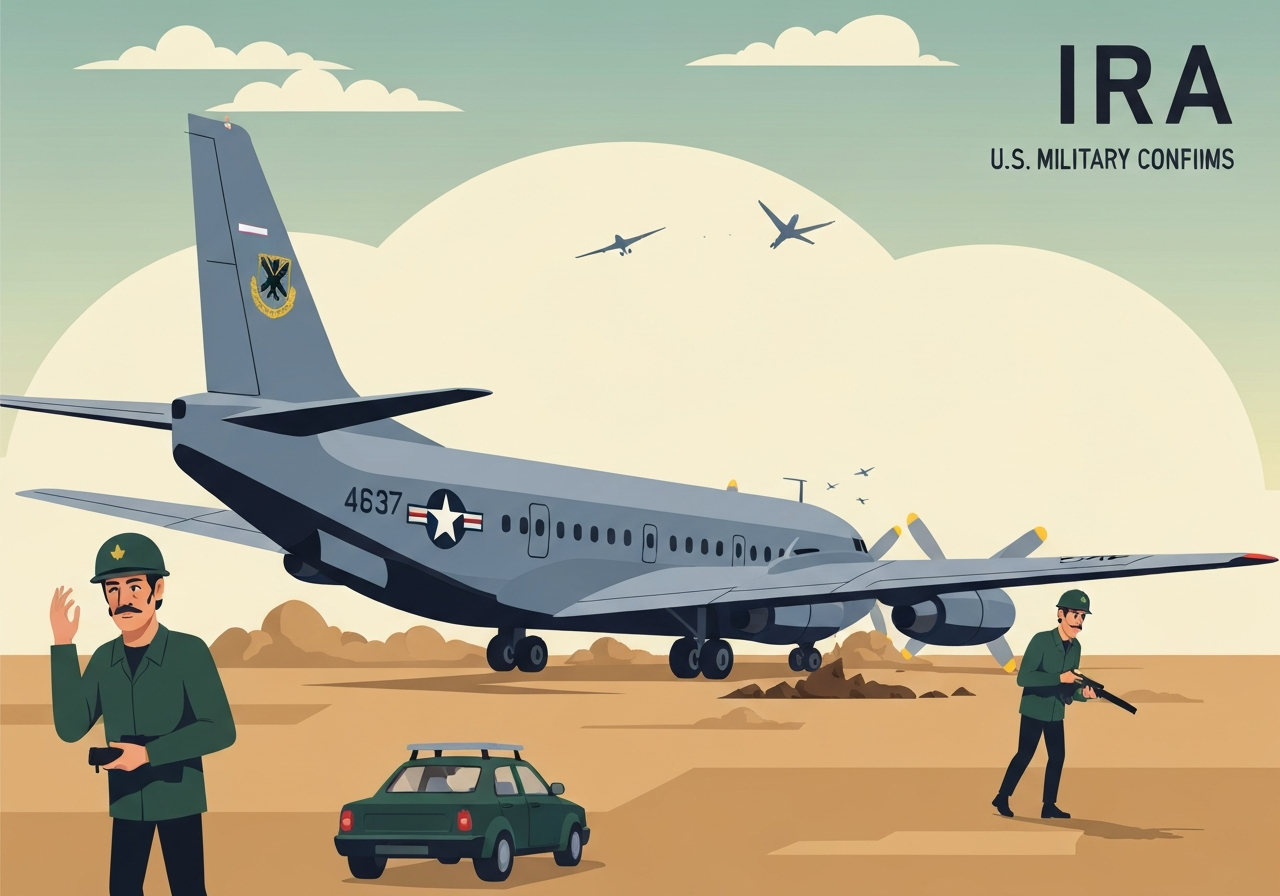
Lead: The U.S. military confirmed that six American service members died when a KC-135 aerial refueling tanker crashed in western Iraq on March 13, 2026. CENTCOM said the loss was not caused by hostile or friendly fire and that the circumstances remain under investigation. The crew included personnel from MacDill Air Force Base and the Rickenbacker Air National Guard Base. A second KC-135 involved in the same incident was reported damaged but landed safely.
Key takeaways
- Six U.S. service members were killed in the KC-135 crash; the Pentagon identified them by name and hometown on March 14, 2026.
- The victims were Maj. John A. Klinner (33), Capt. Ariana G. Savino (31), Tech. Sgt. Ashley B. Pruitt (34), Capt. Seth R. Koval (38), Capt. Curtis J. Angst (30) and Tech. Sgt. Tyler H. Simmons (28).
- Klinner, Savino and Pruitt were assigned to the 6th Air Refueling Wing at MacDill AFB; Koval, Angst and Simmons were assigned to the 121st ARW at Rickenbacker ANGB in Columbus, Ohio.
- CENTCOM said the aircraft loss was not due to hostile or friendly fire; officials are investigating the cause and have not confirmed a final determination.
- U.S. officials told reporters they suspect a possible midair collision, though that theory is not confirmed; a second tanker in the incident was damaged but landed safely.
- The crash occurred near Turaibil along the Iraqi–Jordanian border, according to an Iraqi intelligence source speaking to reporters.
- The incident is the fourth U.S. aircraft loss publicly linked to Operation Epic Fury; U.S. military deaths since the campaign began on Feb. 28 have reached 13.
Background
Operation Epic Fury — the U.S. campaign tied to the broader U.S.-Israel confrontation with Iran that began Feb. 28, 2026 — has included sustained air operations and increased logistical activity across the region. Aerial refueling tankers such as the KC-135 are essential for extending fighter and bomber range and enabling persistent patrols; they often operate on complex, coordinated sortie schedules over multinational airspace. When high-tempo operations are combined with contested air environments and dense flight tracks, the risk of accidents or midair incidents rises, especially during night or contested-weather missions.
U.S. forces maintain procedures for rapid response after an aircraft goes down: Tactical Recovery of Aircraft and Personnel (TRAP) missions aim to secure crash sites, recover crew and protect or destroy sensitive equipment. TRAP operations can be hazardous themselves because they require moving personnel and aircraft into areas that may be unsecured or close to adversary positions. Previously announced losses tied to the campaign include multiple aircraft incidents, underscoring the operational strain on aircrews and maintenance cycles.
Main event
CENTCOM confirmed on March 14 that all six crew members aboard a KC-135 Stratotanker died when the aircraft crashed the day before while participating in operations over western Iraq. The command said the incident is under investigation and reiterated that initial findings do not indicate hostile or friendly fire as the cause. Officials told reporters that both tankers were involved in the same event and that one other KC-135 was damaged but managed to land.
The Pentagon released the identities and unit assignments of the six service members on March 14. Three were assigned to the 6th Air Refueling Wing at MacDill Air Force Base in Florida; the other three were assigned to the 121st Air Refueling Wing at Rickenbacker Air National Guard Base in Columbus, Ohio. The crash site was reported near Turaibil, on the Iraqi–Jordanian border, according to an Iraqi intelligence source who spoke with U.S. media.
U.S. officials briefed reporters that flight-tracking data showed a KC-135 declaring an emergency before landing in Tel Aviv on the evening prior to the confirmation, and that both tankers were part of the same operational package. A Defense Department official said recovery and investigative teams were being readied to examine wreckage and maintenance logs, interview air traffic control and crew survivors or witnesses, and review mission flight data recorders where available.
Analysis & implications
The immediate operational impact is a reduction in refueling availability for regional sorties while the Air Force rebalances tanker allocations and investigates the loss. KC-135 tankers form the backbone of midair refueling for many U.S. and allied aircraft; losing one aircraft and having another temporarily grounded or restricted reduces sortie endurance and may force mission planning changes or additional tanker deployments.
Beyond logistics, the crash amplifies concerns about force protection and aviation safety in a high-tempo campaign. Investigators will examine maintenance records, air traffic deconfliction, crew schedules, communications, and weather conditions to determine whether systemic issues or an isolated accident caused the loss. If a midair collision is confirmed, it would prompt operational reviews and potential procedural changes to minimize intercept and rendezvous risks during high-density flight operations.
Politically and diplomatically, U.S. leaders face pressure to explain the rising toll of service member casualties tied to the campaign that began Feb. 28; as of this incident, U.S. military deaths linked to the campaign total 13. The U.S. will likely coordinate with regional partners on airspace management and search-and-rescue protocols as part of transparency efforts and to reduce further non-combat losses.
Comparison & data
| Incident | Public outcome |
|---|---|
| KC-135 crash (this incident) | 6 killed; investigation ongoing |
| Second KC-135 in same incident | Damaged; landed safely |
| Three F-15E Strike Eagles (earlier) | Shot down in friendly-fire event; six crew ejected safely |
| Total U.S. military deaths since Feb. 28 | 13 confirmed |
The table summarizes publicly acknowledged aircraft incidents tied to Operation Epic Fury. Investigators will use aircraft wreckage, telemetry and eyewitness accounts to reconcile discrepancies in timing, location and causal chains between these events. The data reflect only incidents the U.S. has publicly linked to the campaign and confirmed by official statements.
Reactions & quotes
Defense and military leaders expressed sorrow and emphasized both the sacrifice of those killed and the need for a thorough probe.
“War is hell, war is chaos, and as we saw yesterday with the tragic crash of our KC-135 tanker, bad things can happen.”
Pete Hegseth, U.S. Secretary of Defense (remarks at the Pentagon)
Hegseth offered remarks at a Pentagon news conference, framing the loss in the broader toll of the campaign and urging public support for the families affected. Military leadership also asked the public to keep the victims and their units in thoughts as recovery and investigations proceed.
“Please keep these brave airmen, their families, friends and units in your thoughts in the coming hours and days.”
Gen. Dan Caine, Chairman of the Joint Chiefs of Staff
Gen. Caine noted the crew was on a combat mission and stressed that they were flying over friendly territory when the crash occurred. He described the dedication of service members deployed for the operation and reiterated that an investigation would follow.
“The loss of the aircraft was not due to hostile fire or friendly fire.”
U.S. Central Command (CENTCOM statement)
CENTCOM posted the initial operational detail on social media, stressing that while hostile action was not suspected, the command would pursue a formal inquiry to determine root causes.
Unconfirmed
- Whether a midair collision caused the crash remains unconfirmed; officials have described that as a possible scenario but have not released conclusive evidence.
- Specific mechanical failures, crew actions or air traffic control factors that may have contributed to the loss have not been publicly verified.
- Details about the damaged second KC-135, including the extent of damage and the cause of its emergency landing, have not been fully disclosed.
Bottom line
The March 13 KC-135 crash that killed six U.S. airmen is a significant operational and human loss for forces conducting Operation Epic Fury. CENTCOM’s early statement ruled out hostile fire, but investigators will need time to review technical data and mission records before reaching a definitive cause. The incident reduces tanker availability in the near term and underscores the risks of sustained, high-tempo operations in a complex regional theater.
For families, units and policymakers, the immediate focus is recovery, accountability and measures to prevent similar tragedies. Expect a methodical Department of Defense investigation, potential procedural adjustments for tanker operations, and follow-up briefings as forensic findings become available.
Sources
- CBS News (news report summarizing Pentagon and CENTCOM statements)
- FlightRadar24 (flight-tracking service referenced for emergency-declaration data)
- U.S. Central Command (CENTCOM) (official command statements and social media posts)
- U.S. Department of Defense (official) (Pentagon releases and identification of service members)