
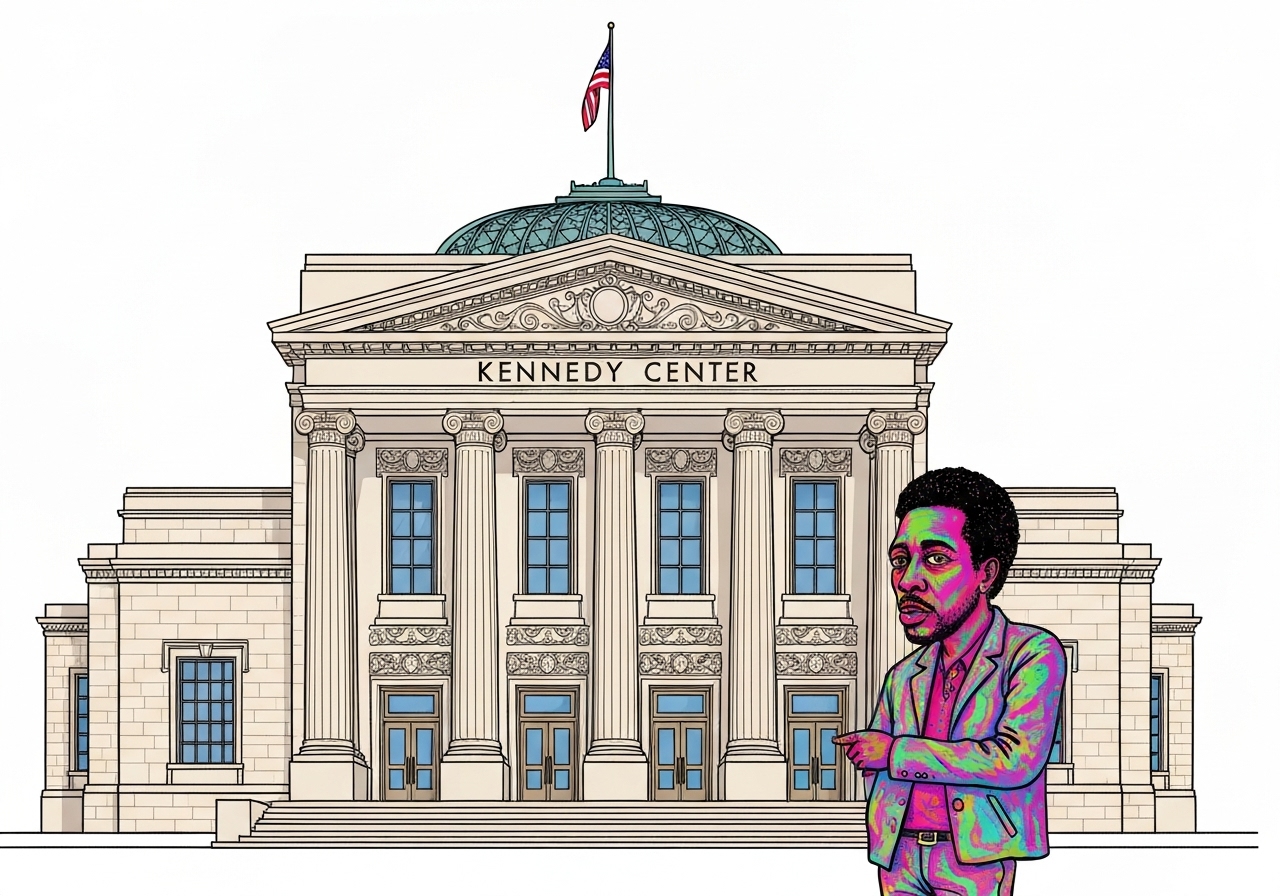
Lead: The Kennedy Center’s president, Richard Grenell, sharply rebuked musician Chuck Redd after Redd canceled a Christmas Eve jazz performance when the White House announced President Donald Trump’s name would be added to the building. Grenell said he will seek $1 million in damages, calling the last‑minute withdrawal a costly political stunt that harmed the nonprofit venue. Redd, who has led the venue’s holiday “Jazz Jams” since 2006, said he pulled out after seeing the name change on the Kennedy Center website and then on the building. The dispute has reignited legal and cultural debate over the 1964 law that designates the center as a living memorial to John F. Kennedy.
Key Takeaways
- Richard Grenell, president of the Kennedy Center, wrote to Chuck Redd and announced plans to seek $1 million in damages over the Dec. 24 cancellation.
- Chuck Redd, a drummer and vibraphone player who has run the holiday “Jazz Jams” at the Center since 2006, canceled after noticing the facility’s exterior and website displayed President Trump’s name.
- The White House said a board chosen by President Trump approved the renaming; scholars have argued that action may conflict with a 1964 law protecting the Center as a living memorial to John F. Kennedy.
- President John F. Kennedy was assassinated in 1963; Congress passed the 1964 law naming the Center a living memorial the following year.
- Kerry Kennedy, a niece of John F. Kennedy, has vowed to remove Trump’s name after Trump leaves office, while former House historian Ray Smock has said any exterior name change would require congressional approval.
Background
The John F. Kennedy Center for the Performing Arts was designated by Congress in 1964 as a living memorial to the late president, following his assassination in 1963. The statute that created the Center contains language intended to preserve its identity as a memorial to Kennedy, and historically trustees have been constrained from repurposing the facility as a monument to another individual. The Center is governed by a board of trustees; the White House statement accompanying the recent renaming said the change was approved by a board selected by President Trump.
Arts institutions are often sites of political controversy when decisions intersect with public memory and donor recognition. The Kennedy Center is both a national cultural institution and a nonprofit that depends on artists, audiences and philanthropic support. Stakeholders in this dispute include the Kennedy family, the Center’s trustees and leadership, artists who perform at the venue, and lawmakers who oversee the statutory protections for the memorial.
Main Event
The dispute unfolded after the White House announced that President Trump’s name would be added to the Kennedy Center’s exterior and the Center’s website reflected that change. In response, Chuck Redd canceled his scheduled Christmas Eve “Jazz Jams,” a recurring holiday program he has led since 2006. Redd told The Associated Press he withdrew after seeing the name change on the Center’s website and then on the building itself.
Richard Grenell, the Kennedy Center’s president, sent a strongly worded letter to Redd that was shared with the AP. Grenell described the withdrawal as “classic intolerance” and said the canceled program imposed financial and reputational costs on the nonprofit venue. In the same letter, Grenell said he intended to seek $1 million in damages, framing the move as a politically motivated stunt that harmed the institution.
Redd did not immediately accept or contest Grenell’s characterization in public comment beyond his explanation for withdrawing. The situation drew attention because Redd’s Jazz Jams are a long‑standing holiday tradition at the Center and because the renaming touches on questions about statutory protections and who has authority to alter the memorial’s designation.
Analysis & Implications
Legally, the core question is whether the trustees’ action to place another person’s name on the Center’s exterior runs afoul of the 1964 statute that created the Kennedy Center as a living memorial to John F. Kennedy. Legal scholars quoted in the initial reporting contend that the trustees lack authority to rename the exterior without congressional approval, which would make the White House’s announcement subject to challenge in law or through congressional oversight.
Politically and culturally, the renaming and the artist’s cancellation underscore how arts institutions can become focal points for broader public controversies. For the Kennedy Center, the immediate risks include reputational harm among artists and audiences, potential donor unease, and logistical disruption of scheduled programs. For artists, the episode highlights the choice many face between creative commitments and public positions in a polarized environment.
If the Center pursues the damages Grenell announced, the case would test contractual and nonprofit law principles about last‑minute cancellations tied to political protest. Even if a court rejects a damages claim, the threat itself could chill performers’ willingness to appear at institutions that take politically contested actions, or conversely, could deter artists from using cancellations as a form of protest.
Comparison & Data
| Item | 1964 Statute | Action Reported |
|---|---|---|
| Primary purpose | Designate a living memorial to JFK | Board approved addition of President Trump’s name (per White House) |
| Authority for exterior naming | Congressional statute restricts making it a memorial to another individual | White House/board action reportedly placed another name on exterior |
| Artist tradition | — | Chuck Redd has led Jazz Jams since 2006 |
| Claimed damages | — | $1,000,000 sought by Kennedy Center president |
The simple comparison shows a tension between statutory purpose and the reported trustee action. The table is not a legal ruling; rather, it highlights the factual contrast prompting legal and political scrutiny. If Congress or courts determine the trustees exceeded their authority, the renaming could be reversed or require formal legislative action.
Reactions & Quotes
Officials and participants framed the dispute sharply but briefly.
Your decision to withdraw at the last moment — explicitly in response to the Center’s recent renaming, which honors President Trump’s extraordinary efforts to save this national treasure — is classic intolerance and very costly to a non‑profit Arts institution.
Richard Grenell, letter to Chuck Redd (Kennedy Center president)
Grenell’s letter accompanied the announcement of a $1 million damages claim and characterized the cancellation as politically motivated and harmful to the institution.
When I saw the name change on the Kennedy Center website and then hours later on the building, I chose to cancel our concert.
Chuck Redd, musician (email to The Associated Press)
Redd framed his withdrawal as a direct response to the visible renaming; he did not immediately respond to the Kennedy Center’s damage claim beyond that statement.
I will remove President Trump’s name from the building when he leaves office.
Kerry Kennedy (Kennedy family member, public statement)
Kerry Kennedy’s vow signals that the Kennedy family views the change as temporary or contestable, and that the dispute may continue after the current administration.
Unconfirmed
- Whether a court would find the trustees’ reported decision to add another person’s name violates the 1964 statute remains legally unsettled and untested in litigation.
- The precise legal authority cited by the trustees or the White House for the exterior name change has not been publicly documented in a full legal opinion at the time of reporting.
- It is not yet confirmed whether the Kennedy Center will formally file a $1 million damages claim in court or pursue alternative dispute resolution.
Bottom Line
The incident crystallizes a clash between institutional governance, statutory protections for national memorials and the increasingly public role artists play in political disputes. A high‑profile cancellation of a long‑running holiday program has immediate operational and reputational consequences for the Kennedy Center, while raising legal questions about authority to alter a memorial established by Congress in 1964.
For policymakers and cultural leaders, the episode underscores the need for clear procedures when political decisions intersect with national memorials. Whether the controversy leads to litigation, congressional review, or internal policy changes will determine the longer‑term impact on the Center’s governance and on how artists and cultural institutions navigate politically sensitive decisions.