
Lead
At least seven people died when a UPS cargo plane crashed shortly after take-off from Louisville International Airport on April 25, 2025, producing a massive fireball and widespread devastation. Multiple clips circulating on social media and CCTV from nearby businesses show the aircraft tilting, a wing scraping the ground and a rapid conflagration. BBC Verify examined several of the videos, traced their origins and sought expert assessment to reconstruct the likely sequence of events. Early analysis by aviation specialists points to catastrophic engine damage during the take-off roll as a key factor in the loss of control.
Key takeaways
- At least seven fatalities were reported after the UPS cargo aircraft crashed shortly after take-off from Louisville International Airport on 25 April 2025.
- BBC Verify authenticated multiple videos: CCTV from a truck-parts shop south of the runway, footage near ramp nine, a car-mounted clip showing the plane moments before impact, and aerial shots of the wreckage.
- Experts consulted by BBC Verify, including retired pilot Terry Tozer and aviation analyst Marco Chan, observed signs consistent with a left-engine failure and a subsequent second-engine loss within seconds.
- Witness and CCTV imagery show the aircraft heavily banked with the left wing contacting the ground before a large fireball erupted.
- The brevity of several shared clips (one 4s and one 10s segment edited together) helped forensic teams determine how the material was assembled and rule out some manipulated content.
- Investigators and Verify teams continue to circulate footage to specialists to refine the timeline; initial technical conclusions remain provisional until flight-recorders and official probes conclude.
Background
Cargo operations at Louisville are a major part of the city’s aviation activity, with regular heavy freighter movements serving logistics hubs across the US. Aircraft taking off with full loads operate close to performance limits, and any sudden loss of thrust or structural failure in climb can rapidly degrade controllability. Historically, multi‑engine transport jets have survived single-engine failures at take-off, but simultaneous or near-simultaneous failures of more than one powerplant have led to several fatal accidents worldwide.
Safety oversight of cargo operators involves airline procedures, manufacturer maintenance records and regulator audits; when an accident occurs, investigators examine mechanical history, crew actions, airport surveillance and recorded flight data. Social media now adds a layer of immediate visual evidence: CCTV and mobile clips can accelerate verification but also complicate initial reporting because material is sometimes edited, reposted or misattributed. BBC Verify’s work focused on authenticating the provenance of clips and asking independent specialists to interpret what they show.
Main event
Verified CCTV from a truck-parts shop located south of the runway captures the aircraft in a steep left tilt during the take-off attempt, with the left wing striking the ground and a large fireball trailing behind. A second clip filmed near ramp nine corroborates the sequence: loss of altitude, contact with terrain and an ensuing inferno. A third, shot from a car, shows passengers reacting audibly as the aircraft appears directly ahead and produces an immediate wall of smoke and flame.
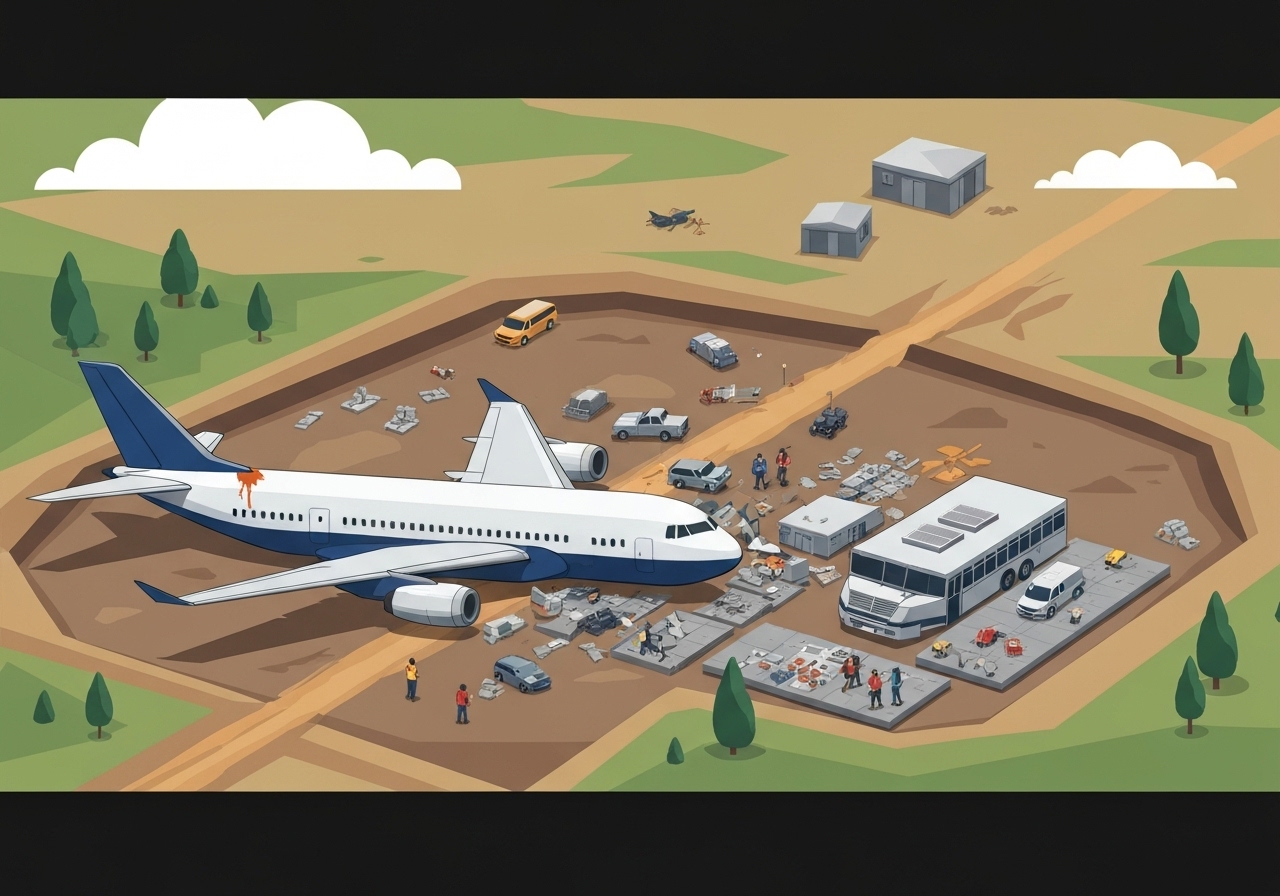
Aerial footage obtained after the crash shows a broad scene of destruction in an industrial zone south of the airport, with active fires and emergency response units at the perimeter. BBC Verify reviewed the timestamps, geolocation cues and camera perspectives to confirm the clips show the same incident and location. The short duration and edits of some viral posts indicated they were assembled from multiple sources rather than a single continuous shot.
In parallel, Verify contacted aviation experts to interpret the imagery. Their reading of the footage—based on observable engine flames, smoke plumes and structural behaviour—suggests a rapid, escalating mechanical failure that overwhelmed the crew’s ability to maintain climb and control. Authorities have not yet released final technical findings; investigators will rely on recorded flight data, maintenance logs and component examinations to reach conclusive determinations.
Analysis & implications
If the initial expert readings are borne out by the formal investigation, the accident will underscore the catastrophic risk posed when more than one engine is compromised during a critical phase of flight. Single-engine failures after take-off are typically survivable for multi‑engine jets if handled correctly and if thrust on the remaining engines is sufficient. However, experts told BBC Verify that losing thrust from two engines within seconds makes sustained climb and control effectively impossible for many cargo types at heavy weights.
For the cargo industry, such an outcome would trigger scrutiny of maintenance practices, inspection intervals and component life limits—particularly for older fleets or high-utilisation airframes. Regulators could respond with urgent airworthiness directives, expanded inspections or operational restrictions until root causes are clarified. Insurers and shippers would also reassess risk profiles for certain routes and aircraft types, potentially affecting logistics costs.
At a local level, the crash raises questions about airport emergency preparedness and zoning around runway departure paths. Industrial facilities and roadways near runways can be at acute risk; investigators and city planners may revisit setback rules and evacuation planning to reduce harm in future incidents. For the public, the proliferation of raw video means investigators must work faster to distinguish authentic evidence from edited or miscontextualised clips.
Comparison & data
| Footage source | What it shows |
|---|---|
| Truck-parts shop CCTV (south of runway) | Plane heavily tilted left; left wing scraping ground; large fireball after impact |
| Ramp nine camera | Failed take-off sequence, aircraft descending and immediate fire |
| Car-mounted mobile clip | Plane visible ahead; audible screams; wall of smoke and flame on impact |
| Aerial drone/phone footage | Post-crash scene: raging fires and industrial-area damage |
These verified clips allowed cross-referencing of time, direction and landmarks to confirm they depict the same event. The consistency across independent camera angles strengthens confidence in the visible sequence: an abnormal engine/wing event during the take-off roll followed by loss of control and a severe post-impact fire. Formal investigation teams will add flight data and maintenance records to determine causation beyond visual indicators.
Reactions & quotes
“It looks like the left engine fell off during take-off,”
Terry Tozer, retired airline pilot and aviation safety commentator
Tozer emphasised that while many multi‑engine jets can maintain flight on a single engine, the scale of visible damage suggested subsequent loss of thrust or structural integrity that would have prevented a safe climb. He stressed that his assessment is based on imagery and must be validated by technical investigators.
“The left engine caught fire during take-off, then a burst of smoke from the upper centre engine,”
Marco Chan, aviation analyst
Chan told BBC Verify that a single-engine fire is usually manageable, but the apparent near-simultaneous loss of thrust from a second engine would rapidly degrade controllability. Both experts noted that only flight recorders and component inspections can confirm the mechanical sequence.
Unconfirmed
- Precise mechanical cause of the left-engine failure (e.g., turbine fracture, bird strike, maintenance error) has not been confirmed by investigators.
- Whether any pre-existing maintenance or manufacturer service bulletin directly contributed to the accident remains unverified pending official records review.
- Some social-media posts implied sabotage or intentional wrongdoing; those claims lack verified evidence and have not been substantiated by authorities.
Bottom line
Verified CCTV and mobile footage provide a consistent visual narrative of a catastrophic event during a take-off attempt at Louisville International Airport, with experts indicating severe engine and possible structural loss as likely immediate contributors. While imagery and expert reading strongly suggest a rapid escalation from an engine anomaly to an unrecoverable state, final determination depends on arrival of flight-recorders, component examinations and regulator findings.
In the coming days, expect investigators to publish preliminary reports on flight data and maintenance history and for regulators to consider targeted inspections if systemic issues are identified. For the public and industry stakeholders, the incident underscores the importance of transparent, evidence-based investigation and cautious handling of early social-media conjecture.
Sources
- BBC Verify — live coverage and verification (media: live reporting/verification)