
Lead
On Feb. 20, 2026, reporters visited the Academy @ Shawnee, a magnet middle and high school in Louisville, Kentucky, to assess Jefferson County’s new bell-to-bell cellphone ban. The district’s approach—students keep phones locked in Yondr pouches or otherwise stowed during the school day—aimed to boost engagement and reduce distractions. Early results show clearer classroom focus and a surge in library use, but students and staff report widespread work-arounds and uneven enforcement. The policy has produced measurable behavior changes while exposing practical and equity challenges for schools implementing statewide restrictions.
Key Takeaways
- Kentucky now requires all public school classes to be cellphone-free during the school day; more than 30 states have similar limits as of 2026.
- Jefferson County adopted a “bell-to-bell” rule: phones must remain stowed from entry until dismissal, enforced districtwide.
- The Academy @ Shawnee used Yondr locked pouches beginning when the policy took effect in August; pouches lock and unlock with magnets to prevent casual use.
- Teachers and administrators report higher student participation and quieter classrooms; a librarian said book checkouts have tripled compared with the previous school year.
- Students described multiple hacks—bringing spare phones, decoys, and cutting pouches—so compliance with the explicit pouch rule is inconsistent.
- Consequences include phone confiscation and parent notification; some students say disciplinary steps have not deterred all noncompliance.
- Informal norms (students choosing not to use phones in class) appear to be as important as formal enforcement for day-to-day results.
Background
States and districts nationwide have pushed to limit phone use during instructional time amid growing concern about distraction, mental health, and academic focus. By early 2026, legislators in more than 30 states had restricted student phone use during the school day, leaving districts to design local enforcement. Kentucky’s mandate requires all public school classes to be phone-free; implementation choices—whether pocket rules, locked storage, or collection at each class—vary across districts.
Jefferson County, which includes Louisville, chose a strict bell-to-bell approach, keeping phones out of sight from arrival to dismissal. The Academy @ Shawnee, a magnet school serving middle and high school grades, adopted Yondr pouches to satisfy that directive, aiming for a practical mechanism to remove phones from sight without permanent seizure. School leaders framed the change as a service to students: removing distractions so instruction can reach more learners.
Main Event
When the policy began in August, each student at Shawnee received a labeled Yondr pouch to secure personal phones for the day. Staff and visitors observed an immediate shift in some behaviors: classrooms appeared more engaged, conversations in the cafeteria increased, and the library saw more visitors. Principal Hollie Smith, in her second year as executive principal, credited the ban with improving student-teacher interaction and raising in-class participation.
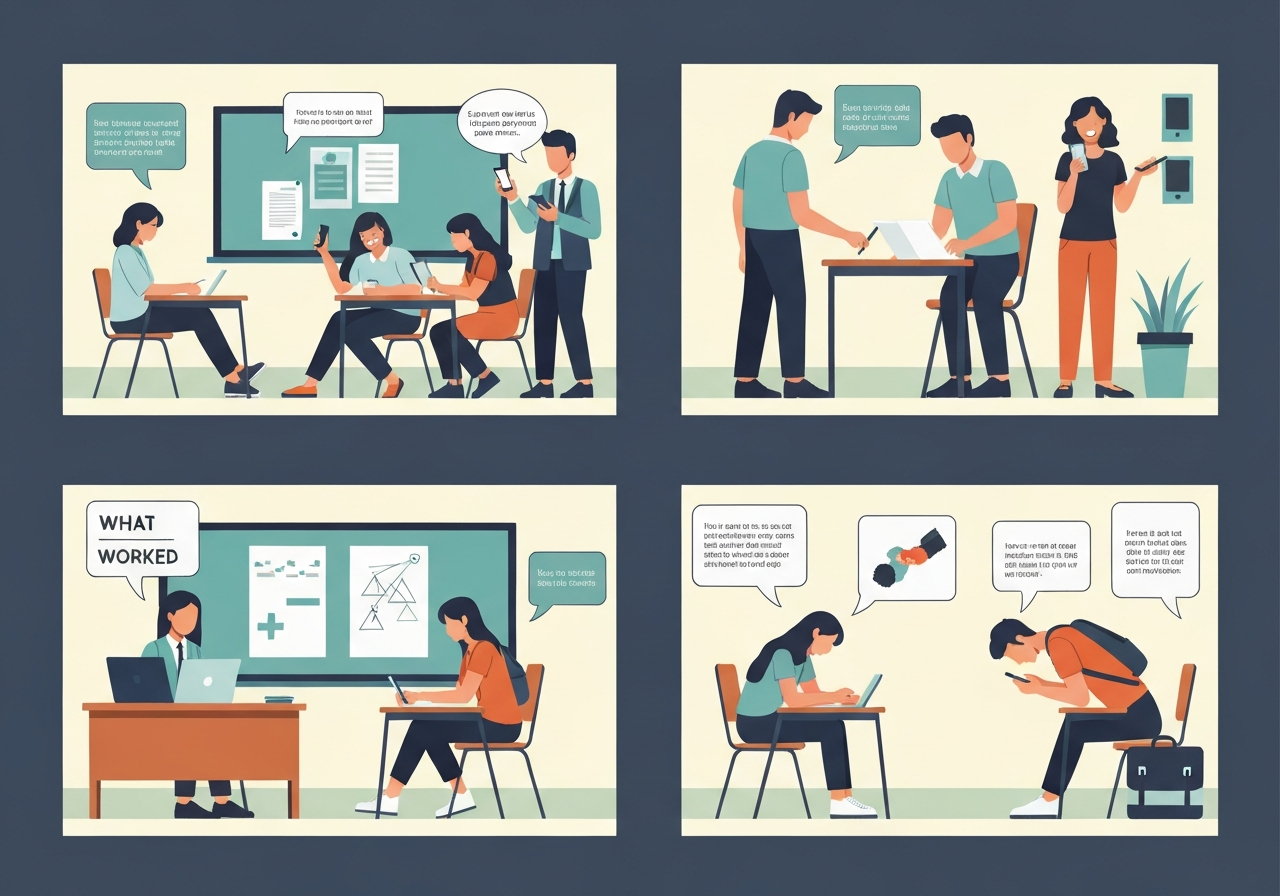
Despite visible benefits, students described rapid adaptation and a range of circumventions. Seniors Jayden O’Neil and Quani’e Lanier told reporters that peers brought older phones into school to place in pouches or deliberately damaged pouches to bypass locks. At least one student described carrying a phone in a pocket but refraining from using it while in class—an informal truce rather than strict rule-following.
Library staff reported a major uptick in circulation. Anton Caldwell, who has been Shawnee’s librarian for more than 20 years, said checkouts so far this school year have already tripled the total from the prior year, with popular teen authors checked out within hours. Still, classroom observation showed mixed results: while many students visibly refrained from using phones in instruction, a small number continued to wear headphones or briefly use a device between classes.
Analysis & Implications
The Shawnee experience highlights a core tension in phone bans: policy design versus lived enforcement. A formal pouch requirement creates a clear rule, but human factors—student ingenuity, uneven staff monitoring, and differing attitudes about autonomy—undermine perfect compliance. Where enforcement is lighter, cultural norms among students and teacher expectations appear to sustain the ban’s effects most of the time.
Educationally, the most immediate reported gain is improved attention and more sustained interpersonal interaction during school hours. Administrators point to livelier cafeteria conversation and increased library engagement as indicators that students are filling formerly screen-driven downtime with other activities. These short-term behavioral changes may precede measurable academic improvements, but long-term learning gains require follow-up study and data collection.
The pattern of work-arounds raises equity and discipline questions. Students with resources can bring extra devices; those without may face barriers to communicating with families if phones are collected or locked. Punitive responses—confiscation or parent calls—can escalate classroom conflict and disproportionately affect students already under disciplinary scrutiny. Policymakers must weigh these trade-offs and consider supports such as counselor access, clear communication channels, and consistent staff training to avoid uneven implementation.
Comparison & Data
| Measure | Before | After (reported) |
|---|---|---|
| Statewide restrictions | Growing movement across states | More than 30 states restrict phone use (2026) |
| Jefferson County rule | Local policies varied | Bell-to-bell phone-free requirement |
| Shawnee library checkouts | Baseline year (previous school year) | Checkouts tripled so far this school year (reported) |
The table summarizes the policy context and locally reported changes at Shawnee. The statewide figure—more than 30 states—reflects legislation and district actions documented through early 2026. School-level numbers, such as the librarian’s claim of tripled checkouts, come from direct reporting at the site and signal changing student activity patterns rather than conclusive academic outcomes.
Reactions & Quotes
Administrators emphasize classroom engagement while acknowledging student resistance and enforcement limits. Principal Smith framed the change as a service to students, arguing that reduced distraction supports learning.
“At the end of the day we have to do our kids a service. They have to be engaged to get the service we’re providing.”
Hollie Smith, Executive Principal, Academy @ Shawnee
Some students expressed frustration and predicted pushback; others said the ban made them more productive in class despite resentment.
“All the students hate it. I think they’re gonna rebel more.”
Jayden O’Neil, Senior, Academy @ Shawnee
Librarians and staff noted a striking uptick in reading and library visits after phones were removed from daily sightlines.
“I’ve already tripled the number of checkouts that I had for the entire year last year, so far this school year.”
Anton Caldwell, School Librarian
Unconfirmed
- The precise prevalence of spare-phone or decoy-phone use across Jefferson County is not independently verified beyond Shawnee’s reporting.
- Long-term academic impacts of the ban at Shawnee (e.g., test scores or graduation rates) have not yet been measured and remain to be seen.
- Districtwide disciplinary data (numbers of confiscations or parent contacts) since implementation were not provided at the time of reporting.
Bottom Line
Shawnee’s experience shows that a strict, districtwide cellphone ban can change daily behavior: teachers report increased attention, the library reports strong gains in reading, and common areas show more conversation. Those outcomes, however, coexist with clear limits—students quickly develop circumvention tactics and compliance often rests on informal norms rather than flawless enforcement.
For districts considering similar rules, Shawnee’s case underscores the need for implementation planning that addresses equity, consistent enforcement, and alternatives to punitive responses. To determine whether such bans produce sustained academic benefits, districts should pair policy changes with systematic data collection on classroom outcomes, disciplinary impacts, and student well-being.