
Lead
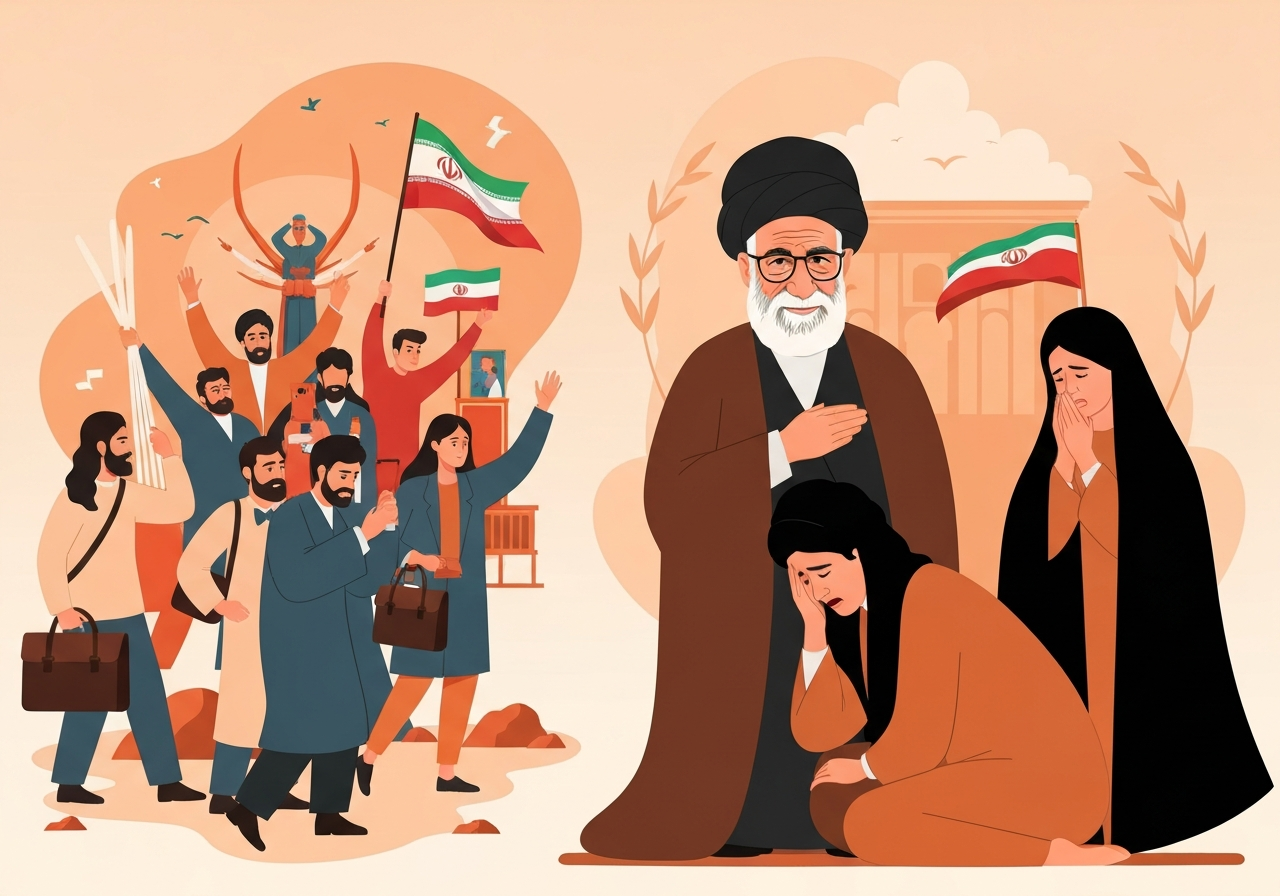
On 1 March 2026, Iran reacted with a mix of public mourning and open celebration after the death of Supreme Leader Ayatollah Ali Khamenei, who led the Islamic Republic for 36 years. In Tehran and other cities, large crowds gathered — some wept and held portraits of the cleric, while others danced, set off fireworks and honked horns. The split response reflected deep divisions following the state’s violent suppression of nationwide protests in 2022–2023. Observers and witnesses described relief, grief and uncertainty about what comes next for Iran.
Key Takeaways
- Ayatollah Ali Khamenei died on 1 March 2026 after 36 years as Iran’s supreme leader, prompting immediate, contrasting public reactions across the country.
- Large gatherings in Tehran included mourners in Enghelab Square and separate celebrations captured in videos from Karaj and other cities.
- Human rights group HRANA reports more than 7,000 confirmed deaths in the 2022–2023 protests, with 11,000 additional fatalities under investigation and tens of thousands arrested or injured.
- Eyewitness accounts include both jubilation — fireworks and balcony cheering — and traumatic memory of recent crackdowns, including gunshot wounds treated in Rasht hospitals.
- Some Iranians fear instability or foreign involvement in the leader’s death; others see the moment as a potential turning point for accountability and reform.
- Local responses varied by city: Mashhad and Tehran showed sizeable mourning gatherings, while Arak, Karaj and Shiraz recorded visible celebrations and cautious relief.
Background
Ayatollah Ali Khamenei assumed the role of Iran’s supreme leader in 1989 and remained the country’s most powerful political and religious figure for 36 years. During his tenure, the Islamic Republic consolidated clerical oversight of state institutions and foreign policy, and periodically faced political dissent that authorities often met with force. The largest recent wave of unrest began in 2022 after the death of Mahsa Amini and evolved into the Woman, Life, Freedom movement, which drew tens of thousands into the streets across Iran.
The government’s response to the protests included widespread arrests and lethal force. HRANA, a US-based rights group cited by multiple reporters, has documented more than 7,000 confirmed deaths and said 11,000 more fatalities remain under investigation. Those figures, alongside reports of mass detentions and injuries, have left many Iranians with deep wounds — both physical and psychological — that shaped how different communities reacted to news of Khamenei’s passing.
Main Event
News of Khamenei’s death spread rapidly online on 1 March 2026 and sparked immediate public gatherings across Iran’s major cities. In Tehran’s Enghelab Square, footage showed people dressed in black, weeping and holding portraits of the leader while chants for the regime were audible. Simultaneously, separate videos and eyewitness accounts from Karaj, Alborz province, and other locations showed crowds celebrating with music, fireworks and car processions.
Individuals who had been directly affected by the state’s recent crackdowns described strong emotional reactions. Nazanin, 24, a media professional in Tehran, told reporters she cried as she saw crowds on the street and felt a sense of vindication for victims such as Nika Shakarami, Sarina Esmailzadeh and Mahsa Amini. A 20-year-old university student, injured in January when security forces opened fire on protesters, said the news intensified feelings of retribution for those killed in demonstrations.
Medical staff in cities like Rasht reported treating large numbers of protest-related injuries earlier in the year, and at least one doctor said he celebrated privately while also fearing the future. In Arak and Mashhad, people took to public spaces to share tea or ride motorbikes in apparent jubilation; in Shiraz and other conservative cities some residents voiced concern about the potential for chaos similar to neighboring Iraq if a stable transition fails.
Analysis & Implications
The immediate split in public sentiment exposes long-standing fissures in Iranian society: loyalty to the Islamic Republic’s leadership among some segments and profound resentment among others, especially those who lost family members during the protest crackdown. The state’s narrative of stability clashes with a parallel narrative of grievance and demand for accountability that has been growing since 2022.
Politically, the death of a long-serving supreme leader creates a period of uncertainty. Iran’s constitution and power structures provide mechanisms for selecting a successor, but the process may heighten factional competition within the clerical and military elite. External actors will also watch closely; international responses could affect Tehran’s strategic calculations, particularly regarding regional proxies and nuclear diplomacy.
Economically, any prolonged instability risks hitting an already stressed economy through investor caution, currency volatility and potential sanctions recalibration. Domestically, the loss of a central figure could open space for renewed civic activism, but that depends on whether security forces continue to employ the same tactics that provoked the 2022–2023 unrest.
Comparison & Data
| Metric | Reported Figure |
|---|---|
| Years Khamenei ruled | 36 years |
| Confirmed protest deaths (HRANA) | More than 7,000 |
| Additional deaths under investigation | 11,000 |
| Arrests/injuries | Tens of thousands |
Those numbers provide context for why reactions were so polarized. The confirmed and investigated fatalities are unusually large for a domestic protest movement and help explain the deep anger among families of victims. Analysts caution that casualty figures from conflict and repression are often revised over time as investigations proceed and new evidence emerges.
Reactions & Quotes
Voices across the spectrum framed the moment differently. Some mourners expressed loyalty and vowed reprisals for any perceived external adversary, while many families of protest victims voiced relief. Below are short, representative statements recorded by reporters and on social platforms.
“The street was full. No one outside can understand what Iranians who were victims of this murderer feel right now.”
Nazanin, 24, media professional (Tehran)
Nazanin linked her reaction to the deaths of protest icons such as Nika Shakarami, Sarina Esmailzadeh and Mahsa Amini, reflecting a sentiment among families who view Khamenei as responsible for the crackdown.
“I will never forget the scene of young boys and girls lying in a pool of blood. Today, that wish for vengeance felt fulfilled.”
Mina, 20, former protester (Tehran)
Mina’s words capture the trauma of protesters who were shot during mass demonstrations earlier in 2026, and illustrate why some celebrated despite concerns about the country’s future stability.
“I cannot be happy because I don’t know what will happen to our country. We saw what happened in Iraq: chaos and bloodshed.”
Atousa Mirzade, schoolteacher (Shiraz), quoted to Reuters
Atousa’s reaction highlights the fear among parts of the population that a sudden power vacuum could trigger disorder and external interference.
Unconfirmed
- Details about the immediate cause of Khamenei’s death remain limited in official public reporting and independent verification is incomplete.
- Claims that a foreign power was responsible for the leader’s death have circulated online; these assertions have not been substantiated by independent evidence.
- Several viral videos showing celebrations in specific towns have not been independently authenticated and may be misattributed or edited.
Bottom Line
Khamenei’s death on 1 March 2026 has produced sharply divided public reactions that reflect the accumulated grievances and loyalties of modern Iran. For families of protest victims and many activists, the moment brought relief and a sense that accountability could be possible; for regime supporters and those fearing instability, it opened fears about violence and foreign meddling. The coming days and weeks will be decisive: how Iran’s political institutions manage succession, how security forces behave, and how civic actors respond will determine whether the country moves toward reform, repression, or instability.
Observers should watch three indicators closely: the transparency of the succession process, patterns of state security operations in restive cities, and independent verification of casualty and arrest figures. International actors’ responses — diplomatic, economic and rhetorical — will also shape Tehran’s options. Above all, the human cost recorded since 2022 makes clear that any transition will be judged by its impact on accountability, justice and the safety of ordinary Iranians.
Sources
- The Guardian (news outlet) — original reporting and compilation of eyewitness accounts
- HRANA (Human Rights Activists News Agency) (human rights monitoring) — casualty and arrest figures cited in reporting
- Reuters (news agency) — contributor to on-the-ground reporting and witness interviews
- Agence France-Presse (AFP) (news agency) — contributed reporting referenced in coverage