
Lead
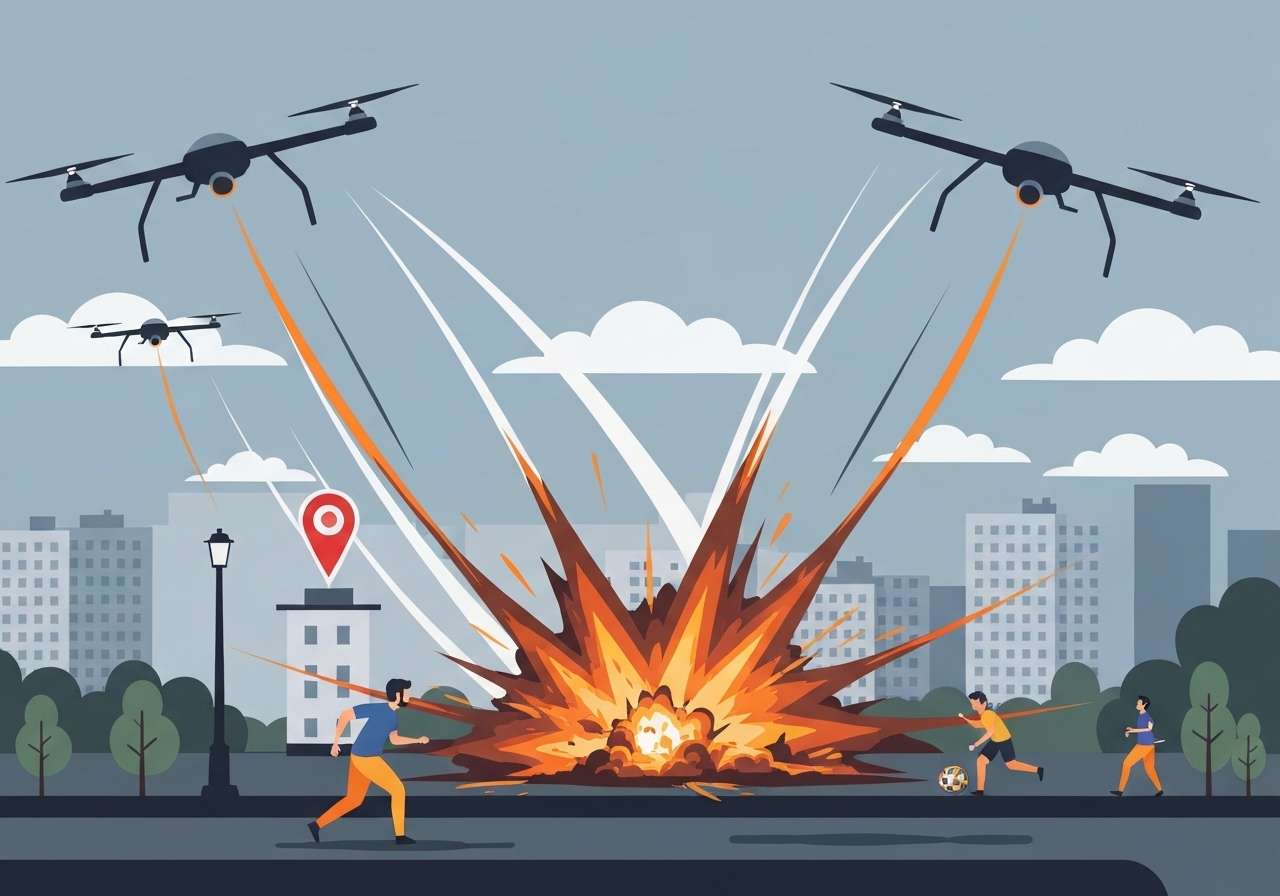
On the night of Nov. 23, 2025, Kharkiv was hit by what local officials described as a “massive” Russian drone attack that killed at least four people and wounded 17. Ukraine’s air force reported 162 drones launched toward the country, with air defenses reportedly downing or suppressing 125 and 37 striking 15 different locations. The strikes struck civilian infrastructure across Kharkiv, Chernihiv and Dnipropetrovsk regions even as U.S., European and Ukrainian delegations met in Geneva to discuss a contentious 28-point U.S. peace proposal. Russian and Ukrainian official tallies of aerial activity diverge sharply, and negotiations in Switzerland continued amid the violence.
Key Takeaways
- Casualties: At least four people were killed and 17 injured in Kharkiv after the overnight drone strike on Nov. 23, 2025, according to local authorities.
- Scale of attack: Ukraine’s air force reported 162 drones were launched into Ukrainian territory; 125 were intercepted or suppressed and 37 impacted across 15 locations.
- Geographic impact: The air force said the heaviest civilian damage occurred in Kharkiv, Chernihiv and Dnipropetrovsk regions, with private homes and infrastructure hit.
- Russian claims: The Russian Defense Ministry said it shot down at least 103 Ukrainian drones and reported four drones downed over the Moscow region, two allegedly en route to the capital.
- Diplomatic backdrop: The strikes coincided with U.S., European and Ukrainian talks in Geneva on a 28-point U.S. peace proposal first circulated last week.
- U.S. posture: U.S. Secretary of State Marco Rubio described the Geneva meetings as “probably the most productive and meaningful” so far, while President Donald Trump allowed room for further negotiation.
- Ukrainian stance: President Volodymyr Zelenskyy said Kyiv held substantive talks in Geneva and stressed Kyiv aims to protect core security points while pursuing compromises.
Background
The attack on Kharkiv occurred in the wider context of a war that has seen frequent long-range drone and missile exchanges between Russia and Ukraine. Since large-scale hostilities resumed in 2022, both sides have increasingly used unmanned aerial systems for strikes, surveillance and disruption, straining air defenses and civilian resilience. Large coordinated drone salvos, like the one Kyiv reported on Nov. 23, 2025, have become a recurring method of pressure, with significant humanitarian consequences for urban areas.
Diplomatically, the overnight strikes coincided with intensive discussions in Geneva, where U.S., European and Ukrainian delegations convened to review a 28-point U.S. plan to end the war. The proposal — described by critics as potentially demanding by Kyiv and by U.S. officials as negotiable — has become a flashpoint among allies. Washington says it is refining the text with Kyiv and partners; Moscow says it has received but not yet formally discussed the proposal with Russia in detail.
Main Event
Local officials in Kharkiv reported a series of explosions late on Nov. 23, 2025, and a mayoral Telegram post described the assault as “massive,” noting new destruction and the city’s ongoing recovery work. Emergency responders fought fires and carried out evacuations where residential buildings and civilian infrastructure were hit. Hospitals reported treating 17 wounded, and municipal services detailed damage to utilities and private homes.
Ukraine’s Air Force said the overnight wave involved 162 drones launched into Ukrainian airspace; its statement said Ukrainian air defenses neutralized or suppressed 125 of those craft, while 37 impacted across 15 locations. The Air Force said the lion’s share of damage was to civilian infrastructure in Kharkiv, Chernihiv and Dnipropetrovsk regions and confirmed civilian casualties.
Russia’s Defense Ministry published an account asserting its forces intercepted 103 Ukrainian drones and reported four drones were downed over the Moscow region, two of which it said had been heading toward Moscow. The competing tallies underscore the challenge of independently verifying all battlefield claims in real time. Both sides routinely present differing operational figures during exchanges.
Analysis & Implications
The timing of the Kharkiv strikes — during high-level Geneva talks — complicates diplomatic efforts and may influence negotiating dynamics. On the one hand, Kyiv and its partners are under pressure to demonstrate unity and secure concrete security guarantees; on the other, ongoing attacks bolster Kyiv’s argument that concessions must not undermine its long-term defenses. The violence may harden positions domestically in Kyiv and among European backers, making some compromises politically costly.
For the United States, which is publicly shepherding the 28-point plan, the strikes underscore the fragility of talks carried out while hostilities continue. U.S. officials framed Geneva as productive, but negotiators must reconcile Kyiv’s insistence on preserving key security and humanitarian demands with calls for a rapid cessation of hostilities. U.S. domestic politics — including comments by President Trump about deadlines and Ukraine’s gratitude — add another layer of complexity to an already delicate process.
Militarily, large drone salvos strain air defense systems and civilian emergency services, raising questions about the sustainability of defensive measures and the protection of population centers. If both sides escalate drone use, the conflict could see more urban disruption and higher civilian tolls. International partners monitoring the talks will likely weigh the immediate humanitarian impact alongside longer-term strategic aims when deciding support and diplomatic signals.
Comparison & Data
| Source | Launched (reported) | Intercepted/suppressed (reported) | Impacted |
|---|---|---|---|
| Ukraine Air Force (statement) | 162 | 125 | 37 (across 15 locations) |
| Russian Defense Ministry (statement) | — (reported 103 Ukrainian drones downed) | 103 (claimed downed Ukrainian drones) | 4 drones downed over Moscow region |
The table highlights divergent tallies offered by Kyiv and Moscow. Ukraine’s figures describe an inbound Russian salvo of 162 drones, with most neutralized by air defenses, while Russia’s figures focus on Ukrainian unmanned systems it says were intercepted. Independent verification of every item remains limited at this stage; open-source analysts will typically combine witness reports, imagery and radar traces to refine these counts over days.
Reactions & Quotes
The mayor of Kharkiv described the immediate scene and consequences for residents.
“Every night and every day bring new challenges for our city, new destructions and new work.”
Ihor Terekhov, Mayor of Kharkiv
U.S. officials framed the Geneva meetings as progress while acknowledging the talks remain unfinished.
“Probably the most productive and meaningful meeting we’ve had so far in this entire process.”
Marco Rubio, U.S. Secretary of State (statement in Geneva)
President Zelenskyy emphasized Kyiv’s cautious approach to negotiations and the need to protect sensitive demands.
“We are working very carefully on the steps needed to end the war… we will continue explaining how dangerous it is to pretend that aggression is something one can simply overlook.”
Volodymyr Zelenskyy, President of Ukraine (social media post)
Unconfirmed
- Independent verification of the exact number of drones launched, intercepted and impacted remains incomplete; numbers reported by both sides differ and are pending third-party corroboration.
- The precise civilian death and injury toll in Kharkiv could change as emergency services continue recovery and hospital reports are updated.
- Whether the Geneva talks produced a formal, agreed text or timeline for a settlement has not been officially released; Moscow says it has not received an official plan.
Bottom Line
The Nov. 23, 2025, drone strikes on Kharkiv underscore the persistent danger to civilians even as high-level diplomacy unfolds in Geneva. The attack and the competing public tallies from Kyiv and Moscow demonstrate the fog of information that accompanies kinetic escalations and the difficulty negotiators face in separating battlefield dynamics from political bargaining.
Going forward, negotiators will need to reconcile urgent humanitarian and security concerns with political imperatives on all sides. If strikes continue during talks, momentum in Geneva may stall or harden positions; if violence diminishes, it could create space for compromises — but only if parties can agree on verification, safeguards and the fate of deeply sensitive issues such as prisoners and territorial security.