
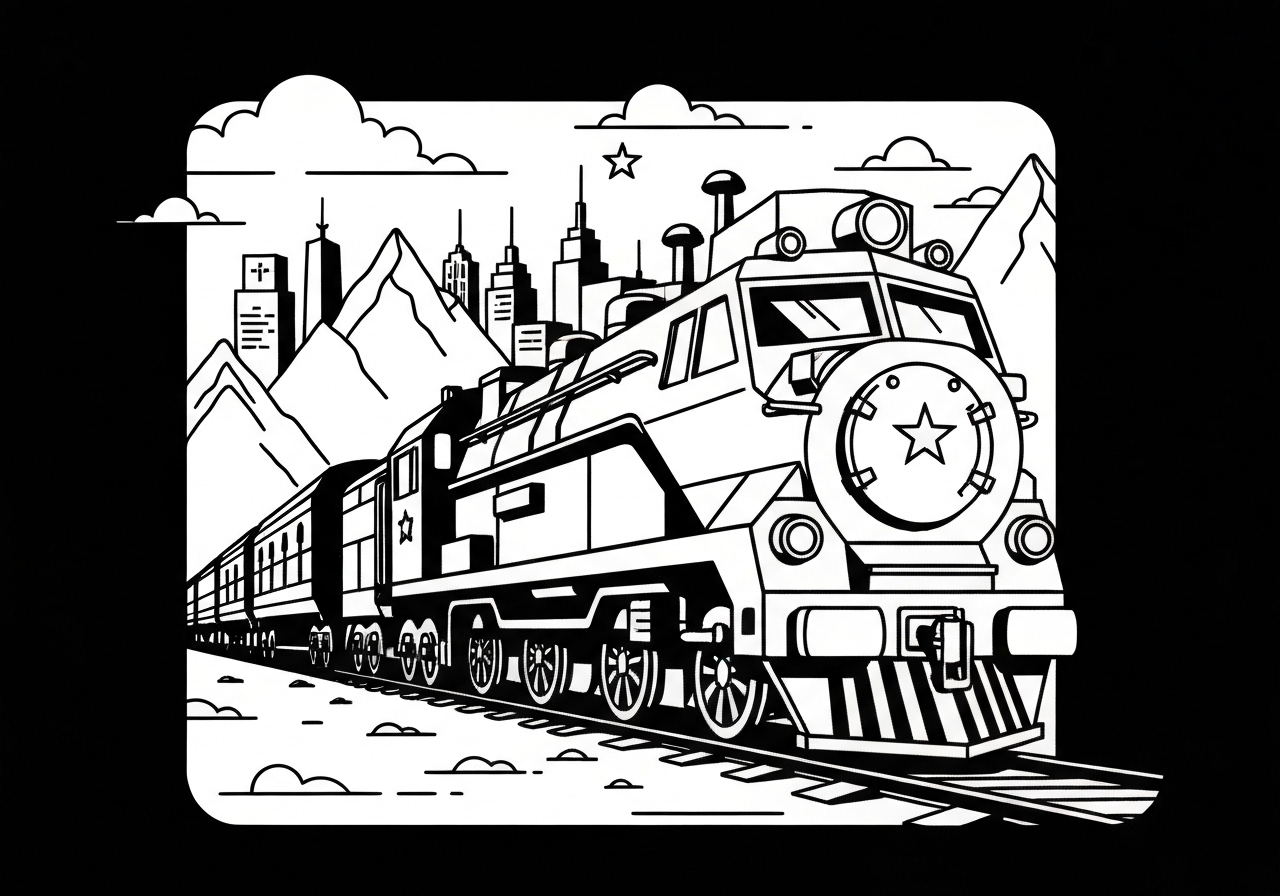
— North Korean leader Kim Jong Un arrived in Beijing on Tuesday aboard his trademark green, armored train, ahead of a military parade marking the 80th anniversary of the end of World War II. The slow but fortified convoy, long favored by North Korea’s rulers, provides secure travel, space for a sizable entourage, and the ability to plan meetings en route.
Key Takeaways
- Kim reached Beijing by armored train on Tuesday for events tied to the World War II anniversary.
- North Korea’s leaders prefer trains over aging passenger aircraft for security, comfort, and command-and-control capabilities.
- Special consists typically include 10–15 carriages per set, with dedicated cars for the leader, security, medical staff, communications, dining—and even space for two armored Mercedes vehicles.
- In China, the train is hauled by Chinese locomotives; on Tuesday, a DF11Z unit bearing serial number 0003 pulled more than 20 carriages.
- Speeds are higher on Chinese tracks (up to 80 kph) than inside North Korea (around 45 kph), according to transport experts.
- Gauge changes are required for Russia but not for China; a Chinese crew takes over after the border crossing.
- The lineage runs deep: Kim Il Sung and Kim Jong Il relied heavily on rail; Kim Jong Il died aboard a train in 2011.
- State media periodically spotlights rail journeys to reinforce leadership presence across the country.
Verified Facts
Analysts say North Korea’s leadership employs multiple train sets to complicate threats and ensure redundancy. Each set generally comprises 10–15 carriages, with cars reserved for the leader—including a bedroom and office—alongside compartments for security personnel and medical teams. Dedicated restaurant cars and vehicle carriers allow the convoy to operate as a rolling headquarters.
Recent state images showed Kim and senior aides beside a green carriage adorned with gold crests and trim. Inside, photos depicted a wood-paneled office with a large gold emblem, North Korean flags, a laptop, multiple telephones, and Kim’s familiar cigarette case. Blue-and-gold curtains framed the windows.
Past footage offered additional glimpses: in 2018, a wide salon car with pink couches hosted meetings with Chinese officials; in 2020, during a typhoon-area inspection, a carriage displayed flower-shaped lighting and zebra-patterned seating.
When Kim travels toward Russia, the train’s wheelsets must be reconfigured at the border because the countries use different rail gauges. No such change is needed for China, where a Chinese locomotive takes the lead after the crossing.
Media imagery reviewed by experts shows Kim’s carriages in China typically hauled by green DF11Z locomotives used for top-tier duties. On Tuesday, DF11Z-0003 arrived in Beijing hauling more than 20 carriages bearing North Korea’s flag and emblem. Six Chinese carriages with bright yellow double stripes were attached—likely for officials who greeted the delegation near the border, according to a transport specialist.
Context & Impact
For Pyongyang, the armored train balances operational security with diplomatic theater. Compared with North Korea’s aging passenger aircraft, rail offers a controlled environment, robust communications, and enough space to coordinate policy and logistics during long journeys.
Kim has repeatedly chosen rail for high-profile trips—to China, Vietnam, and Russia—underscoring how the route itself signals alliance management and strategic intent. The Beijing visit, timed to a major commemorative parade, fits that pattern: a visible show of continuity with China alongside a carefully managed security posture.
The train also functions as a domestic symbol. State media routinely highlights marathon rail tours as evidence of leadership engagement with citizens and economic projects.
Route and Equipment at a Glance
| Segment | Border Procedure | Haulage | Typical Speed |
|---|---|---|---|
| North Korea | None | Domestic locomotives | ~45 kph (28 mph) |
| China | Crew/locomotive change | DF11Z locomotives | Up to ~80 kph (50 mph) |
| Russia | Wheelset reconfiguration | Russian network locomotives | Varies by line |
Official Statements
State television in 2022 described Kim’s nationwide rail inspection as an “exhaustive train tour” to promote a “communist utopia.”
North Korean State TV (2022)
Explainer
Unconfirmed
- The exact number of distinct leadership train sets in rotation.
- Full interior layout and specifications of Kim’s current consist.
- The identities and total size of the delegation aboard this trip.
- Precise routing and intermediate stops within China.
Bottom Line
Kim’s arrival by armored train underscores a long-standing preference for secure, self-contained travel that doubles as political messaging. The method is slower than flying but offers control, continuity, and symbolism—benefits Pyongyang continues to value on high-stakes diplomatic journeys.