
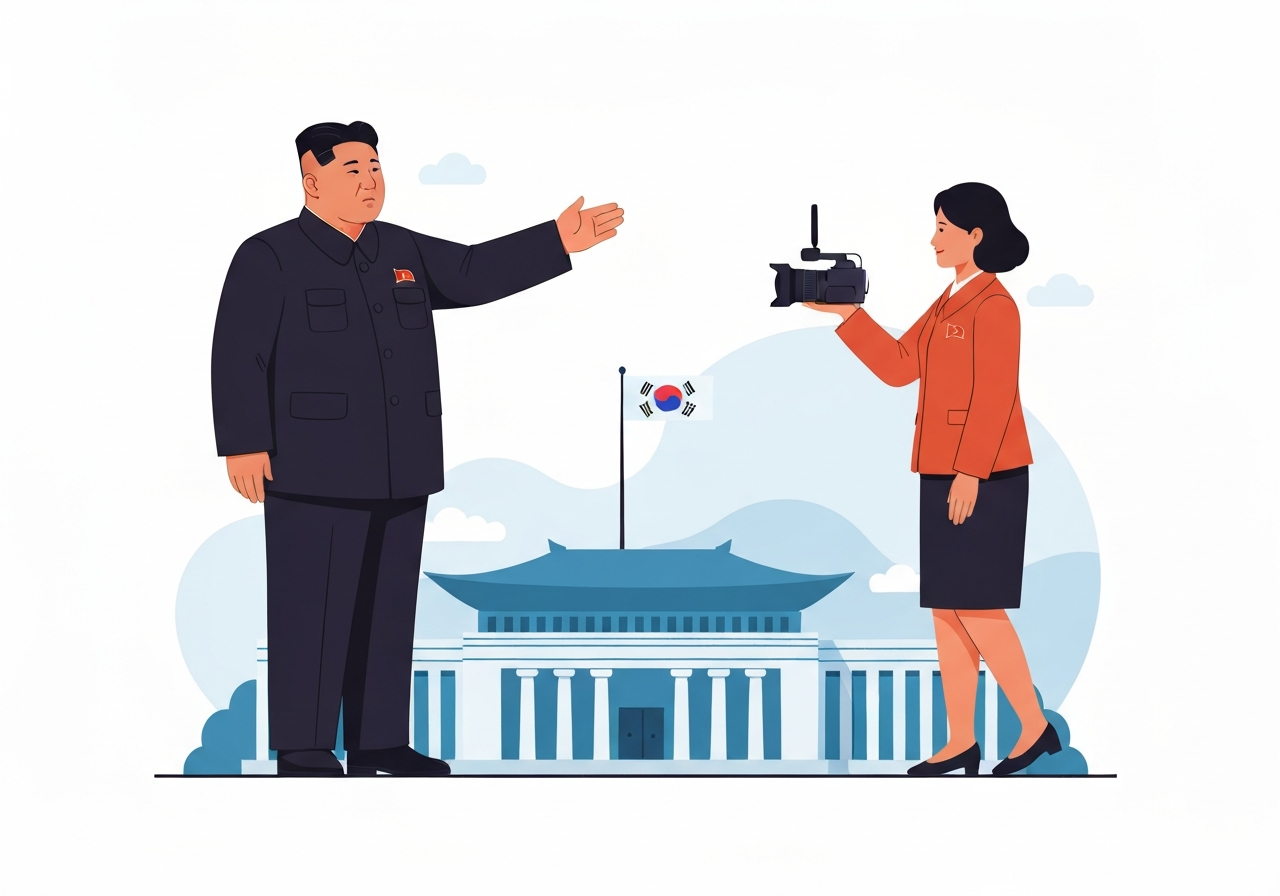
South Korea’s National Intelligence Service (NIS) told lawmakers on 12 February 2026 that North Korean leader Kim Jong Un appears to be preparing to designate his daughter, Kim Ju Ae, as his successor. The NIS elevated an earlier assessment that the teenager was the “most likely successor,” citing increased public grooming and signs she is expressing opinions on some policies. Ju Ae has made periodic public appearances since 2022 and was present at high-profile events including an Armed Forces Day ceremony and a December 2024 visit to the Kalma coastal area. Officials and analysts say a ruling Workers’ Party congress later in February 2026 could be a turning point if she is given a title or formal role.
Key takeaways
- Seoul’s NIS informed legislators on 12 February 2026 that Kim Jong Un is preparing to name his daughter, Kim Ju Ae, as successor; the assessment raised the teenager from “most likely successor” to an active succession candidate.
- Kim Ju Ae first appeared publicly in 2022 and has since been photographed alongside her father at events including a December 2024 Kalma visit and a September 2025 train trip to Beijing.
- Yonhap reported that attendance or a title at the Workers’ Party congress later in February 2026 would increase speculation and lend institutional weight to a succession plan.
- Seoul’s politicians Park Seon-won and Lee Seong-gwon relayed the NIS briefing to the media following a closed-door session with legislators.
- The NIS also reported Kim is directing development of a large submarine reported as 8,700 tonnes, possibly nuclear-reactor powered and capable of carrying up to 10 submarine-launched ballistic missiles (SLBMs).
- Precise details about Ju Ae—including her official age and any formal titles—remain limited and are treated as sensitive intelligence; observers note the regime controls biographical disclosures tightly.
Background
Hereditary succession has been a defining feature of North Korean leadership since its founding: Kim Il Sung was succeeded by his son Kim Jong Il, who in turn was followed by his son Kim Jong Un. The leadership style combines dynastic ritual, elite consolidation, and controlled public imagery. In recent years the regime has more visibly showcased Kim Ju Ae at state events, which analysts interpret as deliberate public grooming consistent with past patterns of preparing a family member to assume authority.
North Korea tightly regulates information about its ruling family, so outside intelligence agencies rely on state media releases, satellite imagery, travel records, and human intelligence to assess succession plans. Domestic institutions such as the Workers’ Party and the Korean People’s Army are central gatekeepers: formal titles and positions awarded at party congresses or military ceremonies can convert symbolic prominence into institutional power. The February 2026 Workers’ Party congress is widely expected to outline major policy goals and could serve as the venue for formal steps toward naming a successor.
Main event
The NIS briefing to South Korean legislators on 12 February 2026 marked a public elevation of Seoul’s assessment. According to South Korean lawmakers Park Seon-won and Lee Seong-gwon, the agency pointed to increased visibility for Kim Ju Ae at key events and signs she is being consulted on some policy matters. Lee told reporters the agency believes she has “entered the succession selection stage,” language that implies an internal process rather than an immediate formal proclamation.
State media photographs released over 2024–2025 show Ju Ae beside Kim at multiple public sites: a December 2024 visit to the newly built Kalma coastal tourist area, attendance at weapons tests, and a September 2025 train trip to Beijing to mark the 80th anniversary of Japan’s surrender. NIS notes and images shared by Pyongyang suggest the leadership is normalizing her presence in settings reserved for ruling-family figures.
Separately, Seoul’s briefing flagged ongoing military projects that intersect with leadership consolidation: officials said Kim is overseeing construction of an 8,700-tonne submarine that North Korean state media described on 25 December 2025. South Korean politicians relayed NIS reporting that the vessel could carry up to 10 SLBMs and might be designed for nuclear-reactor propulsion—an advance that, if confirmed, would materially change Pyongyang’s sea-based strike posture.
Analysis & implications
A deliberate move to anoint Ju Ae would be a continuation of dynastic succession norms in Pyongyang, but it carries internal and external risks. Domestically, the regime must secure elite buy-in—particularly from military leaders and Workers’ Party heavyweights—so any public grooming will likely be accompanied by behind-the-scenes bargaining, promotion of loyalists, and symbolic ritual to legitimize the heir. A succession plan accelerated at a party congress would aim to convert symbolic visibility into formal authority while minimizing factional friction.
Internationally, naming a daughter as successor could be read in multiple ways. To some states, the continuity of Kim family rule signals policy predictability but not necessarily moderation; to others, it heightens concerns about program continuity, including nuclear and missile developments. The reported submarine program compounds those concerns: a sea-based deterrent with SLBM capacity and possible reactor propulsion would introduce survivable launch options, complicating regional defense planning and escalation calculations.
Economically and politically, the move may be designed to shore up regime legitimacy amid sanctions and domestic hardship. Elevating a youthful, media-visible figure can be framed as a renewal narrative, but it may also expose vulnerabilities—questions about competence, legitimacy among older elites, and the optics of grooming a teenager for ultimate authority. How Pyongyang balances ceremonial shoring-up with practical delegation of power will shape short- to medium-term policy trajectories.
Comparison & data
| Item | Public facts reported |
|---|---|
| First public appearance | Kim Ju Ae: 2022 (missile test) |
| Notable later appearances | Kalma visit: Dec 2024; Beijing train trip: Sep 2025; KCNA photo of submarine site: 25 Dec 2025 |
| Reported submarine | 8,700 tonnes; up to 10 SLBMs; possible nuclear reactor (reported by NIS/State media) |
The table summarizes verifiable public milestones and the specific military hardware described in the NIS briefing and state media releases. Those data points reflect official photographs and Seoul’s intelligence assessment rather than independent confirmation of internal deliberations.
Reactions & quotes
“We believe that she has now entered the succession selection stage.”
Lee Seong-gwon, South Korean lawmaker (reporting NIS briefing)
Lee’s comment was given to reporters after the closed NIS briefing and signals Seoul’s reading that the regime has moved beyond mere grooming toward active selection.
“Her presence continues to be highlighted at events such as the recent Armed Forces Day ceremony and her visit to the Kumsusan Palace of the Sun.”
Park Seon-won, South Korean lawmaker (relaying NIS findings)
Park’s observation underscores how symbolic venues and ceremonial visibility are being used to raise Ju Ae’s profile within state ritual spaces that confer legitimacy.
“If Pyongyang formalizes a successor at the party congress, it will be the most consequential institutional move since 2011.”
Independent Korea analyst (expert commentary)
The analyst framed a potential title or role at the February 2026 congress as the critical step that would convert spectacle into institutional authority.
Unconfirmed
- No official North Korean declaration of Kim Ju Ae as successor has been issued; reports describe preparation and selection-stage activity but not a formal designation.
- The NIS-reported submarine’s exact propulsion (nuclear reactor) and full weapons loadout (capacity for 10 SLBMs) have not been independently verified outside North Korean state releases and Seoul’s intelligence summaries.
- Kim Ju Ae’s precise age and any internal titles or ranks she may hold remain unpublicized by Pyongyang.
Bottom line
Seoul’s assessment released on 12 February 2026 signals that Kim Jong Un is taking concrete steps to prepare his daughter, Kim Ju Ae, for potential succession. The regime’s pattern of using ceremonial venues and state media to elevate family members is consistent with past transitions, but formal institutionalization—most plausibly at the Workers’ Party congress—would be the decisive move converting grooming into succession.
Parallel military developments flagged by the NIS, notably a large 8,700-tonne submarine reported on 25 December 2025, add a strategic dimension to leadership continuity: regardless of the heir’s identity, expanded sea-based capabilities would affect regional security calculations. Observers should watch the February 2026 party congress, official North Korean statements, and subsequent personnel changes among senior party and military posts for clearer evidence of a confirmed succession path.
Sources
- Al Jazeera — News report (media)
- Yonhap News Agency — South Korean national news agency (media report relaying NIS briefing)
- Korean Central News Agency (KCNA) — North Korean state media (official releases/photos)
- National Intelligence Service, Republic of Korea — Official agency (intelligence briefings)