
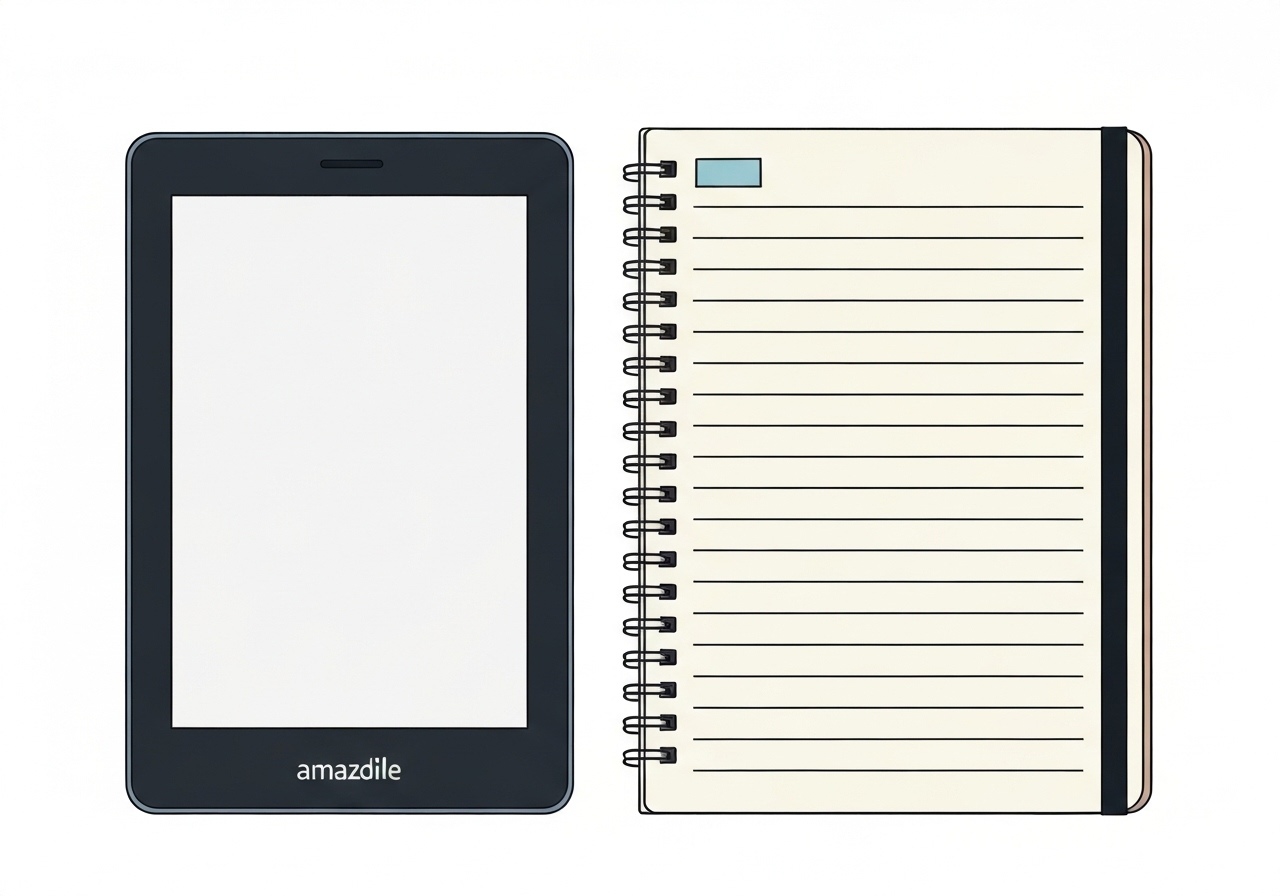
Lead
Amazon’s $629.99 Kindle Scribe Colorsoft is a rare e-reader that combines a color E Ink screen with a pressure‑sensitive stylus and notebook‑style note tools. After a week of hands‑on testing, the device impressed with long battery life, light weight (14.1 oz) and a pleasant Premium Pen, but its muted color, awkward one‑handed handling on commutes and Amazon‑centric workflows mean it doesn’t supplant a favorite paper notebook or a compact Kindle for many users.
Key takeaways
- The Kindle Scribe Colorsoft costs $629.99 and uses an 11‑inch color E Ink display with front lighting.
- The device weighs 14.1 ounces and measures 5.4 mm thick, making it very thin but relatively large for small bags and one‑handed reading.
- Battery life was excellent in our weeklong test; I did not need to charge during that period.
- The included Premium Pen is pressure‑sensitive and responsive, but handwriting control and erasing remain less precise than paper tools.
- Color rendering on E Ink is noticeably muted; highlights and art appear more newspaper‑like than vibrant.
- Annotation works well with Kindle books, including color highlights, but PDFs and some document types lack full annotation features.
- File import/export routes (Send to Kindle, cloud services) work but subject materials to Amazon’s terms and create extra export files rather than seamless two‑way sync.
- Best‑fit users are heavy annotators who prioritize paper consolidation over vivid color or absolute portability; casual readers will likely prefer a Paperwhite or an analog notebook.
Background
E Ink devices have long prioritized readability, battery efficiency and minimal distraction. Over recent years manufacturers have iterated on color E Ink panels to add hues while maintaining those core traits, but the technology remains less saturated than LCD or OLED alternatives.
Amazon’s Kindle Scribe line extends the Kindle family toward note‑taking: pairing traditional e‑reading features with handwriting tools and file import options. The Colorsoft model specifically aims to attract users who want color for highlights, sketches or covers while keeping E Ink’s benefits.
Demand for digital note devices spans professionals (editors, lawyers, researchers), students and creatives who want a single device to read, mark up and archive materials. That market sits between tablets (iPad) that emphasize color and responsiveness, and analog notebooks prized for tactile control and familiar workflows.
Main event
Physically, the Colorsoft is striking: at 5.4 mm thick and 14.1 ounces it’s exceptionally slim and light for its size. In handheld use the large 11‑inch display makes one‑handed reading awkward, especially for commuters who rely on small purses or one‑hand grips. Without a dedicated case or grip accessory, the thin chassis can feel slippery when used standing on public transit.
The Premium Pen is a highlight. It attaches magnetically, offers pressure sensitivity and feels responsive across handwriting, simple sketches and marginalia. For a gadget reviewer with a large pen collection, the stylus was enjoyable, but the tactile feedback and micro‑control still don’t match paper, pencil or brush‑tip markers for fine calligraphy or detailed drawing.
Color functionality is most meaningful when used for annotation: color highlights helped separate themes, facts and reaction notes while reading. However, E Ink’s color palette is subdued—orange often reads as brown and vivid tones lose punch—which limits the appeal for modern graphic novels or precise color‑coded art work.
Document handling exposes the device’s ecosystem tradeoffs. Amazon’s Send to Kindle and cloud integrations (Google Drive, OneDrive, OneNote) make importing files straightforward, but those imports are governed by Amazon’s and each provider’s terms. Export is possible but creates new files rather than a clean, synced mirror; PDFs don’t always support Amazon’s Active Canvas inline writing feature and the AI summarization tools work on notes more than on arbitrary documents.
Analysis & implications
The Colorsoft occupies a narrow but real niche: users who want to consolidate paper piles and do heavy inline annotation without switching to backlit tablets. For those users, the device’s combination of a large E Ink canvas, a capable stylus and long battery life is compelling.
However, Amazon’s ecosystem decisions heighten vendor lock‑in. Documents sent through Send to Kindle are processed under Amazon’s policies, which raises privacy and workflow concerns for professionals handling sensitive material. Organizations with strict data rules will likely avoid routing confidential files through these services.
From a product‑market standpoint, Colorsoft is unlikely to cannibalize traditional paper notebooks or smaller Kindles. Paper remains superior for tactile control and archival habits; smaller Kindles still win on portability. The Colorsoft instead complements those tools for users who accept compromises in exchange for consolidated digital notes.
Technically, E Ink color will improve but is still constrained by the medium’s microcapsule approach; saturation and color gamut are limited compared with emissive screens. That means future iterations could refine color fidelity and refresh behavior, but the device will probably never match an iPad for vivid display or a sketch tablet for art workflows.
Comparison & data
| Device | Screen | Weight | Price | Best for |
|---|---|---|---|---|
| Kindle Paperwhite | 6–7 in monochrome E Ink | ~7–8 oz | Varies (lower than Scribe) | Portable reading |
| Kindle Scribe Colorsoft | 11 in color E Ink | 14.1 oz | $629.99 | At‑desk annotation, consolidated notes |
| Hobonichi Techo (notebook) | Paper | varies (~15 oz for larger formats) | Less than Scribe | Analog journaling and pen control |
The table highlights tradeoffs: the Paperwhite is far more pocketable, the Colorsoft offers larger writing area and color at a premium price, and the analog notebook remains unmatched for tactile pen control.
Reactions & quotes
The device’s hardware shows clear strengths—battery life and stylus responsiveness are notable—yet color and portability leave room for improvement.
Reviewer (hands‑on testing)
The Colorsoft ships with an 11‑inch color E Ink display and a pressure‑sensitive pen designed for note‑taking and annotations.
Amazon (product information)
Public response online mixes enthusiasm from heavy annotators who value the large canvas with frustration from commuters and artists who expected more color fidelity. Privacy and workflow commentators have also flagged the dependence on Amazon’s import/export and data‑processing rules.
Unconfirmed
- Long‑term durability of the magnetic pen attachment in daily commute conditions is not yet verified beyond short‑term testing.
- How Amazon will expand Active Canvas and AI summarization support for arbitrary document types remains unclear and unannounced.
- The precise privacy treatment of imported documents across future software updates could change and is not guaranteed to remain identical to current policy.
Bottom line
The Kindle Scribe Colorsoft is an impressive hardware package that will satisfy a particular user: someone who wants to digitize and color‑code notes while preserving the low‑distraction benefits of E Ink. Its long battery life, thin chassis and capable stylus give it clear strengths for deskbound annotation work.
For most readers and analog notebook fans, however, the device won’t replace existing habits. Muted color rendering, less precise pen control than paper, awkward small‑bag portability and Amazon’s ecosystem and privacy considerations make it a niche complement rather than a universal replacement.
If you are a heavy annotator willing to accept Amazon’s workflows and the current limits of color E Ink, the Colorsoft could become a primary tool. Otherwise, keep your Paperwhite for reading and your Hobonichi or favorite notebook for the tactile experience.