
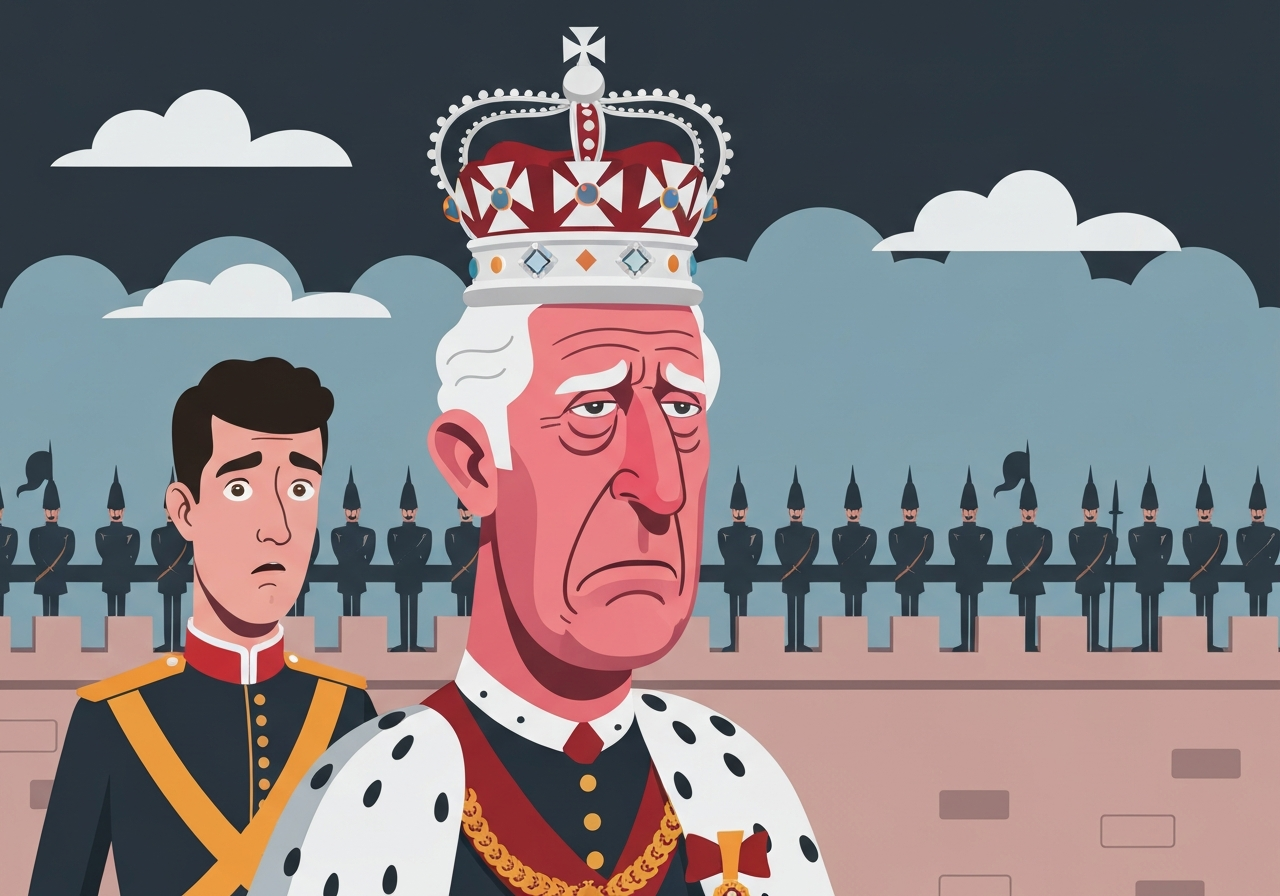
King Charles intervened on Monday as Thames Valley Police assess allegations arising from newly released Jeffrey Epstein files that mention his brother, Andrew Mountbatten-Windsor. Buckingham Palace said the monarch has shown “profound concern” about the continuing revelations and that the palace will cooperate if approached by police. The documents include emails that appear to show official visit reports and confidential investment material being forwarded to Epstein in 2010. The assessment follows a complaint from the anti‑monarchy group Republic and renewed public scrutiny after a fresh tranche of Epstein-related files.
Key Takeaways
- Buckingham Palace said the King has expressed “profound concern” and will support Thames Valley Police if asked to assist with an inquiry.
- Thames Valley Police confirmed it is assessing whether to investigate a complaint by Republic alleging misconduct in public office and breach of official secrets.
- Emails from the newly released Epstein files suggest Andrew forwarded reports of official visits to Epstein on 30 November 2010, five minutes after receiving them from an aide.
- Separate emails dated 24 December 2010 appear to include confidential notes on potential investment opportunities in Afghanistan that were passed to Epstein.
- Since the latest batch added roughly three million documents, allegations have intensified, including claims about a second woman flown to the UK and photographs circulated in the files.
- In October 2025 Andrew was stripped of his royal titles; he continues to deny wrongdoing and being named in the files is not proof of criminal conduct.
- The King travelled to Clitheroe on Monday, where a heckler questioned him about his knowledge of the Andrew material; bystanders largely rebuked the interruption.
Background
The Epstein archive — enlarged by recent releases — has renewed scrutiny of individuals linked to Jeffrey Epstein, a convicted sex offender whose network and records have been the subject of ongoing investigations and litigation. The latest tranche, reported to add around three million documents, includes emails, photographs and internal notes that investigators and campaign groups say merit review. Republic, an anti‑monarchy organisation, filed a complaint with Thames Valley Police alleging possible misconduct and breaches of official secrecy in how certain information may have been handled.
Prince Andrew, formally Andrew Mountbatten‑Windsor, has been implicated in prior waves of Epstein-related revelations. In October 2025 he was stripped of his titles as a prince and a duke following earlier disclosures; he has consistently denied allegations of sexual misconduct. Under UK guidance, trade envoys and officials are expected to safeguard commercially or politically sensitive information arising from official visits, a standard that informs questions about the apparent forwarding of official reports.
Main Event
Buckingham Palace issued a statement on Monday noting the King’s concern and offering cooperation with law enforcement if approached. The palace emphasised sympathy for victims of abuse and framed the response as a matter of institutional support for an active police assessment rather than an internal disciplinary step. The statement referred to both words from the King and what it described as “unprecedented actions” taken in response to the continuing disclosures.
Thames Valley Police said it is assessing whether there are grounds for an investigation after Republic submitted a complaint alleging misconduct in public office and breach of official secrets. The force has not announced a formal probe; an assessment typically involves reviewing documentary evidence, speaking to potential complainants and deciding whether criminal thresholds are met. That process can lead either to a full investigation, a referral elsewhere, or no further action.
The emails in question include material dated 30 November 2010 that appears to show Andrew forwarding official reports of visits in Asia, sourced from his then‑special adviser Amit Patel, to Epstein shortly after receiving them. Another message dated 24 December 2010 appears to pass on notes labelled “confidential” about investment prospects in Afghanistan. If authenticated and shown to be sensitive, those exchanges raise questions about handling of privileged information on official trips.
The public response has been immediate: protesters and commentators pressed the monarchy during royal engagements, while media outlets, campaign groups and former aides have revisited earlier accounts. The palace also noted that the King and Queen’s thoughts remain with victims of abuse, linking the new disclosures to a broader duty of care toward those affected by Epstein’s crimes.
Analysis & Implications
The King’s explicit willingness to cooperate with Thames Valley Police signals a shift toward greater institutional transparency and a recognition of the reputational stakes for the monarchy. Offering support to police can help ensure evidence is preserved and examined by independent investigators rather than handled solely through internal or political channels. For the royal household, that posture is designed to balance respect for legal process with protection of the institution’s integrity.
Legally, the core questions are whether the forwarded material met the legal definition of “official secrets” or if any duty of confidentiality was breached under the relevant rules for trade envoys and officials. The presence of emails that appear to show rapid onward transmission to Epstein does not by itself prove criminal intent; investigators will need to establish what was known about the content’s sensitivity and what permissions, if any, existed for sharing.
Politically, the episode puts fresh pressure on republican campaigners and on supporters of the monarchy alike. For government and law enforcement, it creates a set of delicate choices about timing and public communication: proceeding quickly risks further public spectacle, while delay risks criticism for opacity. Internationally, any confirmed mishandling of sensitive diplomatic or commercial information could complicate UK trade relationships in regions mentioned in the files.
For Prince Andrew personally, the renewed attention compounds earlier reputational damage and underscores the long tail of evidence and litigation tied to Epstein. Even absent criminal charges, the material could influence civil claims, historical assessments and public opinion, with long-term consequences for his public role and any remaining ties to royal duties.
Comparison & Data
| Date | Documented item | Source in files |
|---|---|---|
| 24 Dec 2010 | Notes on investment opportunities in Afghanistan described as “confidential” | Epstein emails |
| 30 Nov 2010 | Official visit reports reportedly forwarded five minutes after receipt | Emails from Amit Patel to Prince Andrew, then to Epstein |
| Oct 2025 | Andrew stripped of royal titles | Royal Household announcement |
The table summarises the discrete dates and items that have been cited publicly. Context matters: the labels “confidential” and the speed of forwarding are factual attributes of the files, but their legal and ethical significance depends on establishing provenance, intent and whether the documents were genuinely subject to confidentiality rules. Investigators will compare these records with official logs, aide testimony and any contemporaneous authorisations.
Reactions & Quotes
The palace statements and public responses frame the immediate institutional reaction.
“The King has made clear, in words and through unprecedented actions, his profound concern at allegations which continue to come to light in respect of Mr Mountbatten‑Windsor’s conduct.”
Buckingham Palace spokesman
“While the specific claims in question are for Mr Mountbatten‑Windsor to address, if we are approached by Thames Valley Police we stand ready to support them as you would expect.”
Buckingham Palace spokesman
“Their thoughts remain focused on the victims.”
Kensington Palace spokesperson
Unconfirmed
- That the emails definitively prove criminal misconduct by Prince Andrew; naming in the files is not proof of an offence.
- Claims that a second woman was definitively flown to the UK by Epstein for an encounter with Andrew remain unverified in publicly released files.
- Photographs circulating in the files have been reported but the provenance and context of those images have not been independently authenticated in public disclosures.
Bottom Line
The King’s public expression of concern and the palace offer to assist police mark a consequential moment: the monarchy is signalling institutional cooperation with law enforcement rather than attempting containment through media statements alone. Thames Valley Police’s assessment is the next formal step and will determine whether a criminal investigation follows, a process that could take weeks or months depending on complexity and cross‑jurisdictional issues.
For the public and political actors the episode underscores unresolved questions about accountability, the handling of sensitive official information and how institutions respond when senior figures are mentioned in large investigative archives. Readers should watch for formal statements from Thames Valley Police and for any new, authenticated material from the Epstein files that clarifies the provenance and significance of the documents cited.
Sources
- BBC News (media: UK public broadcaster)