
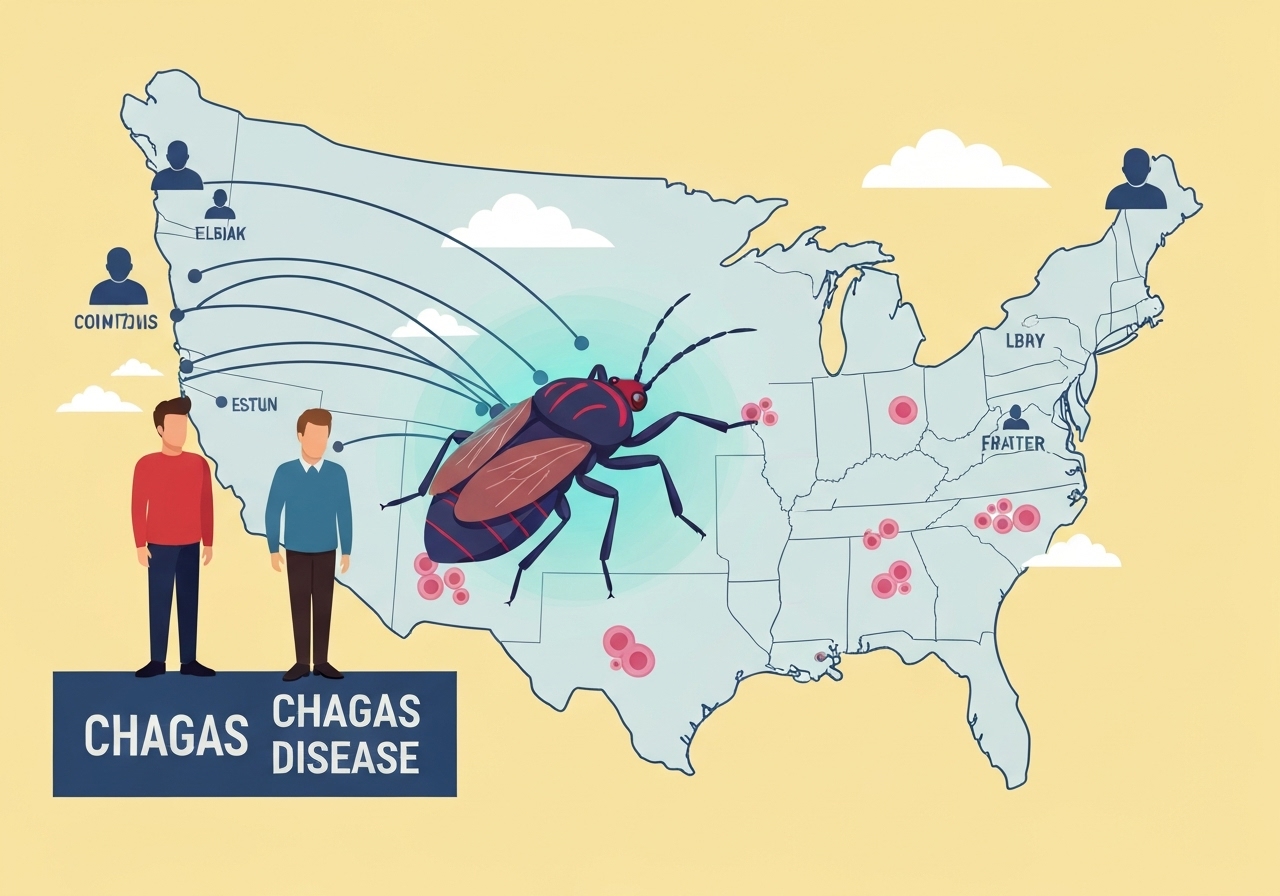
Health officials say that as of Sept. 5, 2025 the triatomine “kissing bug” and the parasite Trypanosoma cruzi it carries have been detected in at least 32 US states, with confirmed locally acquired human cases in eight states; untreated infections can quietly progress to life‑threatening heart and digestive disease.
Key Takeaways
- Chagas disease is caused by Trypanosoma cruzi transmitted primarily by triatomine insects (“kissing bugs”).
- The parasite has been detected in triatomines in at least 32 US states; human cases have been confirmed in eight states.
- Between 2013 and 2023 Texas recorded more than 50 locally acquired human cases; some kennels reported canine infection rates up to 31%.
- About 300,000 people in the US are estimated to be infected, but fewer than 2% know their status; Los Angeles County estimates roughly 45,000 cases.
- Infection is often silent at first (acute phase) but 20–30% of infected people may develop chronic cardiac or digestive complications years later.
- Diagnosis requires blood tests; early antiparasitic treatment with benznidazole or nifurtimox is most effective.
- Prevention focuses on vector control, housing improvements, screening for blood/organ donors and clinician awareness.
Verified Facts
Trypanosoma cruzi is transmitted when infected triatomine insects feed near the face, defecate, and parasite‑laden feces enter the body through a bite, scratch or mucous membrane. The insect bite itself is usually painless; infection often goes unnoticed during the acute phase.
Clinically, Chagas unfolds in an acute phase lasting weeks to months with possible fever, fatigue, rash, facial swelling (Romaña’s sign) and nonspecific symptoms. Decades later a chronic phase develops in roughly 20–30% of cases, causing cardiomyopathy, arrhythmias, sudden cardiac arrest, heart failure and gastrointestinal enlargement (megaesophagus or megacolon).
Testing varies by disease stage: direct parasite detection in blood is most useful early; serologic antibody tests are used to diagnose chronic infection. Antiparasitic drugs—benznidazole and nifurtimox—are most effective when given in acute or congenital infection, with reported cure rates high in early disease; effectiveness declines in longstanding chronic infection but treatment may slow progression.
Epidemiologic data driving concern include detections of infected kissing bugs across at least 32 states and studies urging a reassessment of endemic status in parts of the US. Texas surveillance recorded more than 50 locally acquired human infections from 2013–2023, and wildlife reservoirs such as raccoons and opossums sustain local transmission cycles.
Context & Impact
Public health implications are twofold: first, silent chronic infections can present suddenly as heart failure, arrhythmia, stroke or cardiac arrest, often in people who were unaware of prior exposure; second, low clinician awareness and limited routine screening mean many infections remain undiagnosed.
Blood transfusion and organ transplantation screening reduce iatrogenic transmission risk, but gaps remain in universal screening policies in some settings. Regions with warm, sylvatic cycles of the parasite—parts of the southern US including Texas, Arizona, California, Florida and Louisiana—face higher vector contact risk.
Preventive measures emphasize housing improvements, sealing cracks and screens, removing brush and animal nests near dwellings, targeted insecticide use, and bed nets in high‑risk situations. Physician training to consider Chagas in differential diagnoses for unexplained cardiac or gastrointestinal disease and expanded testing in prenatal care can identify cases earlier.
Official Statements
Health experts and recent CDC‑affiliated research have called for increased surveillance, clinician awareness and consideration of Chagas as locally transmitted in parts of the US.
CDC / Emerging Infectious Diseases researchers
Unconfirmed
- Exact counts of locally acquired human cases are likely underestimates due to low testing and reporting.
- Projections for future geographic spread within the US vary; localized risk depends on vector ecology and human housing conditions.
- Timelines for new vaccines or expanded drug approvals remain uncertain.
Bottom Line
Chagas disease, once viewed as primarily a Latin American problem, is now detected across much of the US. Early testing and treatment substantially improve outcomes, so increasing clinician awareness, targeted screening (including prenatal and donor screening), and practical vector‑control steps are the most immediate tools to limit illness and prevent late, often fatal cardiac complications.