
Lead
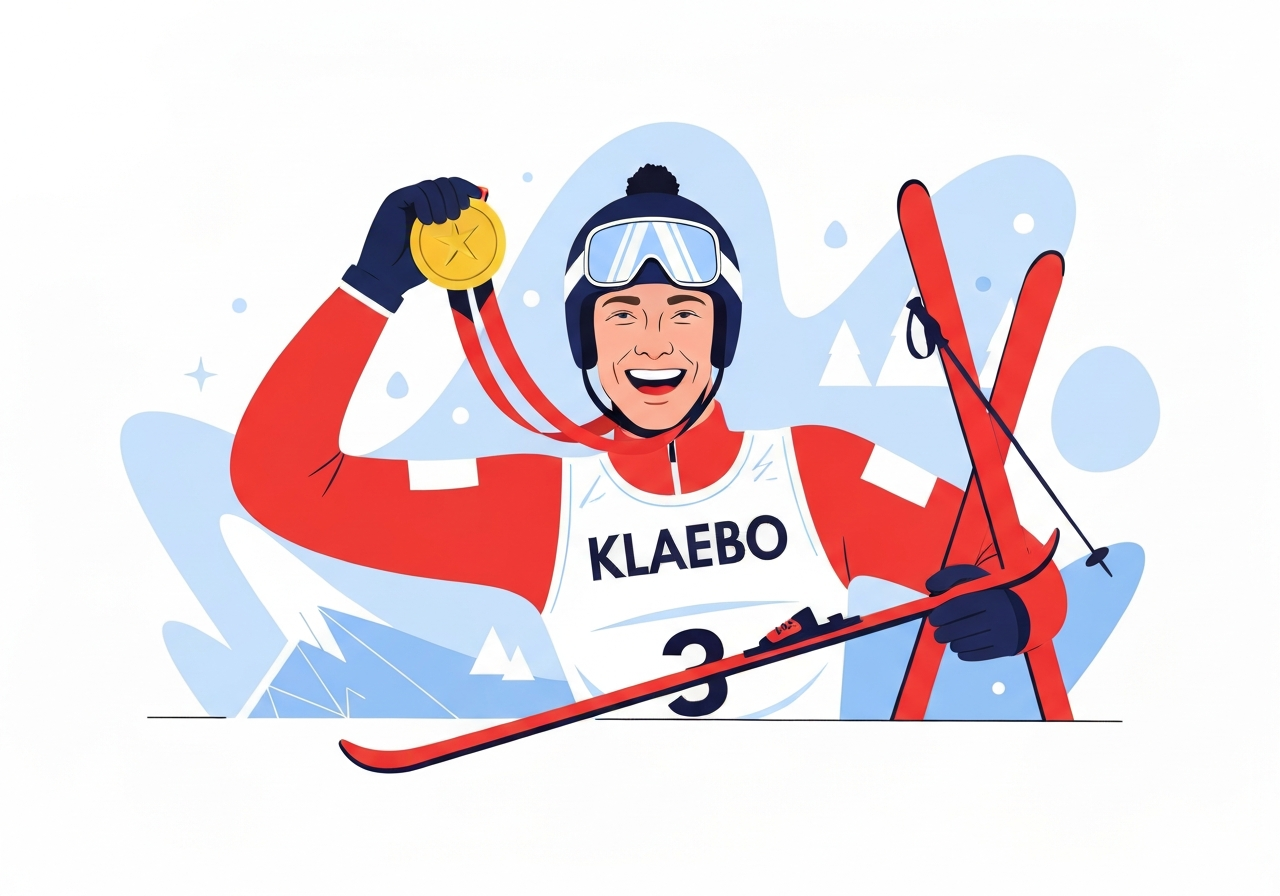
In Tesero, Italy on Wednesday, Norway’s Johannes Høsflot Klæbo won the men’s team sprint to take his fifth gold of the Milan Cortina Games and a record 10th Winter Olympic medal overall. Racing with teammate Einar Hegstad Krag, Klæbo finished in 18:28.9, edging the United States by 1.4 seconds. Americans Ben Ogden and Gus Schumacher took silver, while Italy’s Elia Barp and Federico Pellegrino claimed bronze, 3.3 seconds back. Klæbo, 29, has now won every race he entered at these Games and will race the 50-kilometer mass start later in the program.
Key Takeaways
- Johannes Høsflot Klæbo won the men’s team sprint in 18:28.9, securing his fifth gold of Milan Cortina 2026 and a record 10th Olympic medal overall.
- The U.S. duo Ben Ogden and Gus Schumacher finished 1.4 seconds behind Klæbo and Einar Hegstad Krag, earning silver.
- Italy’s Elia Barp and Federico Pellegrino took bronze, 3.3 seconds off the winning pace in front of a home crowd.
- Klæbo has been undefeated at these Games and earlier helped Norway break the Winter Olympics relay record on Sunday in the 4 x 7.5 km relay.
- In the women’s team sprint, Sweden’s Jonna Sundling and Maja Dahlqvist won in 20:29.99; Switzerland and Germany took silver and bronze respectively.
- France suffered a setback when Mathis Desloges snapped a pole; the French men finished 12th in the event.
- Jessie Diggins and Julia Kern of the U.S. finished fifth in the women’s race, 11.54 seconds behind Sweden.
- During the women’s heats a dog briefly ran onto the course; venue officials said the animal’s owner was walking it locally before it entered the race area.
Background
Johannes Høsflot Klæbo arrived at Milan Cortina 2026 already among cross-country skiing’s most decorated athletes and entered the week with an opportunity to extend an exceptional Olympic run. Norway has a long, dominant tradition in cross-country skiing, and Klæbo’s program this winter has reinforced the country’s strength across sprint and distance events. Team sprint races pair two skiers per team who alternate laps, making exchanges and tactical positioning crucial to final results. The format rewards skiers with explosive finishing speed and teams that manage energy and pacing across multiple laps.
Klæbo’s performance here built on Norway’s relay success earlier in the Games: the Norwegian quartet set a new Winter Olympics mark in the 4 x 7.5-kilometer relay on Sunday, underscoring the depth of the team. He is scheduled to contest the marquee 50-kilometer mass start at the weekend, an event that often decides national narratives and endurance hierarchies in Olympic cross-country. For the United States and Italy, the Milano-Cortina program has presented opportunities to challenge Nordic dominance, especially in sprint formats where tactical surprises can yield podium results.
Main Event
The men’s team sprint in Tesero unfolded as a tense tactical battle. Klæbo and partner Einar Hegstad Krag maintained contact with the leading packs through the exchanges and produced decisive speed in the closing laps. The Norwegian pair crossed the line in 18:28.9 to secure gold, with the U.S. duo of Ben Ogden and Gus Schumacher finishing a narrow 1.4 seconds back in silver position. Italy’s Barp and Pellegrino energized the local stands and secured bronze, 3.3 seconds adrift of the winners.
Gus Schumacher mounted a strong challenge for the Americans and stayed close through the final circuits, but slipped back on the last hill where Klæbo made his decisive move to seal the win. Ben Ogden stressed the team’s belief and tenacity in the final moments, noting that Schumacher refused to relent until the finish. Norway’s victory continued a streak of dominant performances by Klæbo at these Games, where he has entered and won every event so far.
In the women’s team sprint earlier, Sweden’s Jonna Sundling and Maja Dahlqvist claimed gold in 20:29.99, with Switzerland’s Nadja Kälin and Nadine Fähndrich taking silver and Germany’s Laura Gimmler and Coletta Rydzek earning bronze. Jessie Diggins and Julia Kern of the United States finished fifth, 11.54 seconds behind the winners. The Swedish triumph reinforced their sprint depth, with Dahlqvist noting the team’s breadth of contenders for the event.
A small but notable incident occurred during the women’s heats when a dog ran onto the course and briefly accompanied skiers across the finish line. Venue officials later told reporters the dog had been out for a walk by its owner, who lives locally, and had escaped into the race area; the animal did not disrupt the outcome of heats and drew cheers from parts of the crowd. Separately, France faced a mechanical issue when Mathis Desloges snapped a pole, contributing to the French side finishing 12th.
Analysis & Implications
Klæbo’s tenth Olympic medal in Milan Cortina 2026 consolidates his position as one of the sport’s all-time Olympic performers. Winning across sprint and relay events at a single Games speaks to an athlete who combines tactical acumen with high-end speed, a rare mix that can alter team strategies and how competitors race against him. Norway’s depth means teammates can play support roles that amplify a star skier’s chances, making it difficult for single-nation challengers to displace them consistently.
The United States’ silver in the men’s team sprint is significant for American cross-country skiing, indicating progress in producing athletes capable of competing with Norway in tactical, high-speed formats. Both Ben Ogden and Gus Schumacher demonstrated closing speed and composure, and their narrow margin suggests the U.S. program is closing the gap in sprint disciplines. For Italy, a home podium provides a morale boost and an immediate showcase of the country’s sprinters under pressure.
Looking ahead to the 50-kilometer mass start, Klæbo will face a different physiological and tactical test compared with sprint events. The mass start emphasizes endurance, pacing, and often pack tactics over longer terrain and variable snow conditions. How Klæbo and his rivals manage recovery, course conditions, and racing tempo will shape whether the Norwegian can further extend his medal haul and cement his Olympic legacy.
Comparison & Data
| Event | Gold (time) | Silver (gap) | Bronze (gap) |
|---|---|---|---|
| Men’s team sprint | Norway — 18:28.9 | USA — +1.4 | Italy — +3.3 |
| Women’s team sprint | Sweden — 20:29.99 | Switzerland — (silver) | Germany — (bronze) |
The table above summarizes podium times and gaps for the team sprints. The men’s final was decided by marginal differences under four seconds; in sprint formats, those margins are frequently determined in the closing climb or final sprint. Sweden’s women posted a time about two minutes slower than the men’s winning time, consistent with differences in course pacing and field tactics.
Reactions & Quotes
Team and athlete reactions highlighted both personal satisfaction and team dynamics after the races.
“It’s obviously very satisfying to make this happen. The team sprint is one of the most fun events, but also one of the hardest.”
Johannes Høsflot Klæbo
Klæbo framed the win as a team accomplishment and emphasized the difficulty and reward of the event’s format.
“Man, we kept the belief and I knew that Gus was not going to let up until the last second. And therefore I couldn’t let up to the last seconds. So it was pretty incredible.”
Ben Ogden, United States
Ogden described the U.S. effort as a sustained push and praised Schumacher’s tenacity in the closing moments.
“It is just amazing, so happy and so relieved too. We have like five, six girls who could do the team sprint today. So we have a really strong team and I’m happy to bring a gold for the whole team.”
Maja Dahlqvist, Sweden
Dahlqvist emphasized Sweden’s depth and collective contribution to the women’s victory.
Unconfirmed
- Whether the dog owner will face fines or sanctions under venue rules has not been publicly confirmed by organizers beyond initial remarks.
- Officials have not indicated that the dog’s brief presence altered any official times or results; any effect on athlete performance remains unverified.
Bottom Line
Johannes Høsflot Klæbo’s victory in the men’s team sprint at Milan Cortina 2026 extends a remarkable Olympic run: five golds at these Games and a record 10th Olympic medal overall. The result underscores both his personal versatility across sprint and relay formats and Norway’s continued depth in cross-country skiing. Close finishes—measured in seconds—highlight the tactical nuance of team sprints and the rising competitiveness of nations like the United States and Italy in sprint events.
With the 50-kilometer mass start remaining on Klæbo’s schedule, attention will turn to whether he can translate this sprint form into endurance success and further enlarge his Olympic legacy. For fans and national programs, Milan Cortina’s sprints have offered a compact showcase of shifting margins and emerging challengers to established Nordic supremacy.
Sources
- Associated Press — news report on Milan Cortina 2026 results and athlete quotes
- Milan Cortina 2026 Official Site — official organizing committee information and event schedule