
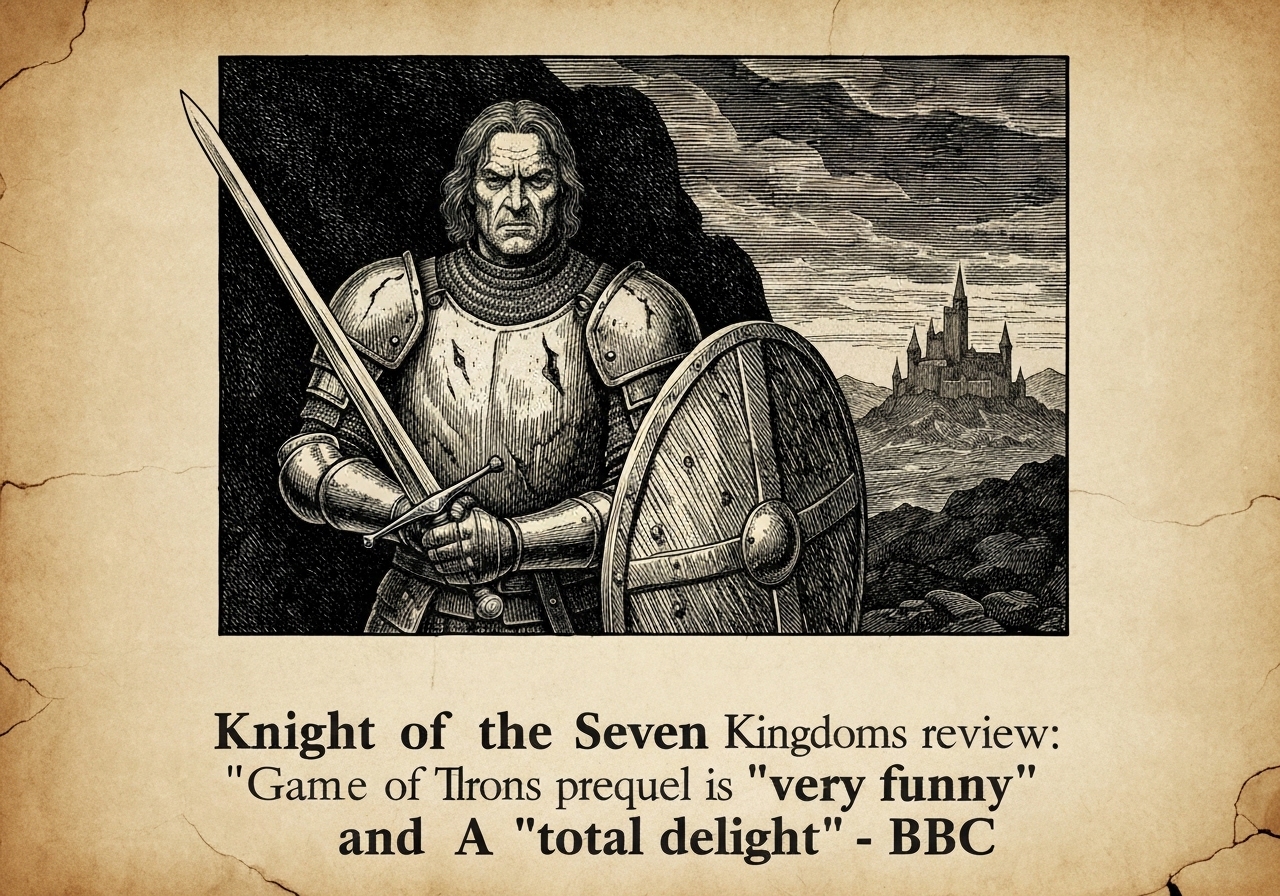
Lead: The new Game of Thrones prequel, A Knight of the Seven Kingdoms, arrives as a brisk, comedic-adventure in the same universe created by George R.R. Martin. The opening episode follows an inexperienced hedge knight, Ser Duncan (Dunk), and his irreverent squire as they begin a roadbound origin story set roughly two centuries before the events of Game of Thrones and after House of the Dragon. The series balances moments of harsh violence with abundant, broad humour, and the first instalment establishes a lightness that many viewers have missed in Westeros. Early scenes—beginning with Dunk burying his mentor Ser Arlan—set the tone for a show that prioritises character chemistry and comic timing as much as medieval grit.
Key Takeaways
- The series is set roughly in the middle of the two centuries separating House of the Dragon and Game of Thrones, anchoring it firmly within established Westerosi chronology.
- Episode one opens with Ser Duncan burying his former master, Ser Arlan, establishing Dunk’s status as a wandering “hedge knight” without lordly allegiance.
- Peter Claffey plays Ser Duncan; his rapport with the young squire is commonly noted as a leading strength of the show.
- The premiere mixes grim, physical stakes with frequent comic beats, producing a tonal blend described by reviewers as reliably entertaining.
- Fans and critics are responding to the show’s lighter touch after the darker arcs of the earlier TV installments.
- The first episode uses a short biographical montage to sketch Ser Arlan’s modest possessions and personal quirks, reinforcing the series’ interest in character detail over spectacle.
Background
The new prequel expands the televised history of Westeros, adapting events and characters from George R.R. Martin’s wider material about the realm. Television adaptations anchored in Martin’s world have varied in reception: Game of Thrones once dominated global pop culture and delivered landmark television moments, while House of the Dragon drew solid viewership without matching its predecessor’s cultural peak. A Knight of the Seven Kingdoms arrives into that mixed legacy with the opportunity to refresh the franchise by shifting tone and scale.
Hedge knights—wandering warriors who are not sworn to a great house—are central to the story’s ethos. Their itinerant life allows the series to travel across regions and encounter a diversity of social orders in the realm, exposing feudal hierarchies, local customs, and the small-scale human dramas often missed in throne-centered narratives. The show’s creative team appears intent on using that mobility to foreground humour and interpersonal dynamics rather than court politics alone.
Main Event
The premiere follows Dunk immediately after the death and burial of Ser Arlan, whose modest end contrasts with the sweep of royal chronicles. This beginning frames Dunk as an everyman knight whose ideals of chivalry were shaped by a mentor who had little in material wealth. The episode uses this pairing to set up both emotional grounding and comic interplay: the veteran’s simplicity endears him to the audience and motivates Dunk’s ambition to become more than a footnote in history.
On the road, Dunk meets a cheeky squire whose banter and practical know-how play off Dunk’s earnestness; the actors’ interplay reads as an old-fashioned comedic duo updated for a fantasy setting. Scenes alternate between low-stakes encounters—local inns, roadside disputes—and sudden flashes of brutality that remind viewers the world remains dangerous. Costume, set detail, and short visual montages are used sparingly but effectively to sketch characters’ pasts and social position.
The episode also nods to larger Westerosi lore—brief references and artifacts connect this origin tale to the wider timeline without overwhelming viewers who may know the novels or earlier shows. Narrative choices privilege small, human scenes over sprawling battle choreography, which amplifies the humour and makes the dramatic moments land more sharply. The result is a pilot that feels both intimate and rooted in the franchise’s established mythos.
Analysis & Implications
By shifting toward a lighter, character-driven approach, A Knight of the Seven Kingdoms recalibrates what a Westeros story can be on television. Where earlier franchise entries often concentrated on dynastic struggle and large-scale spectacle, this series invests in episodic encounters and relationship dynamics. That creative pivot may broaden the franchise’s tonal range and attract viewers who enjoyed the earlier seasons’ worldbuilding but missed levity and warmth.
The emphasis on a hedge knight’s perspective also has commercial and storytelling advantages. Lower-scale conflicts reduce reliance on expensive spectacle and allow writers to explore the social texture of Westeros—local politics, smallfolk customs, and regional humour—providing fresh narrative territory. If the series sustains strong word-of-mouth around its chemistry and tone, it could become a template for further spin-offs that experiment with genre and pace within the same universe.
There are risks: leaning too far into comedy could alienate fans who expect the franchise’s characteristic darkness, and episodic, low-scale storytelling may struggle to retain viewers seeking the narrative momentum of larger arcs. However, the premiere’s balance of humour and occasional brutality suggests the show aims for a middle ground that preserves stakes while offering a novel emotional register.
Comparison & Data
| Series | Approximate setting | Tonal focus |
|---|---|---|
| Game of Thrones | Present timeline of Martin’s main saga | Political drama, epic scale |
| House of the Dragon | ~200 years before Thrones | Dynastic conflict, darker drama |
| A Knight of the Seven Kingdoms | Midpoint between Dragon and Thrones (~centuries before GOT) | Character-driven, comedic with brutal moments |
The table highlights how the new prequel occupies a distinct slot in the franchise’s chronology and tonal palette. Rather than competing for the same narrative territory, the series looks to complement the existing shows by exploring smaller-scale life in Westeros. That difference matters for audience expectations, marketing strategy, and how future instalments in the franchise might be positioned.
Reactions & Quotes
“A fresh, laugh-filled re-entry into Westeros that foregrounds character chemistry over courtly spectacle.”
BBC Culture (review)
“The leads’ on-screen rapport gives the premiere a vintage buddy-comedy energy set against a medieval backdrop.”
Independent television critic (analysis)
“Audience response at early screenings emphasised how rare it is to find both humour and genuine jeopardy in the same franchise instalment.”
Early viewer feedback (screening reports)
Unconfirmed
- Long-term audience ratings and season-over-season viewership trends for the new series have not yet been released; current reactions are based on early reviews and screenings.
- The number of planned seasons for A Knight of the Seven Kingdoms has not been officially confirmed beyond initial commissioning details.
- Potential crossovers or narrative links with upcoming franchise projects remain speculative until producers disclose story plans.
Bottom Line
A Knight of the Seven Kingdoms establishes a distinct, inviting tone in its first episode: it is courageous in narrowing scope, choosing intimate character work and frequent comedy over constant grandeur. The premiere’s handling of Dunk and his squire creates an emotional anchor that often yields both laughs and surprisingly affecting moments.
If subsequent episodes maintain the balance between levity and legitimate peril, the show could become the franchise’s most approachable entry point while still rewarding longtime fans with connective lore. For viewers fatigued by relentless grimness, this prequel may offer the most consistent pleasure in Westeros in years.
Sources
- BBC Culture — Review of A Knight of the Seven Kingdoms (media/press)