
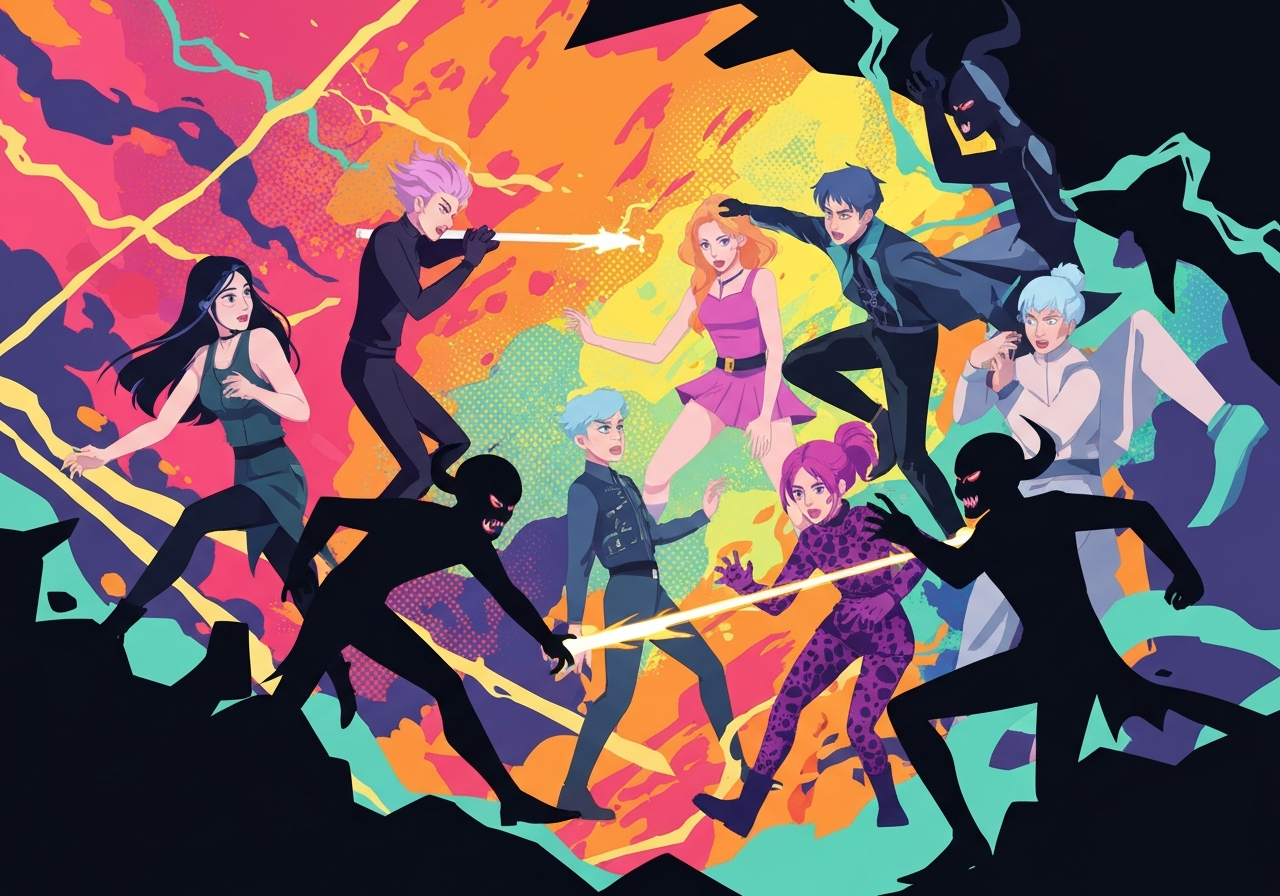
— Netflix has officially greenlit a sequel to KPop Demon Hunters, the record-setting animated feature that became the streaming service’s most-watched original film after its 2025 launch. Sony and Netflix will collaborate again on the follow-up, with writer-directors Maggie Kang and Chris Appelhans returning and signing an exclusive creative deal with the streamer. Kang said she is proud the crowd wants more of the Korean story and characters the film introduced. The directors signalled ambition for the franchise while cautioning that high-quality animation takes time to produce.
Key takeaways
- The sequel was formally confirmed by Netflix on 12 March 2026, with Sony remaining a production partner.
- Maggie Kang and Chris Appelhans will return as writer-directors and have signed an exclusive deal to develop content for Netflix.
- KPop Demon Hunters became Netflix’s most-watched original film after its 2025 arrival and later had a singalong theatrical run in August, topping the US box office for Netflix.
- The film earned two Academy Award nominations for Best Original Song and Best Animated Feature at the 2026 Oscars.
- A commonly cited 2029 release window is reported in some outlets but is widely viewed by industry observers as optimistic, given the animation pipeline involved.
- Bela Bajaria, Netflix’s chief content officer, credited the first film with creating a global fandom spanning languages and generations.
Background
KPop Demon Hunters began as a Sony-produced animated property before becoming widely associated with Netflix through a first-look arrangement. The film follows Huntrix, a demon-hunting pop trio, and blended K-pop culture with high-concept animation to reach worldwide audiences after its summer 2025 streaming debut. Its crossover appeal—music, animation and genre action—drove unusually broad engagement across age groups and territories, prompting Netflix to leverage the title in both streaming and a limited theatrical singalong release the following August. That theatrical run marked Netflix’s first film to reach number one at the US box office, a milestone for a streamer traditionally focused on at-home viewing.
The film’s commercial and cultural success prompted awards attention as well: it secured two nominations at the Academy Awards held in March 2026, including recognition for its original song, which became a chart-topping hit. The creators’ Korean background and the story’s cultural specificity were repeatedly highlighted in press coverage and audience discussions, contributing to debates about global representation in major streaming franchises. Industry executives have taken note of how the title’s marketing and music-first approach broadened a typical animated feature’s reach.
Main event
On 12 March 2026, Netflix announced a sequel commission for KPop Demon Hunters and confirmed that Kang and Appelhans would lead writing and direction under an exclusive deal. The statement from the creative team emphasized a desire to expand the world and characters first introduced in the original film, while Netflix said it would continue to collaborate with Sony. The announcement did not provide a firm production schedule, but it affirmed the intention to develop a multicraft partnership that blends streaming resources with Sony’s animation pipeline.
Public remarks from the directors acknowledged both audience appetite and the technical demands of animated features. Appelhans noted that fans have asked for more but urged patience if the team aims to meet heightened expectations; Kang framed the sequel as a continuation of a specifically Korean creative vision that resonated internationally. Netflix executives framed the move as a response to demonstrable global demand: the first film’s metrics and cultural footprint, they said, justify further investment in the property and in the filmmakers themselves.
Industry observers cautioned that animation timelines and the complexity of music-driven storytelling make any near-term release improbable. Some outlets have circulated a possible 2029 release year, but production professionals familiar with large-scale animated projects told reporters that multiple years are normally required for scripting, music composition, animation and postproduction. Netflix’s confirmation of an exclusive deal for Kang and Appelhans suggests a multi-project relationship rather than a single-film commitment, expanding the scope beyond an immediate sequel.
Analysis & implications
The sequel confirmation signals a shift in how streamers treat international, culturally specific properties: rather than regional hits, such titles are now core global franchises for platforms seeking long-term engagement. KPop Demon Hunters combined K-pop aesthetics with genre animation to attract not only fans of Korean pop culture but also general animation audiences; that hybrid success model will likely influence commissioning decisions across studios. For Netflix, the move reinforces a strategy of converting breakout originals into franchise assets and securing creator partnerships to retain IP leverage.
For the Korean creative community, Kang’s and Appelhans’s return and exclusive deal have dual meaning. Creatively, it validates the global marketability of stories rooted in Korean language and culture; commercially, it creates a precedent for Korean filmmakers to secure long-term agreements with major global streamers. That may encourage more investment in locally produced content intended for international rollout, while also raising questions about creative control, revenue sharing, and how indigenous storytelling is adapted for global audiences.
Economically, a successful sequel could translate into sustained streaming viewership, merchandising opportunities, live events, and soundtrack revenue—areas where the original already showed traction. The theatrical singalong and chart success of the nominated song illustrate ancillary channels that can amplify a streaming release’s profitability. However, producers must balance speed with quality: rushing an animated sequel risks damaging a newly established brand if audiences perceive diminished craft or storytelling.
Comparison & data
| Metric | KPop Demon Hunters (2025) | Context / Previous benchmarks |
|---|---|---|
| Netflix status | Most-watched original film on Netflix | Surpassed prior Netflix originals in viewing reach |
| Theatrical outcome | Singalong release; #1 US box office (August) | First Netflix film to top the US chart in its theatrical run |
| Academy recognition | 2 Oscar nominations (Original Song, Animated Feature) | Uncommon for streaming-originated animated features |
The table summarizes verified milestones: record streaming viewership on Netflix, a successful limited theatrical expansion, and two Academy Award nominations. Those markers together created commercial momentum and critical visibility that likely influenced Netflix’s decision to greenlight a sequel and to secure the filmmakers on an exclusive basis. While numeric viewership totals have not been publicly detailed by Netflix in the Guardian piece, the combination of platform metrics, box office ranking and awards attention is a robust indicator of cross-platform success.
Reactions & quotes
Creators framed the sequel as both a point of pride and a call for careful development. Maggie Kang highlighted cultural significance and the opportunity to deepen the story world for an international audience; her remarks were presented as a mixture of pride and forward-looking intent.
She said the audience’s appetite for more of the Korean characters feels like a responsibility and an opportunity to expand what has been built.
Maggie Kang (writer-director)
Chris Appelhans addressed fans’ patience and the craft involved in animation, urging quality over haste and acknowledging fan commentary. He emphasized that audiences understand when a project benefits from time devoted to making it right rather than rushing a follow-up.
He noted that fans have asked for more but that creating a sequel worthy of the original requires time, especially in animation.
Chris Appelhans (writer-director)
Netflix leadership framed the decision as a response to demonstrable global demand. Bela Bajaria, the streamer’s chief content officer, positioned the property as an example of how original streaming films can build multigenerational, multilingual fandoms and justify continued investment.
She said the first film ignited a global fandom that crossed languages, generations and genres, underscoring why Netflix is investing in the franchise’s future.
Bela Bajaria (Netflix, Chief Content Officer)
Unconfirmed
- The widely reported 2029 release year remains speculative and is not confirmed by a production schedule; industry sources say that timeline may be optimistic.
- The precise financial terms and duration of the exclusive deal between the filmmakers and Netflix have not been disclosed publicly.
- Detailed viewership figures for the original film (raw hours viewed) were not published in the primary report and therefore cannot be independently verified here.
Bottom line
The announced sequel and the creators’ exclusive deal mark a clear strategic move by Netflix to convert a breakout international title into a sustained franchise. The original film’s mix of music, culture and spectacle produced a rare combination of streaming records, theatrical presence and awards recognition—credentials that support further investment. However, the technical and creative demands of high-end animation and music production mean audiences should expect a measured development timeline rather than a quick follow-up.
For creators and the broader industry, this moment underscores shifting power dynamics: culturally specific stories can now achieve global franchise potential while granting creators leverage with major platforms. For viewers, the promise is more Huntrix content and an expanded world; for the market, the project will be a litmus test of how well streaming platforms can translate global fandom into sustainable franchise economics without compromising creative quality.
Sources
- The Guardian — news report summarizing the Netflix confirmation and quotes (news media).
- Netflix Media Center — official streamer press and corporate information (official/press).
- Sony Pictures — studio information and corporate site (studio/official).
- Academy of Motion Picture Arts and Sciences — Academy nominations and awards information (official/industry).