
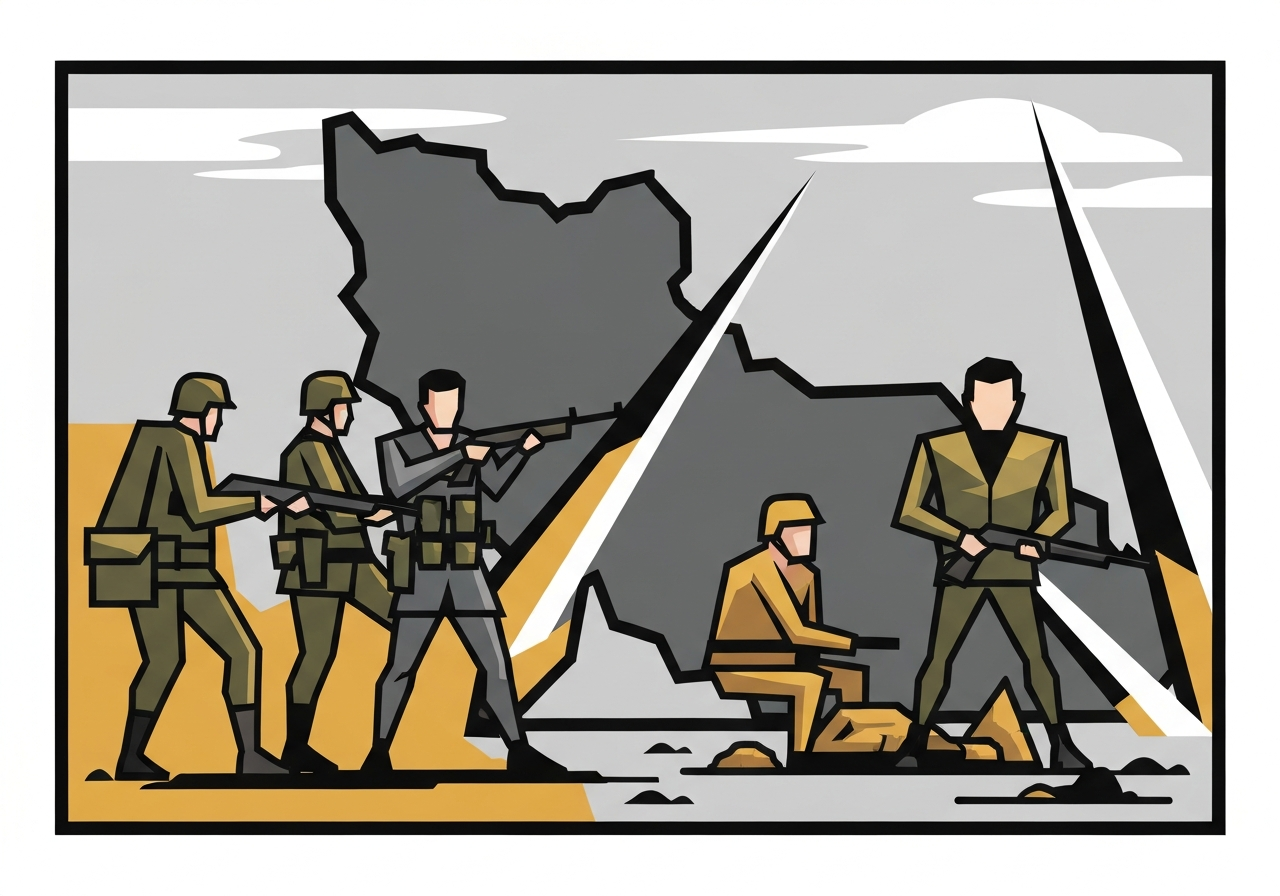
Pro-American Iranian Kurdish units based in Iraq are organizing armed teams that could cross into Iran, opening a potential new front in the expanding regional conflict, according to Iraqi officials and senior Kurdish leaders. Reports say the C.I.A. supplied small arms to some Iranian Kurdish groups in Iraq through a covert program that began before the current war. The U.S.-Israeli bombing campaign that started on Saturday has been reported to have killed Iran’s supreme leader and other top officials and to have struck facilities along the Iran–Iraq border. The White House has publicly denied that President Trump approved any plan for a Kurdish incursion.
Key Takeaways
- Iranian Kurdish forces based in northern Iraq are preparing armed units that commanders say could cross into Iran; Iraqi officials and Kurdish leaders have described planning activity in recent days.
- People familiar with U.S. activity say the C.I.A. provided small arms to some Iranian Kurdish factions in Iraq under a covert program begun before the current war.
- The U.S.-Israeli bombing campaign that began on Saturday has reportedly killed Iran’s supreme leader and other senior officials and struck government and security sites, including near the Iran–Iraq border.
- The White House, through press secretary Karoline Leavitt, said reports that President Trump agreed to a Kurdish insurgency plan are “completely false” in a recent briefing.
- U.S. officials are debating the strategic value of a Kurdish incursion; supporters argue it could draw Iranian ground forces into exposed positions, while critics warn of escalation and historic risks from past U.S.-Kurdish relationships.
- If carried out at scale, a cross-border Kurdish operation could compel Iranian army units to respond inside Iran, creating targeting opportunities for U.S. or Israeli aircraft, according to people briefed on deliberations.
Background
The Kurdish population spans parts of Turkey, Syria, Iraq and Iran and includes several political and armed groups with distinct agendas. Within Iraq, Iranian Kurdish parties and militias have long maintained bases and political structures across the northern region; some have periodically conducted cross-border operations or political activities directed at Tehran. The United States has a long, complicated history of partnering with Kurdish forces in Iraq and Syria for tactical objectives, while also facing criticism for abandoning Kurdish partners at key moments—most notably after the 1991 Persian Gulf War when a U.S.-encouraged uprising was later crushed by Iraqi government forces.
Covert programs to influence adversary stability are part of long-standing U.S. policy options, and officials say a small-arms supply to Iranian Kurdish units predates the current fighting. The present war has broadened rapidly since the weekend bombings, increasing pressure on regional actors and creating incentives for local proxies to reconsider offensive operations. Iraqi authorities, Kurdish leaders and U.S. interlocutors are now navigating a fragile mix of tactical opportunity, legal restraint, and political risk across a porous borderland.
Main Event
Senior members of Iranian Kurdish groups and several Iraqi officials say preparations are underway to form armed units that, if activated, could penetrate into Iran to strike security targets or to foment an insurgency. Those senior Kurdish figures described recruitment, training, and logistical staging in segments of northern Iraq, though they declined to provide detailed timetables. Iraqi officials briefed on the matter confirmed increased movement around known Kurdish camps and said they had shared concerns with U.S. and regional partners.
According to people familiar with classified programs, the C.I.A. provided small weapons to some Iranian Kurdish factions as part of a long-running covert effort aimed at weakening Tehran. Those people say the assistance began before the current conflict and was intended as a destabilizing lever; the scope and exact timing of transfers were not detailed to journalists or outside analysts. U.S. officials described the program as limited in scale but strategically significant given the new battlefield dynamics.
On Wednesday, White House press secretary Karoline Leavitt denied reports that President Trump had agreed to a Kurdish incursion plan, calling such accounts “completely false” during a public briefing. American officials continue internal debates about whether a Kurdish cross-border operation would yield military advantage by forcing Iranian forces to reveal positions, or instead risk widening the war and inflaming regional partners. Iraqi authorities are managing tensions on their soil, balancing Kurdish autonomy in the north with the risk of becoming a staging ground for external conflict.
Analysis & Implications
The prospect of Kurdish forces entering Iran would mark a significant geographic escalation in the conflict, adding a new asymmetric front along the Iran–Iraq boundary. Strategically, limited cross-border raids could compel Iranian ground units to respond, potentially exposing them to air strikes by U.S. or Israeli forces; planners see that as a way to degrade Iran’s military cohesion. However, such an operation risks provoking broader mobilization inside Iran, rallying nationalist sentiment and prompting retaliation against Kurdish communities within Iran and in Iraq.
Politically, U.S. association—whether direct or indirect—with Kurdish operations would revive bitter memories of prior episodes when Kurdish partners felt abandoned after U.S. policy shifts. That historical precedent complicates Washington’s choices: offering support may create short-term leverage but longer-term credibility costs if the partnership is not sustained. Regionally, Turkey, Iraq’s central government, and Iran’s neighbors will monitor any incursion closely; each has distinct thresholds for intervention, diplomatic response, and internal political fallout.
There are legal and operational constraints. Cross-border operations by non-state actors raise questions under international law and expose Iraqi sovereignty concerns. Logistically, sustaining an insurgency inside Iran would require secure supply lines and safe havens, which are difficult to guarantee amid intensified air campaigns and the concentration of security forces near border zones. The debate inside Washington mirrors this reality: military advantage must be weighed against unpredictable escalation and humanitarian costs.
Comparison & Data
| Period | U.S.–Kurdish Interaction |
|---|---|
| 1991 | U.S. encouraged local uprisings after Gulf War; subsequent Kurdish losses when help did not materialize |
| 2014–2019 | U.S. partnered with Kurdish forces in Syria/Iraq against ISIS, providing training and arms |
| 2026 (reported) | Covert small-arms transfers to Iranian Kurdish groups reported; potential preparations for incursion into Iran |
These comparisons highlight recurring patterns: U.S. partnerships with Kurdish actors have provided tactical gains but also carried political costs when U.S. objectives shifted. Current reports of limited C.I.A. arms transfers echo past episodic support, while the reported deaths of Iran’s leadership in recent strikes have altered the strategic calculus and urgency of regional actors.
Reactions & Quotes
Reports that President Trump agreed to any Kurdish insurgency plan are completely false,
Karoline Leavitt, White House press secretary (official briefing)
Leavitt’s denial addresses media reports attributed to briefed officials; it does not, however, dispute other factual elements such as past covert assistance to Kurdish groups, which sources have described separately.
Preparations observed in northern Iraq suggest capability development, though precise intent and timetable remain unclear,
Senior Iraqi official (anonymized)
The Iraqi official spoke on condition of anonymity because of the sensitivity of discussions with U.S. and regional partners; Iraqi authorities say they are monitoring movements and coordinating with Kurdish administrations.
A Kurdish commander described steps to form armed teams and said the groups are weighing options to exploit perceived openings inside Iran,
Senior Kurdish leader (party official)
Leaders of Iranian Kurdish parties framed any potential move as political and military pressure against Tehran rather than an expansion of territorial claims, but they declined to provide operational details publicly.
Unconfirmed
- The scale and timeline of any planned incursion into Iran remain unconfirmed; available reporting describes preparations but does not establish an operational start date.
- The full extent and duration of the C.I.A. small-arms program is not independently verified in public records; sources briefed on the program provide partial accounts.
- Some media accounts link President Trump to approval of Kurdish operations; the White House has denied such approval and that linkage remains unproven.
Bottom Line
Claims that Iraqi-based, pro-American Iranian Kurdish forces are preparing units to enter Iran represent a potentially consequential shift in the geography of the conflict. If such an incursion occurs at scale, it could force Iranian ground responses and create targeting opportunities for U.S. or Israeli air operations, but it also risks broadening the war and inflicting harm on Kurdish communities inside Iran and Iraq.
U.S. decision-makers face a crossroads between exploiting tactical openings and avoiding a cascade of escalation. Historical patterns of U.S.–Kurdish interactions warn that short-term partnerships can carry long-term costs; policymakers will need to weigh immediate military objectives against legal, humanitarian, and political consequences in the region.
Sources
- The New York Times — U.S. news reporting on Kurdish preparations, C.I.A. activity, and White House statements (March 4, 2026).