
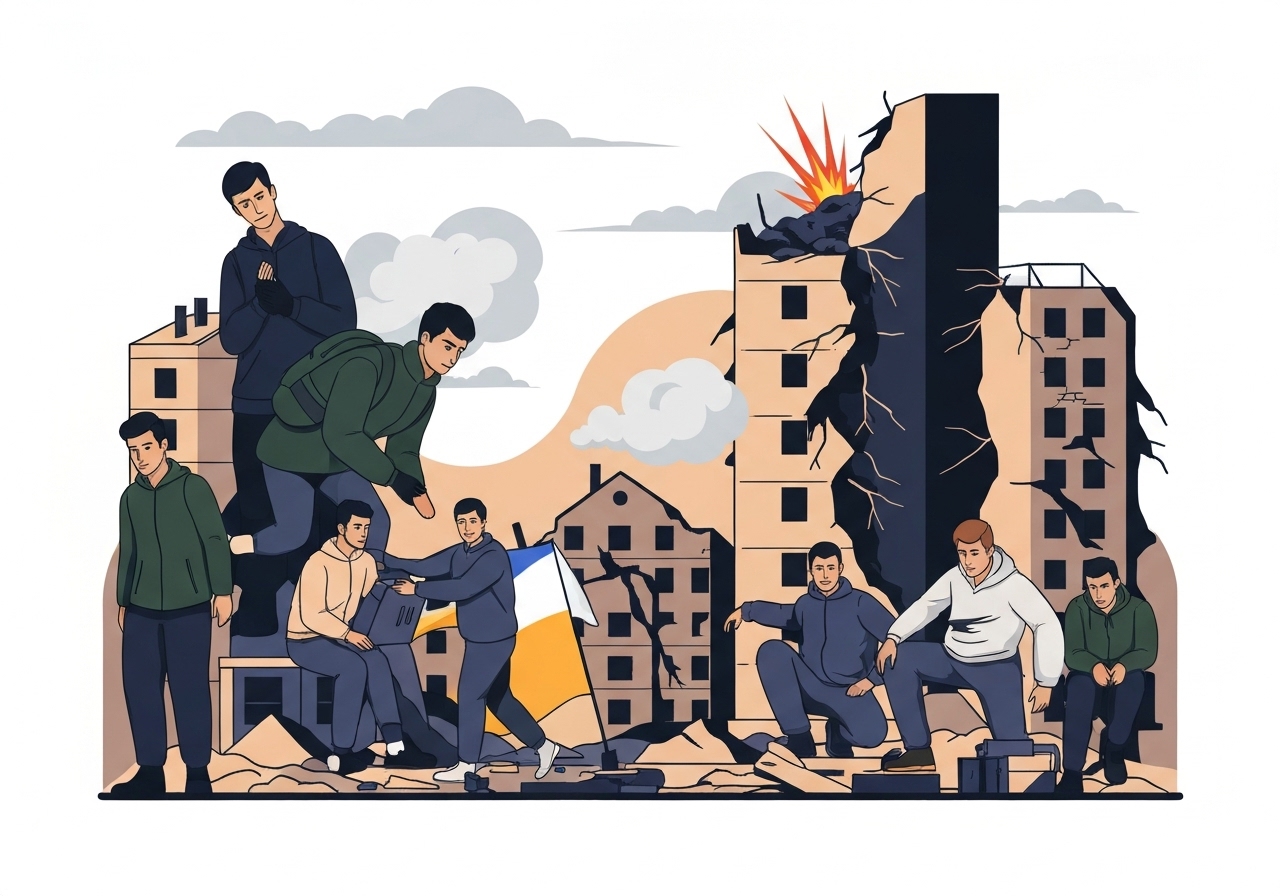
Four people were killed and at least 29 others wounded after Russia launched a large, coordinated assault on Kyiv early Friday, Ukrainian officials said. The strikes, which set fires and scattered debris across multiple districts of the capital, coincided with wider strikes elsewhere in Ukraine. President Volodymyr Zelenskyy said the assault involved roughly 430 drones and 18 missiles and described it as designed to inflict maximum harm on people and civilian infrastructure. Emergency teams reported ongoing rescue efforts and warned of power and water outages after damage to residential buildings in seven Kyiv districts.
Key Takeaways
- Fatalities and injuries: 4 people killed; at least 29 injured, with nine hospitalized including a pregnant woman.
- Scale of the strike: Ukraine’s president reported about 430 drones and 18 missiles used across the country during the attack.
- Geographic impact: Damage recorded in seven districts of Kyiv; strikes also hit other regions, with civilian infrastructure and private homes affected.
- Specific damage: Fragments from an Iskander missile reportedly damaged the Azerbaijan Embassy in Kyiv.
- Humanitarian risk: Local authorities warned of potential power and water outages and said rescue teams may still be searching for people under rubble.
- Official Russian position: Russia’s defence ministry said its forces targeted military-industrial and energy infrastructure, without acknowledging civilian damage.
- Political context: The attack came amid stalled peace talks and broader geopolitical tensions linked to planned high-level diplomacy and threats of resumed nuclear testing.
Background
The attack occurred in the context of more than two years of conflict that has repeatedly drawn strikes on cities and energy networks across Ukraine. Kyiv, as the capital and largest city, has been a frequent target in waves of missile and drone attacks intended to damage infrastructure and reduce civilian morale, especially during winter months. Ukraine’s energy systems have been strained for months; millions already face intermittent power as authorities try to cope with repeated strikes and extreme weather.
Political negotiations aimed at de-escalation have made little progress recently, and diplomatic movements — including a paused summit and public disagreements among international actors — have coincided with renewed military pressure. Russian official statements typically frame such operations as aimed at military or energy sites; Ukrainian officials and many independent observers stress substantial civilian harm in practice. Domestic politics and scandals, such as reported corruption in the energy sector, have also compounded public anxiety at a sensitive moment.
Main Event
Kyiv’s military administration reported multiple explosions early Friday as air-defence systems were activated across the city. Emergency responders described fires and debris spread across several districts and said search-and-rescue teams were working at sites where buildings were damaged. Local authorities noted the possibility that people remained trapped under rubble and continued rescue operations into the morning.
Nine people were taken to hospitals, including a pregnant woman; other injured civilians were treated at the scene. In the broader Kyiv region, regional officials reported damage to critical infrastructure and private houses, and a 55-year-old man in Bila Tserkva suffered thermal burns and was hospitalized after nearby strikes. Suburban fires were reported in several private properties.
President Zelenskyy publicly characterized the assault as a “specially calculated attack to cause as much harm as possible to people and civilian infrastructure,” and noted the high number of unmanned aerial vehicles and missiles involved. Kyiv Mayor Vitali Klitschko cautioned residents that even layered air-defence systems cannot guarantee complete protection when dozens or hundreds of aerial threats arrive simultaneously and urged citizens to prepare for outages and cold conditions.
Later Friday, Russia’s defence ministry said its forces struck Ukraine’s “military-industrial complex and energy infrastructure” with high-precision long-range weapons, a description that did not mention civilian damage. Ukrainian officials countered with on-the-ground reports of residential impacts and embassy damage from missile fragments.
Analysis & Implications
Operationally, the scale and mixed mix of weapons in this strike — hundreds of drones together with ballistic and cruise missiles — indicate a broad effort to saturate air-defence systems and hit both military and civilian targets. Such saturation tactics increase the chance that some weapons will penetrate defences and strike soft civilian targets, amplifying humanitarian impact. That dynamic has been a recurring feature of recent months as both sides test air-defence coverage.
Politically, the attack complicates any short-term prospects for diplomacy. It occurred amid stalled U.S.-led negotiations and high-level uncertainty, including public debate over planned summits and statements about potential nuclear-testing policies. The Kremlin’s rhetoric about resuming testing — if pursued — would mark a sharp escalation in rhetoric and risk elevating global concern about broader military posture.
The immediate humanitarian consequences are acute: damaged housing, possible civilian casualties under rubble, and increased pressure on repair crews during winter. Repeated strikes on energy and transport infrastructure also deepen winter hardships for millions, raising urgency for international humanitarian assistance and resilience planning at municipal and national levels.
Militarily, sustained use of large drone swarms and mixed missile types may force Kyiv and partners to adjust air-defence deployments and procurement priorities, potentially accelerating moves to acquire additional interceptors, electronic warfare systems, or layered sensors. For adversaries and partners watching, the episode demonstrates both the limits of current defences and the escalating resource demands of sustained strategic strikes.
Comparison & Data
| Weapon type | Count reported in this attack |
|---|---|
| Drones (various types) | ~430 |
| Missiles (ballistic/cruise) | 18 |
The numbers reported by Ukrainian officials make this among the larger multi-domain strikes since the full-scale invasion began, particularly in drone volume. Kyiv officials and the mayor contrasted the current wave to earlier large raids that used “more than a hundred” drones; the reported 430 UAVs substantially exceeds that benchmark. Exact weapon types and individual intercept rates remain subject to further verification by military analysts.
Reactions & Quotes
Ukrainian leadership framed the assault as a deliberate attack on civilians and infrastructure, while local officials described the strain on rescue and utility services.
This was a specially calculated attack to cause as much harm as possible to people and civilian infrastructure.
Volodymyr Zelenskyy, President of Ukraine (Telegram)
Kyiv’s mayor warned residents about the limits of air defences when confronted with a large, simultaneous wave of drones and missiles and urged practical preparations.
When more than a hundred drones and ballistic and cruise missiles are directed at our city at once, even our air-defence forces can’t guarantee complete protection.
Vitali Klitschko, Mayor of Kyiv
The Russian defence ministry issued a brief operational statement claiming strikes targeted military-industrial and energy facilities, a line consistent with prior Russian accounts of major raids.
Our forces struck targets in Ukraine’s military-industrial complex and energy infrastructure with high-precision long-range weapons overnight.
Russian Ministry of Defence (official statement)
Unconfirmed
- Exact interception rate: official counts of destroyed versus penetrated drones and missiles have not been independently verified and may change as assessments continue.
- Full casualty and rubble figures: authorities warned rescues were ongoing, so final tallies of injured and any additional fatalities remain subject to confirmation.
- Targeting intent: while Ukrainian officials say civilians and civilian infrastructure were targeted, Russia’s assertion that military and energy facilities were the aim has not been independently corroborated for each reported strike.
Bottom Line
Friday’s large-scale assault on Kyiv, involving hundreds of drones and multiple missiles, caused civilian deaths, numerous injuries and material damage across several districts — underscoring the continued human cost of the conflict and the vulnerability of urban centres to saturation attacks. The assault also deepens energy and humanitarian risks as winter continues, compounding urgent needs for repairs and civilian protections.
Short-term, Kyiv faces intensified pressure to bolster defences and accelerate emergency response and infrastructure repairs. Internationally, the strike is likely to sharpen debates over diplomatic avenues, military support, and the risks of further escalation if rhetoric about nuclear testing or other dramatic measures intensifies.
Sources
- NBC News (U.S. news media)