
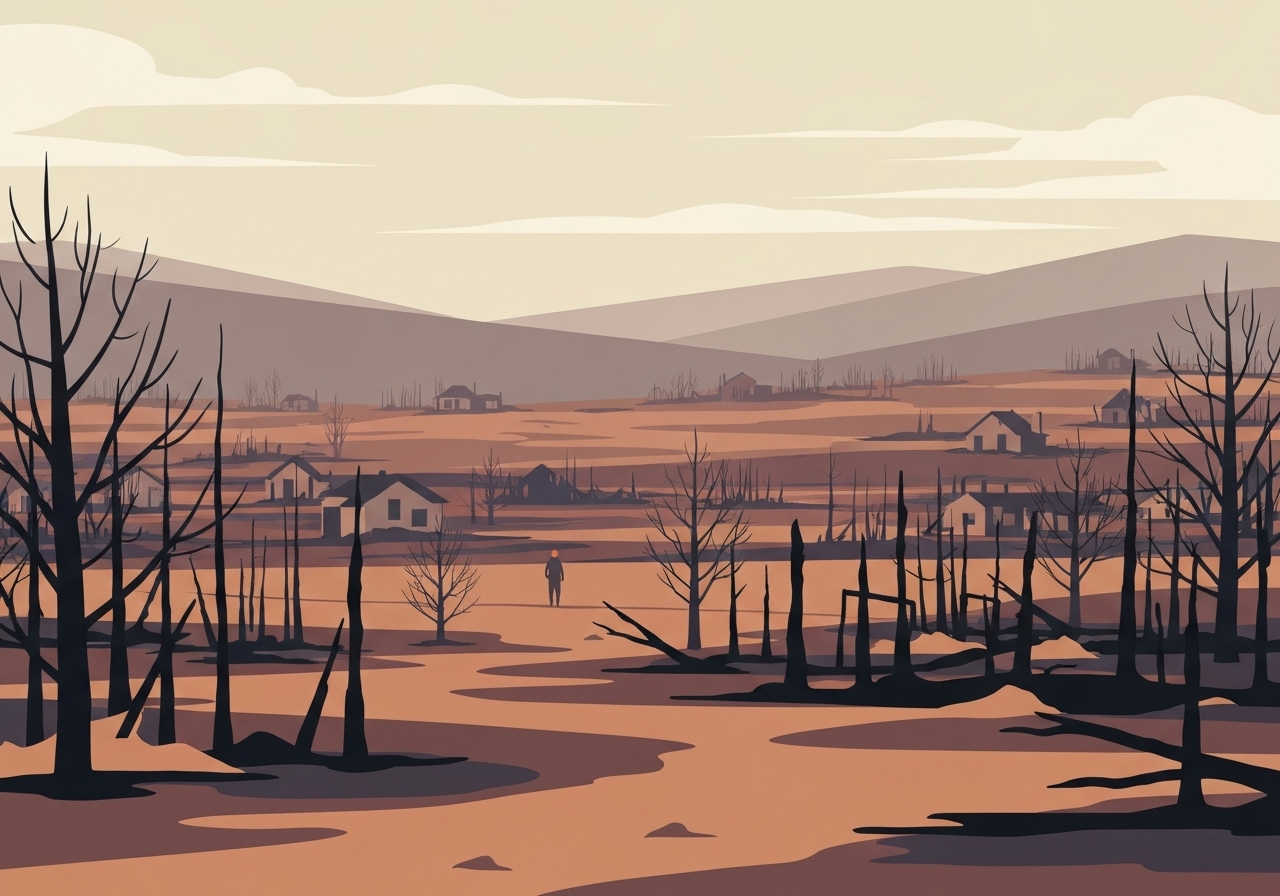
One year after the Jan. 7, 2025 wildfires that devastated large swaths of the Los Angeles area, rebuilding remains minimal: fewer than a dozen single-family houses in Los Angeles County have been completed. The fires — the Palisades and Eaton events — killed 31 people and destroyed about 13,000 homes and other residential properties. While roughly 900 homes are reported to be under construction, most lots in Pacific Palisades, Altadena and Malibu are still empty or show only foundations. Survivors cite insurance shortfalls, slow federal relief, legal disputes and contamination concerns as the primary obstacles to returning.
Key takeaways
- Fewer than a dozen homes in Los Angeles County have been rebuilt in the year since the Jan. 7, 2025 Palisades and Eaton fires, which killed 31 people and destroyed roughly 13,000 homes.
- About 900 properties are currently under construction, a pace that could yield more completions later this year but remains small compared with the scale of loss.
- More than 600 properties where single-family homes were destroyed have been sold, according to real-estate tracker Cotality, indicating significant displacement.
- By December, fewer than 20% of total-loss homeowners had closed out their insurance claims, per a Department of Angels nonprofit survey.
- Many insured homeowners report inadequate payouts, delays and multiple adjusters; State Farm and the California FAIR Plan were common carriers cited by respondents.
- Community groups say Black homeowners in Altadena are disproportionately stalled: UCLA research found 7 in 10 damaged Altadena owners had not begun rebuilding and Black owners were 73% more likely to have taken no action.
- Relief programs such as SBA loans are available but applicants report lengthy, difficult processes; some homeowners have tapped retirement savings to move forward faster.
Background
The Palisades and Eaton fires on Jan. 7, 2025 burned through coastal bluffs and foothill neighborhoods under drought conditions and hurricane-force winds, producing one of the most destructive wildfire events in recent California memory. The blaze killed 31 people and leveled about 13,000 residential structures across multiple jurisdictions, triggering emergency declarations, mass evacuations and a wide response from federal, state and local agencies. Insurance carriers, nonprofit relief groups and local recovery coalitions mobilized to assess losses, but many homeowners faced complicated claims processes and delays.
Rebuilding after catastrophic wildfire often unfolds unevenly. Past incidents, including the December 2021 Marshall Fire near Boulder, Colorado, show that visible momentum typically increases after the first year — often around 12–18 months — when debris removal, permits and financing converge. Local economies, property values and community cohesion all shape who can return and who cannot, and preexisting disparities can be amplified during recovery. In Altadena, a historic center of Black homeownership in the region, community leaders warn that systemic gaps are contributing to slower recovery for longtime residents.
Main event
On the ground, the recovery picture is mixed. In Altadena and Pacific Palisades, many lots remain dirt-filled voids where homes once stood; in Malibu, foundations and concrete piles rise from the sand. Streets that were once lit at night remain dark in parts because streetlamps and infrastructure repairs lag. Toxic ash and contamination concerns have kept some surviving houses vacant while owners evaluate remediation needs and health risks.
There are exceptions. Ted Koerner of Altadena, 67, had his house reduced to ash and two chimneys. With his insurance payout delayed, he liquidated roughly 80% of his retirement savings, hired contractors quickly and completed a rebuild in just over four months so his 13-year-old golden retriever, Daisy Mae, could move back with him. Koerner’s case illustrates how available cash and willingness to assume financial risk can accelerate an individual’s recovery while many neighbors remain stalled.
Other survivors face steeper hurdles. Jessica Rogers learned after the fire that her policy had been canceled; she ultimately secured a $550,000 low-interest SBA loan after a protracted application, identity-theft issues and job loss tied to the disaster. The Baileys, who lived in Altadena for four decades, are living in an RV on their former lot while they combine insurance proceeds and loans in hopes of rebuilding. Meanwhile, lawsuits filed against Southern California Edison allege equipment failures sparked the Altadena blaze; those claims are an ongoing legal factor in many homeowners’ recovery plans.
Analysis & implications
The slow pace of rebuilding signals both logistical and structural barriers. Debris removal, environmental remediation, permitting and infrastructure restoration create sequential bottlenecks; homeowners cannot choose contractors or obtain permits until cleanup is certified and utilities are restored in some areas. When insurance payouts are delayed or insufficient, prospective builders cannot commit, and construction timelines stretch indefinitely. That dynamic helps explain why fewer than a dozen homes are finished even a year after the fires.
Insurance shortfalls and the distribution of relief amplify inequality. Homeowners with ready cash or liquidity — or those with multiple sources of recovery funds — can move faster, while lower-wealth owners, renters and condo residents often fall behind or exit communities permanently. UCLA research cited higher inaction rates among Altadena homeowners and a disproportionate stall among Black property owners; if sustained, these patterns risk reshaping neighborhood demographics and accelerating displacement.
Legal actions and utility liability add further uncertainty. Lawsuits against Southern California Edison and civil probes into major insurers’ claims practices can lead to settlements or policy changes, but they also prolong resolution for individual claimants. Meanwhile, municipal capacity to process permits and remediate sites will determine whether current construction under way converts to widespread rebuilding within 12–24 months.
Comparison & data
| Metric | Count |
|---|---|
| People killed | 31 |
| Homes & residential properties destroyed | ~13,000 |
| Homes rebuilt (completed) | Fewer than 12 |
| Homes under construction | About 900 |
| Destroyed single-family properties sold | More than 600 |
| Homeowners closed insurance claims (by Dec.) | <20% |
The table highlights the disparity between loss and completed recovery work. Even with roughly 900 projects started, completions remain a tiny fraction of the roughly 13,000 destroyed properties. If the 900 projects proceed without major delay, visible rebuilding could accelerate later this year, but the broader recovery will depend on claims resolution, financing and legal outcomes.
Reactions & quotes
Advocacy groups and recovery coordinators emphasize the gap between insurance payouts and rebuilding costs. Their statements reflect frustration with insurer practices and the complexity of available government aid.
“We’re seeing huge gaps between the money insurance is paying out, to the extent we have insurance, and what it will actually cost to rebuild and/or remediate our homes.”
Joy Chen, Eaton Fire Survivors Network (advocacy)
Chen’s group, which represents roughly 10,000 survivors, reports widespread dissatisfaction and says the county’s investigation into insurer conduct has prompted some larger payouts but has not resolved the majority of stalled claims.
“Around the 18-month mark is when you start to see really significant progress in terms of going from handfuls to hundreds”
Andrew Rumbach, Urban Institute (research)
Rumbach, co-lead of the Climate and Communities Program at the Urban Institute, notes recovery timelines from other major burns and warns that inequities will determine who recovers first and who is left behind.
Unconfirmed
- Lawsuits allege Southern California Edison equipment started the Altadena wildfire; the precise cause remains under legal and investigative review.
- Reports of a “flurry” of substantial insurance payouts after Los Angeles County opened an inquiry into State Farm are cited by advocates but not fully documented for all claimants.
- Some individual remediation timelines and settlement amounts remain private or in negotiation and have not been independently verified.
Bottom line
One year after the Jan. 7, 2025 fires, the contrast between the scale of destruction and the number of completed rebuilds is stark: fewer than a dozen houses finished amid thousands lost. A modest pipeline of about 900 construction projects suggests recovery momentum may increase, but substantial barriers remain in the form of insurance shortfalls, legal uncertainty and remediation requirements.
The coming 12–18 months will be decisive for many homeowners. If insurer practices, legal claims and permitting can be resolved more quickly and equitably, rebuilding could accelerate; if not, the region risks prolonged displacement and demographic change in neighborhoods such as Altadena and Pacific Palisades. Policymakers and recovery organizations will need to focus on financing, streamlined permitting and protections for lower-wealth homeowners to prevent long-term community erosion.