
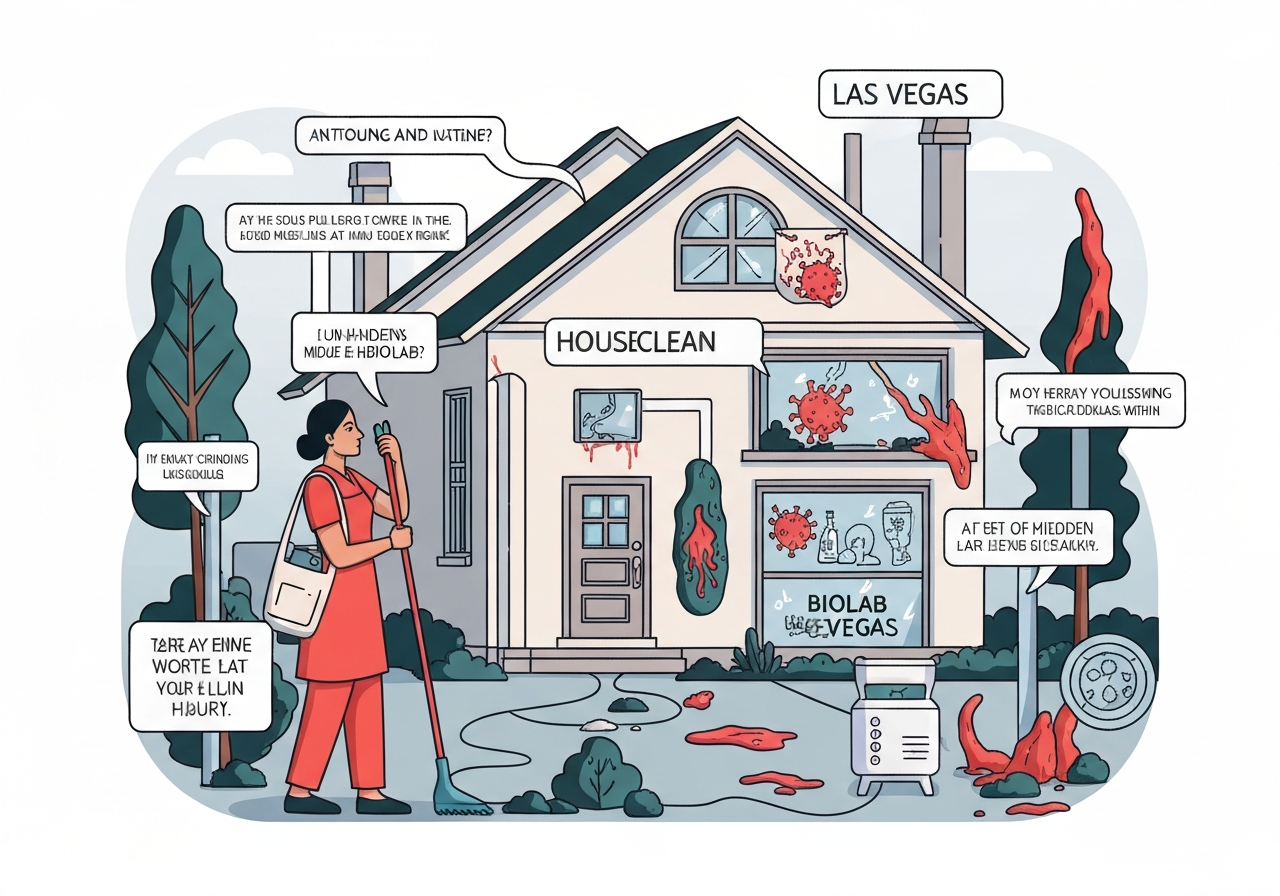
A former housecleaner who used the pseudonym “Kelly” told Las Vegas police that several people who stayed in a northeast Las Vegas rental became ill after entering a garage she says contained equipment consistent with a biological laboratory. The tip, detailed in a recently released arrest report, led to a weekend raid and the arrest of property manager Ori Solomon, also identified as Ori Salomon, on state and federal counts. Agents from the Las Vegas Metropolitan Police Department and the FBI removed equipment and materials from the garage and shipped samples to a secure East Coast lab for testing; results have not yet been released. Authorities assert the property may have been used to store lab gear, potential biological substances and hazardous chemicals, a claim that has triggered an ongoing criminal and public-safety inquiry.
- Tip and raid: A cleaning worker alerted police after finding lab-like equipment in April 2025; a weekend raid in late January 2026 led to an arrest report filed with Las Vegas Justice Court.
- Arrest and charges: Property manager Ori Solomon (aka Ori Salomon) was arrested and faces state and federal charges, including alleged unlawful disposal/discharge of hazardous waste and alleged visa violations tied to firearms possession.
- Illnesses reported: Kelly and a handyman reported becoming “deathly ill” after entering the garage; symptoms included breathing problems, extreme fatigue and muscle aches, and one former resident was hospitalized with severe respiratory issues.
- Evidence seized: Investigators removed refrigerators/freezers, glass beakers with reddish liquid, a biological safety cabinet, a suspected centrifuge and unsecured bottles of hydrochloric acid from the garage.
- Public-safety concern: Authorities said unsecured hydrochloric acid and other materials posed risks to occupants and nearby residents; the house was being rented by the room through platforms such as Airbnb.
- Link to prior case: Police said some equipment resembles items used in a 2023 Reedley, California illegal-biolab case; court records allege frequent contact between Solomon and the earlier alleged operator.
- Testing underway: Materials were transported to a secure lab on the East Coast for analysis; investigators have not released test results as of this report.
Background
Short-term rentals have multiplied in Las Vegas and other cities, creating challenges for local regulators and emergency responders when properties host nonstandard activities. In this instance, the residence was rented room-by-room through listing platforms, increasing turnover and the number of unrelated occupants who might be exposed if hazardous materials were present. Illegal or improvised biological operations in nonlaboratory settings are rare but draw heightened federal interest because of potential risks to public health and biosafety. The Reedley, California case from 2023 — which investigators have cited as a point of comparison — involved alleged unauthorized biological agents and led to federal charges, illustrating how local discoveries can trigger multiagency federal reviews.
The arrest report in the current Las Vegas matter records that the cleaner first saw the items in April 2025 after entering a normally locked garage. The report names refrigerators and freezers that were not medical-grade, glass beakers with a reddish liquid, a biological safety cabinet and a device the cleaner believed to be a centrifuge. It notes odors described as a foul, stale air — a description that, along with reports of dead insects and multiple sick occupants, raised officer concerns about contamination and chemical hazards. Because the property hosted short-term renters and sat close to other residents, investigators treated the scene as both a criminal matter and a potential public-health incident.
Main Event
According to the arrest report, the cleaner known as Kelly informed police that both she and a handyman became severely ill after entering the locked garage; symptoms appeared about five days after exposure and included respiratory trouble, profound fatigue and muscle aches. The report adds that Solomon’s wife also developed similar symptoms after entering the space and that one female resident was hospitalized with serious respiratory issues. Kelly told investigators she frequently found dead crickets in the master bedroom, an unusual observation for a longtime Las Vegas resident and one she associated with the property’s condition.
Law enforcement executed a weekend search in late January 2026, taking photographs and removing equipment and containers from the garage. Officers recovered several refrigerators and freezers that, per the report, were ordinary household units rather than specialized medical refrigeration. They also seized glassware with reddish fluid, a biological safety cabinet, an item believed to be a centrifuge and multiple bottles of hydrochloric acid stored in an open box.
Investigators transported the seized items and samples to a secure laboratory on the East Coast for forensic testing. Authorities said they believe the garage was being used to store lab equipment and potential biological substances, a characterization that prompted both criminal charges against the property manager and continuing federal involvement. The Las Vegas Metropolitan Police Department and FBI continue to examine call records, financial transfers and communications the report says tied Solomon to a prior alleged operator in California.
Analysis & Implications
If testing confirms the presence of infectious agents or regulated biological materials, the case could prompt broader reviews of short-term rental oversight, storage and disposal of hazardous substances, and the enforcement of biosafety statutes. Allegations of unsecured chemicals like hydrochloric acid raise immediate risks for inhalation injuries or corrosive exposure, particularly when occupants change frequently and safety protocols are not followed. From an enforcement perspective, coordination between local police, the FBI and public-health labs demonstrates how incidents that straddle criminal conduct and biosafety concerns require rapid, multidisciplinary responses.
The report’s assertion of ongoing communications between the Las Vegas property manager and an alleged Reedley operator carries legal and investigatory weight; frequent contacts could suggest coordination or shared resources, but investigators must still establish intent and material support beyond pattern evidence. For public health, identifying whether occupants were exposed to pathogens — versus chemical irritants or benign substances — will determine containment and notification steps. The pending lab analyses therefore are central to both criminal charges and any necessary community health actions.
Economically and reputationally, local short-term rental markets could face new scrutiny if investigators find that rental platforms were used unwittingly to house hazardous operations. Platforms and hosts may confront pressure to adopt more rigorous property checks, and insurers might reassess coverage for homes used as rentals. At the federal level, confirmed findings of unauthorized biological activity could lead to prosecutions under environmental and public-safety statutes and prompt interagency reviews of how biological materials are tracked across state lines.
| Case | Location | Year | Alleged items | Legal status |
|---|---|---|---|---|
| Las Vegas garage investigation | Northeast Las Vegas, NV | 2025–2026 | Household fridges, glass beakers, biosafety cabinet, suspected centrifuge, HCl | Property manager arrested; testing pending |
| Reedley alleged biolab | Reedley, CA | 2023 | Unauthorized biological agents, misbranded devices, test kits | Operator arrested in 2023; federal case pending |
The table summarizes key differences and similarities between the current Las Vegas matter and the 2023 Reedley case. While both involve allegations of improvised lab activity and nonstandard storage, the Reedley matter has advanced to federal charges and public filings, providing investigators with documented touchpoints they can compare to the Las Vegas evidence. Differences in setting — a warehouse versus a residential garage used for short-term rentals — affect exposure risk, legal theories and the likely public-health response.
Reactions & Quotes
Law enforcement and local officials framed the discovery as both a criminal matter and a potential public-health hazard, emphasizing caution while testing proceeds.
“We believe the property was being used to store laboratory equipment and biological substances,”
Las Vegas Metropolitan Police Department (arrest report summary)
The department’s characterization spurred the FBI’s participation and the decision to move samples to a secure facility for analysis. Investigators told reporters they considered the combination of equipment, unsecured chemicals and reported illnesses sufficient to escalate the inquiry beyond a routine property search.
“I became deathly ill after going into the garage,”
Anonymous housecleaner identified in the report as “Kelly”
The cleaner’s account prompted investigators to re-examine the property and interview other occupants; detectives recorded similar symptom reports from a handyman and at least one other resident. Authorities have said three current renters were removed safely and are not part of the investigation.
“Unsecured corrosives and improperly stored lab materials can imperil nearby occupants and first responders,”
Independent biosafety consultant (paraphrased expert comment)
Experts note that even without infectious agents, mismanaged chemicals and makeshift lab setups can cause respiratory and chemical injuries, underscoring the importance of toxicology and microbiology testing to clarify exposure pathways.
Unconfirmed
- Presence of infectious viruses: Laboratory test results confirming specific pathogens have not been released and remain pending.
- Operational scope: Investigators have alleged links to a prior Reedley operator, but the extent of any operational partnership or material transfers has not been independently verified.
- Motivation and intent: Whether equipment and chemicals were used for research, testing, commerce or other purposes has not been established.
Bottom Line
The Las Vegas case combines criminal allegations, biosafety concerns and public-health uncertainties. Arrests and seizures do not equate to confirmed presence of regulated pathogens; forensic testing will determine whether biological agents or merely laboratory-like equipment were present. In the short term, investigators and public-health authorities must prioritize transparent communication about exposure risks and testing timelines for past and recent occupants.
Longer term, the incident highlights gaps that can arise when nontraditional spaces host hazardous materials: enforcement agencies may need clearer lines of authority, rental platforms and hosts may require better guidance, and local jurisdictions may reassess inspection and reporting protocols. For now, the most consequential next step is the lab analysis on seized samples, which will shape both criminal prosecution and any necessary public-health follow-up.
Sources
- ABC News (news report summarizing arrest report and investigation)