
Lead
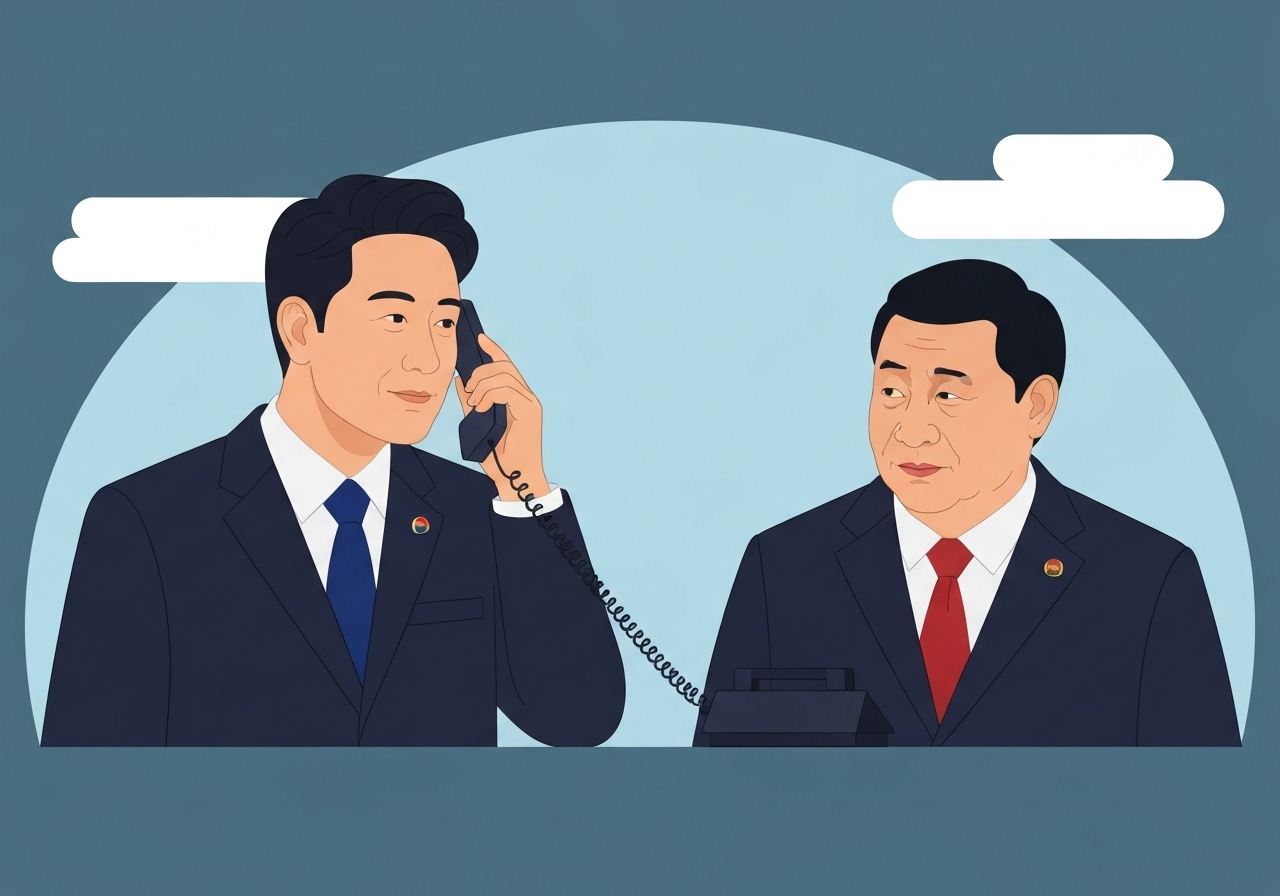
South Korean President Lee Jae Myung said he asked Chinese President Xi Jinping during a Beijing summit on Monday to serve as a mediator to address the North Korean nuclear crisis and reduce tensions between the Koreas. Lee told reporters in Shanghai on Jan. 7, 2026, that Xi responded by urging patience. Lee framed the request as a bid to reopen stalled channels and to pursue phased, reciprocal steps toward denuclearization. China, a primary economic and diplomatic backer of North Korea, said it would make efforts while stressing restraint.
Key Takeaways
- Lee Jae Myung told reporters on Jan. 7, 2026, he asked Xi Jinping during a summit in Beijing on Monday to mediate on North Korean issues.
- Lee said Xi replied that patience was needed; Chinese Premier Li Qiang gave a similar message in a separate Tuesday meeting.
- Lee proposed a freeze-first, phased denuclearization approach in exchange for calibrated benefits to Pyongyang; he said China shared that view.
- China remains North Korea’s largest trading partner and has resisted tougher U.N. sanctions in recent years despite weapons tests that violate U.N. resolutions.
- North Korea has largely refused to resume dialogue with Seoul or Washington since high-profile talks with the U.S. collapsed in 2019.
- Lee took office in June 2025 and has prioritized reopening diplomatic channels with Pyongyang despite public rebukes from North Korean officials this July.
Background
China is the principal external interlocutor for Pyongyang, supplying food, fuel and diplomatic cover at the United Nations. Seoul and Washington have repeatedly asked Beijing to use its leverage to persuade North Korea to return to negotiations or agree to denuclearization steps that would reduce regional risk. Beijing has sought a cautious line: urging all sides to exercise restraint while blocking some efforts to strengthen sanctions at the U.N.
Inter-Korean diplomacy has had intermittent breakthroughs and reversals over two decades, with summits, family-reunions and aid alternating with missile tests and diplomatic freezes. The Trump-Kim summit diplomacy that began in 2018 collapsed by 2019, after which Pyongyang accelerated weapons development and largely shut down channels with Seoul and Washington. Since coming to office in June 2025, President Lee has made reopening dialogue a central foreign-policy goal, proposing phased reciprocity rather than immediate, comprehensive denuclearization.
Main Event
Lee said he raised the mediation request in Beijing during a summit with Xi earlier in the week and repeated the account to reporters while on the Shanghai leg of his state visit. According to Lee, he asked China to play a mediator’s role to restore communication lines and to help negotiate step-by-step limits on North Korea’s nuclear and missile programs in return for benefits. He framed a practical first step as freezing further expansion of North Korea’s nuclear capabilities.
Lee recounted Xi’s response as counsel for patience, saying Chinese leaders urged a measured approach. Lee also described a separate exchange with Premier Li Qiang, who conveyed a similar emphasis on patience and said China would make efforts. Seoul presented the proposed approach as calibrated: limited, verifiable steps by Pyongyang in return for phased relief and incentives.
Lee warned that leaving the status quo would be detrimental to Northeast Asia and global security because North Korea continues to produce weapons. He emphasized that Seoul seeks to avoid rewarding incompletely verified concessions while still offering a realistic pathway out of the current impasse. Pyongyang, however, has publicly rejected returning to denuclearization negotiations, complicating any mediation effort.
Analysis & Implications
If China accepts a formal mediator role, it could amplify Beijing’s diplomatic responsibilities and increase pressure on Pyongyang to engage. Beijing retains unique economic and political levers, including trade ties and border controls; those tools could be deployed to encourage talks. But Beijing’s willingness to be seen as enforcing penalties is limited by its strategic interest in a stable, buffer North Korea.
Seoul’s freeze-first proposal seeks to lock in a non-expansion outcome before negotiating more intrusive rollback measures. That approach is pragmatic given enforcement and verification challenges, but it carries risks: limited concessions in exchange for partial relief could allow Pyongyang to retain significant capabilities while reaping economic gains. Experts worry this could entrench rather than dismantle parts of the program if verification is weak.
The U.S.-South Korea-China triangular dynamic will be critical. Washington has long called on Beijing to use its influence, but disagreements over incentives and enforcement could limit coordination. A Chinese-mediated process that lacks clear verification mechanisms or U.S. buy-in may struggle to achieve durable results, while strong trilateral alignment could increase the chance of incremental progress.
Comparison & Data
| Year | Event | Outcome |
|---|---|---|
| 2006 | North Korea’s first nuclear test | Start of nuclear escalation |
| 2018 | Inter-Korean and U.S.-DPRK summits | Diplomatic thaw with limited follow-through |
| 2019 | U.S.-DPRK diplomacy collapsed | Channels largely closed; missile work continued |
| 2025 | Lee Jae Myung takes office (June) | Policy push to reopen talks |
The table highlights episodic progress and setbacks: periodic summits have not translated into sustained denuclearization, while testing and weapons development have persisted. Seoul’s current approach emphasizes incremental, verifiable steps to avoid repeating past patterns where talks stalled and weapons progress resumed.
Reactions & Quotes
South Korean officials framed the China visit as a diplomatic opening. Lee’s brief comments to reporters were the principal public account of the request to Xi.
“We requested China to play such a role, and China said it will anyway make such efforts,”
President Lee Jae Myung (reported remarks)
Lee also relayed Xi’s reported counsel when discussing the North Korean issue.
“We need to be patient,”
Xi Jinping (reported response via Lee)
Pyongyang’s recent public statements have been hostile to Lee’s outreach. In July, Kim Yo Jong criticized the South Korean government for what she called misplaced trust.
“Blind trust”
Kim Yo Jong (July public remark summarized)
Unconfirmed
- Whether China has committed specific, binding mediation steps beyond public assurances of effort is not verified by an official Chinese statement.
- It is unconfirmed whether Pyongyang will accept Chinese mediation or re-engage with Seoul under the proposed phased framework.
- The precise verification mechanisms that might accompany any freeze or phased steps have not been detailed publicly.
Bottom Line
Lee’s public appeal to Xi underscores Seoul’s reliance on Beijing to reduce tensions and restart diplomacy with Pyongyang. China’s acceptance of a mediator role—if substantive—could change the dynamics, but it would require concrete, verifiable mechanisms and likely coordination with Washington to be effective. Observers should watch for formal Chinese statements, any follow-up meetings, and signs from Pyongyang indicating willingness to negotiate.
Absent clear commitments on verification and enforcement, a brokered freeze could stabilize the situation temporarily but leave core risks intact. For durable progress, trilateral alignment on incentives, verification and contingency measures will be essential.
Sources
- Associated Press via ABC News (press wire/major news outlet)
- United Nations Security Council sanctions information (official/UN)