
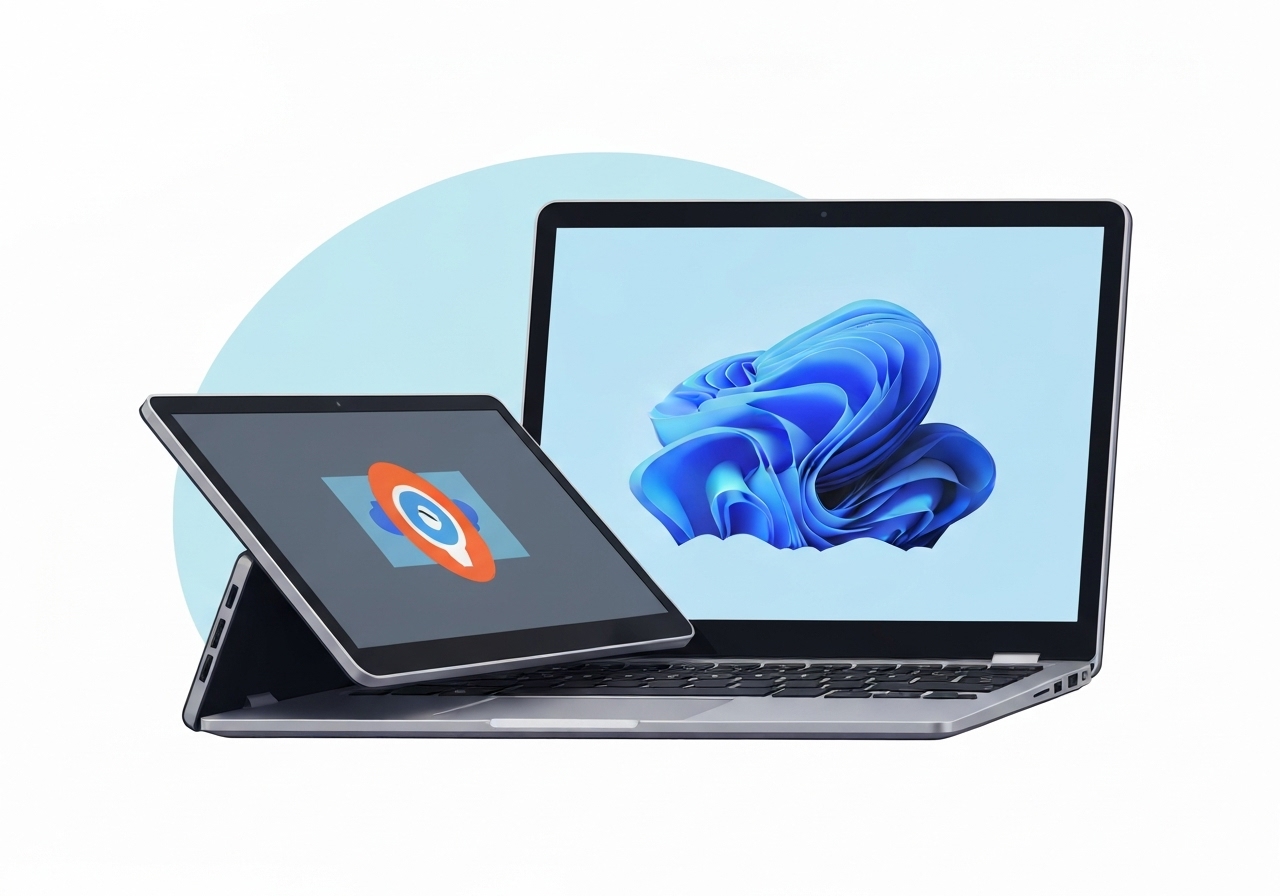
— At IFA in Berlin, Lenovo demonstrated the ThinkBook VertiFlex concept: a 14‑inch prototype laptop, 0.7 inches thick and weighing 3.06 pounds, whose display pivots and rotates into portrait orientation for reading or vertical workflows.
Key Takeaways
- Lenovo showed the VertiFlex concept at IFA 2025 in Berlin; it is a prototype, not a commercial product.
- The device uses a central pivot and a hidden hinge/track system to move a 14‑inch panel from landscape into portrait.
- Lenovo reported the machine measures 0.7 inches thick and weighs 3.06 pounds in the demo unit.
- Under the rotating panel is a felt‑covered backplate; Lenovo suggested using that area for phone mirroring with its Software Connect feature.
- Potential use cases include split‑screen multitasking, reviewing long documents or code, and vertical content viewing.
- No hardware details, launch timeline, or pricing were provided; durability and long‑term reliability remain open questions.
Verified Facts
Lenovo presented the VertiFlex as a concept device at IFA in Berlin on Sept. 5, 2025. Company materials and demo footage show a 14‑inch display that can be rotated smoothly from a conventional clamshell position into a portrait orientation. The prototype shown at the event was described as 0.7 inches thick and weighing roughly 3.06 pounds.
Mechanically, the display relies on a central pivot and a secondary hinge mechanism hidden behind the screen. Reporting from PCMag notes a horizontal track inside the hinge assembly that guides the panel as it slides and rotates; a separate lift hinge raises the screen slightly during the motion to prevent the display’s corner from striking the base.
| Spec | Demo unit |
|---|---|
| Display | 14‑inch, swivelable |
| Thickness | 0.7 inches |
| Weight | 3.06 pounds |
| Status | Prototype / concept (no release announced) |
Lenovo also showed a felt‑covered backplate beneath the rotating panel and suggested using that surface to hold a smartphone for mirroring via its Software Connect feature; that pairing requires a Lenovo Motorola phone according to company notes. The demo video adjusts the screen image automatically when the panel reaches portrait mode.
Context & Impact
Lenovo has a history of experimenting with unusual form factors — rollable panels, outward‑folding screens, foldables and dual‑display systems — and the VertiFlex joins that lineup as an alternative to bendable OLED approaches. By rotating a rigid panel rather than relying on a flexible OLED, Lenovo aims to avoid issues such as visible creases, reflectivity and complex motorized folding mechanisms.
If developed into a production device, a swivel display could appeal to professionals who frequently read long documents, code vertically, or run split vertical views for reference material. The orientation change also matches mobile workflows that favor portrait layouts.
However, adoption would depend on practical factors: hinge longevity under repeated rotation, ingress protection around moving parts, keyboard ergonomics when the display is vertical, and the added cost of a more complex hinge assembly. Felt or fabric surfaces under the panel may divide user opinion and could affect cleaning, wear, and perceived durability.
Official Statements
“The VertiFlex concept explores new display orientations for portable PCs and shows how a swivel screen might support multitasking and document review,”
Lenovo press materials, IFA 2025
Unconfirmed
- No release timeline, pricing, or final hardware specifications have been announced by Lenovo.
- Long‑term durability and the expected service life of the pivot and hidden hinge remain unproven outside of the demo unit.
- The felt backplate’s longevity, cleaning requirements, and user reception are not yet validated in consumer testing.
Bottom Line
The VertiFlex concept is a notable entry in Lenovo’s ongoing experiments with display form factors. It offers a practical route to portrait viewing without bendable OLEDs, but it must clear engineering, cost, and durability hurdles before it could become a consumer product. Watch for further testing or official product announcements to see whether this pivot approach reaches production.