
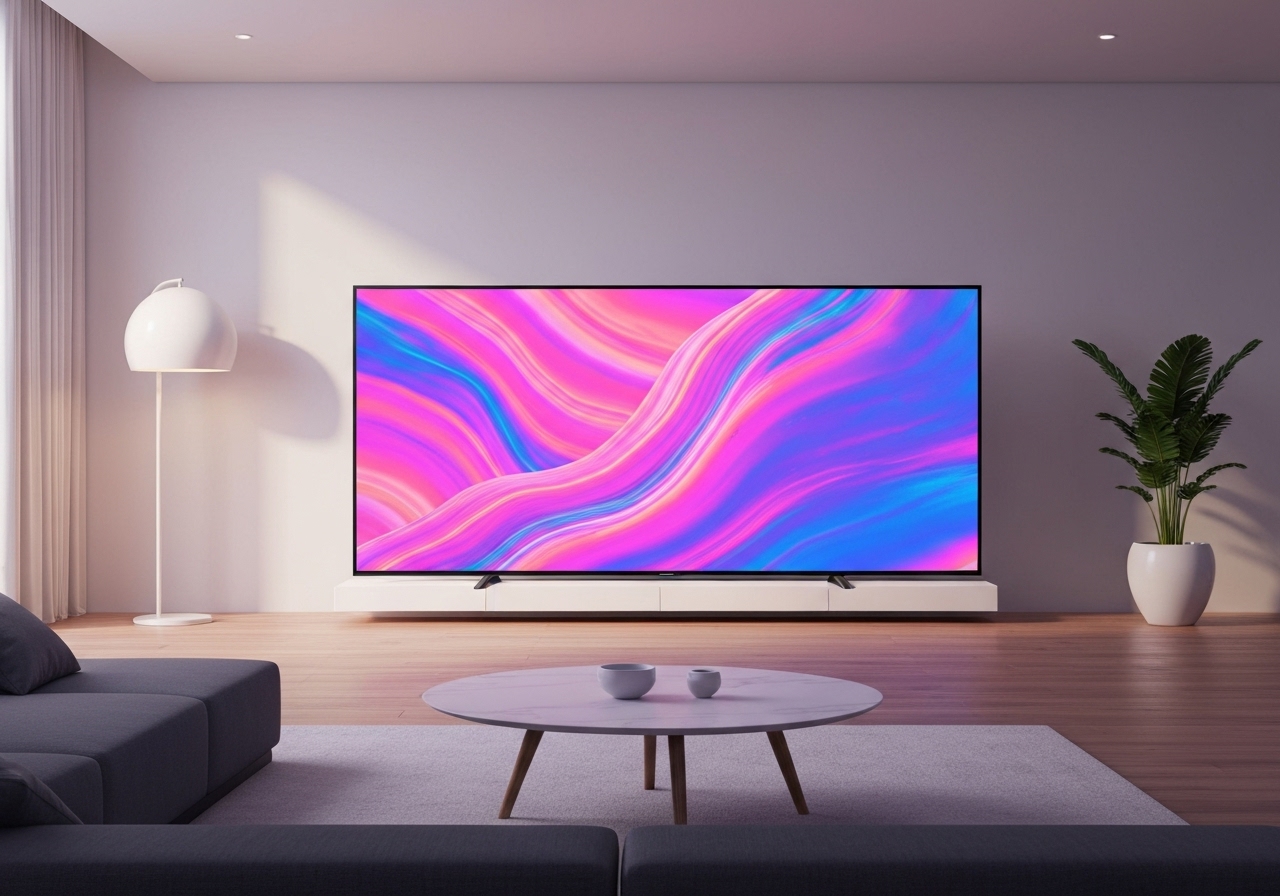
LG will introduce a canvas-style art television, the LG Gallery TV, at CES 2026, offering 55- and 65-inch Mini LED models with a flush-mount design and interchangeable magnetic frames. The set uses the company’s Alpha 7 AI processor and delivers 4K resolution, while integrating a paid Gallery+ art service that includes a library of more than 4,500 works. LG says the display was developed with museum curators and includes a Gallery Mode to optimize brightness and color for artwork, plus automatic picture adjustments tied to ambient light.
Key Takeaways
- The LG Gallery TV debuts at CES 2026 in 55-inch and 65-inch sizes with a flush wall-mount design and magnetic frames for customization.
- Display technology: Mini LED panel, 4K resolution and LG’s Alpha 7 AI processor for image processing and upscaling.
- Content: integration with Gallery+, a paid subscription offering a catalog of over 4,500 artworks, plus support for user photos and generative-AI-created images.
- Artwork presentation: a dedicated Gallery Mode developed with museum curators to prioritize texture, color fidelity and brightness for art display.
- Ambient handling: the TV will automatically adjust picture settings to respond to changing room light and includes unspecified reflection- and glare-reduction measures.
- Market context: positioned as a direct rival to Samsung’s The Frame and Hisense CanvasTV, expanding LG’s prior Gallery-design efforts such as the 2020 LG GX Gallery OLED.
Background
Televisions designed to double as wall art have become a distinct product category as manufacturers chase living-room aesthetics as much as technical performance. Samsung popularized the segment with The Frame, offering art-mode software and bezel customization; other makers including LG and Hisense have since introduced similar options blending décor and display. LG first entered the “gallery” concept in 2020 with the ultra-thin GX Gallery OLED, which emphasized a picture-frame look and wall-flush mounting.
The Gallery TV announced for CES 2026 builds on that lineage but shifts hardware and software emphases: Mini LED backlighting in place of OLED, an AI image engine (Alpha 7), and a subscription art library to create a curated experience. Partnerships and curation—LG notes museum curators contributed to the new Gallery Mode—reflect a broader strategy to court buyers who want museum-like reproduction and easy content sourcing for art displays. As living rooms become multifunctional, manufacturers are threading design features and services together to capture recurring revenue beyond hardware sales.
Main Event
LG has confirmed that the Gallery TV will be shown at the Consumer Electronics Show in January 2026, with two screen sizes—55 inches and 65 inches—offered. The physical design emphasizes a flush mounting approach and includes magnetic frames users can swap to match interior décor; LG highlighted that the chassis is engineered to sit close to the wall for a canvas-like appearance. On the hardware side, LG specified a Mini LED backlight and 4K panel driven by its Alpha 7 AI processor, which the company says is responsible for scene analysis and image optimization.
The company also described software and content features tied to the set’s art-first positioning. Gallery+ is LG’s paid subscription service that supplies a library of more than 4,500 artworks ready for display; users will also be able to show personal photos or generate custom images using generative AI tools built into the platform. LG indicated Gallery Mode was developed with input from museum curators and is intended to prioritize color accuracy and surface texture so works look closer to physical art.
On viewing conditions, LG stated the display includes measures to reduce reflections and manage glare, and it will dynamically alter picture settings as ambient lighting changes during the day. The company did not publish full technical specifications for anti-reflective coating or exact ambient-sensing thresholds ahead of the CES unveiling. Pricing, regional availability and precise launch timing beyond the CES reveal were not confirmed at the time of announcement.
Analysis & Implications
LG’s move reaffirms that manufacturers see an opportunity in lifestyle-focused displays where aesthetics and recurring content services can boost margins compared with commodity TVs. By deploying Mini LED rather than OLED for this model, LG appears to prioritize brightness and controlled local dimming that can benefit art reproduction in brightly lit rooms; Mini LED typically yields higher peak brightness than many OLED panels, which helps in showing texture and detail on art pieces.
The inclusion of Alpha 7 AI processing signals LG’s intent to make framing artwork easy while maintaining perceived fidelity. AI-driven scene analysis and upscaling reduce the expertise required to present high-resolution art, potentially expanding the market beyond ergonomically minded enthusiasts to mainstream buyers who want plug-and-play solutions. The Gallery+ subscription also mirrors a broader industry trend: hardware is the initial sale, but curated content and services create ongoing revenue streams.
Competition will be centered on both hardware characteristics (panel type, anti-reflective performance, mounting design) and software/service ecosystems (art libraries, third-party integrations, generative tools). Samsung’s The Frame remains a strong incumbent because of its software polish and marketplace relationships, and Hisense’s CanvasTV offers another price-positioned alternative. LG’s curator collaboration and emphasis on texture could differentiate its offering, but success will depend on price, image quality in varied lighting, and the user experience for acquiring and managing art content.
Comparison & Data
| Model / Feature | Panel Type | Sizes | Art Service |
|---|---|---|---|
| LG Gallery TV (CES 2026) | Mini LED, 4K | 55″, 65″ | Gallery+ (4,500+ works) |
| LG GX Gallery (2020) | OLED | various (ultra-thin) | — |
| Samsung The Frame | QLED / LCD | multiple sizes | Art Store (paid/free) |
| Hisense CanvasTV | LCD variants | various | Manufacturer art options |
The table highlights LG’s pivot from ultra-thin OLED (GX, 2020) to a Mini LED approach in 2026, alongside service differentiation via Gallery+. Buyers weighing options should compare how each panel type performs in their typical room lighting—Mini LED for brightness, OLED for black levels—and whether content libraries meet aesthetic needs.
Reactions & Quotes
“The Gallery TV was developed with museum curators to optimize brightness and color to better reveal the texture of artwork,”
LG (company statement)
LG framed the product as a curatorial exercise, emphasizing collaboration with museum professionals to tune the set for art presentation rather than conventional entertainment-first picture presets.
“Gallery+ provides access to a catalog of more than 4,500 works for display on the TV,”
LG (product briefing)
LG presented Gallery+ as a paid subscription intended to simplify access to professionally curated art; the company also said users can display personal photos or create images using integrated generative-AI tools.
“The new Gallery TV positions LG more directly against art-focused competitors such as Samsung’s The Frame and Hisense’s CanvasTV,”
Engadget (tech media)
Industry coverage characterized the announcement as both an iteration of LG’s earlier gallery-style models and a targeted challenge to rival products that combine design and content ecosystems.
Unconfirmed
- Exact pricing and regional launch dates for the LG Gallery TV were not disclosed ahead of CES 2026.
- Specific technical details for reflection handling and anti-glare coatings were not published; LG provided only general statements about glare reduction.
- It is unclear whether Gallery+ will offer third-party museum partnerships or allow cross-platform purchases at launch.
Bottom Line
LG’s Gallery TV for CES 2026 tightens the company’s push into lifestyle displays by combining Mini LED hardware, AI-driven image processing and a subscription art library into a canvas-like product. The combination of museum-curator input, magnetic frames and automated ambient adjustments aims to lower the barrier to creating a gallery feel at home while offering potential recurring revenue through Gallery+.
How compelling the product will be depends largely on price, the effectiveness of glare and reflection management in real-world rooms, and the usability and perceived value of Gallery+. Buyers comparing art-focused TVs should evaluate in-person image quality under their typical lighting and factor ongoing subscription costs against the convenience of a curated art catalog.