
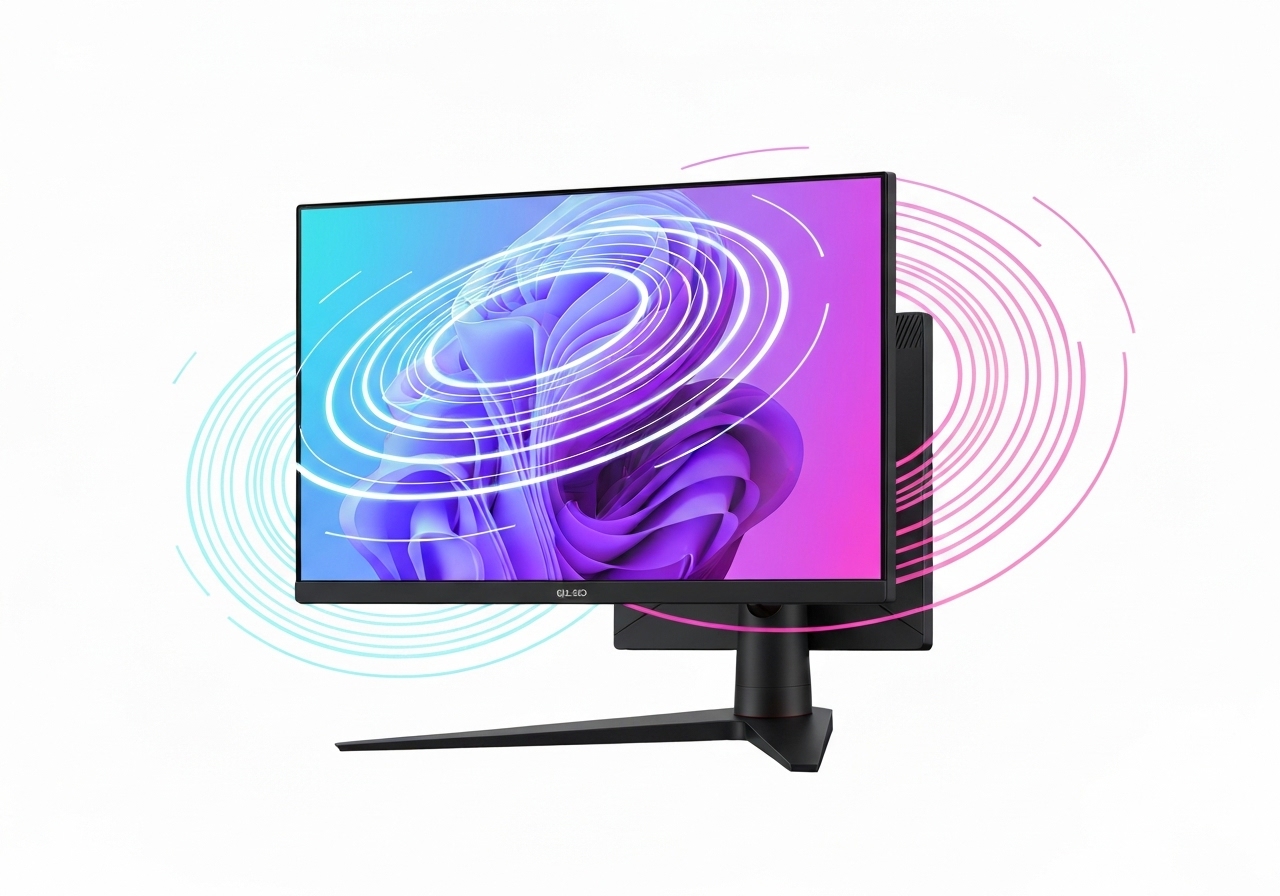
LG Electronics announced a new UltraGear evo family of high-end gaming monitors ahead of CES, unveiling three flagship models that share 5K-class resolution and integrated AI upscaling. The lineup includes the 39GX950B (39-inch ultrawide), 27GM950B (27-inch), and 52G930B (52-inch curved), each aimed at different competitive and immersive use cases. Key hardware highlights include OLED and advanced MiniLED panels, refresh rates up to 330Hz in a lower-resolution mode, and a 240Hz 5K2K mode on the largest model. LG says the displays will be previewed at CES next month; pricing and availability were not disclosed.
Key Takeaways
- LG introduced three UltraGear evo flagships: 39GX950B (39-inch), 27GM950B (27-inch), and 52G930B (52-inch).
- All models use a 5K-class resolution often described as 5K2K and incorporate AI upscaling to boost lower-resolution content.
- The 39GX950B is a 21:9 5K2K OLED ultrawide that runs 165Hz native or 330Hz when switching to WFHD for high-frame competitive play.
- The 27GM950B employs “New” MiniLED technology LG says offers higher peak brightness while reducing traditional MiniLED blooming artifacts.
- The 52G930B is a massive curved 12:9 panoramic 5K2K panel capable of 240Hz at native resolution, targeting immersive console and PC setups.
- LG manufactures panels used in high-end displays such as Apple’s Pro Display XDR, and reports indicate the GM9 panel may relate to an upcoming update for that product line.
- All three models will be on display at CES next month; LG has not released pricing or shipping windows.
Background
LG’s UltraGear line has long targeted gamers who demand fast refresh rates, low latency and vivid color. Over recent years, monitor makers have pushed both pixel counts and refresh rates, creating a tension between extreme resolution and the high frame rates competitive players require. The 5K2K designation aims to sit between 4K and ultrawide formats by offering extra horizontal pixels for productivity and panoramic gaming while retaining high pixel density.
Hardware trends feeding this release include broader adoption of OLED for deep blacks and contrast, and iterative improvements in MiniLED backlighting to raise brightness without traditional local-dimming halo issues. At the same time, AI-driven upscaling has become a differentiator: manufacturers increasingly add neural upscalers to improve perceived detail from lower-resolution inputs, reducing the GPU requirements for high-quality visuals. CES is traditionally the forum where vendors reveal new displays and prototype technologies to press and partners.
Main Event
LG positioned the UltraGear evo line as a simultaneous push on multiple fronts: pixel count, refresh performance and computational enhancement. The 39GX950B pairs a 21:9 ultrawide OLED panel at native 5K2K resolution with a dual-mode refresh strategy—165Hz at full res for visual fidelity and a 330Hz WFHD mode designed for ultra-high-frame-rate competitive play. That switching capability targets users who want cinematic workspace and the option for extreme responsiveness in esports titles.
The 27GM950B is described as using “New” MiniLEDs. LG says this approach raises peak luminance compared with OLED while addressing the blooming typically associated with dense local dimming zones. The company frames this model as a bridge between brightness and contrast—aiming at creators and gamers who need both vivid HDR highlights and minimal halo artifacts.
The 52G930B is the lineup’s outlier in scale: a 52-inch curved display delivering a 12:9 panoramic aspect at native 5K2K and a 240Hz refresh rate. LG markets this as an immersive alternative for users who want console-style presence or a single-panel multiview setup, combining high refresh and resolution without multi-monitor bezels. All three models incorporate AI upscaling to enhance lower-resolution input sources, though LG has not published benchmark figures for the technology.
LG confirmed the monitors will be physically exhibited at CES next month, where press and attendees can inspect panel behavior, latency and HDR presentation firsthand. The company withheld pricing and ship dates, saying only that more details will follow after the show. This staged reveal aligns with typical CES product cycles—announce hardware, gather hands-on feedback, then release commercial details ahead of broader availability.
Analysis & Implications
Technically, packing 5K-class resolution into both ultrawide and traditional formats reflects a strategy to capture both productivity-minded users and competitive gamers. The 39-inch ultrawide offering, with a 165Hz/330Hz dual-mode, acknowledges that many gamers prioritize frame rate over resolution in fast-paced titles; an explicit high-refresh WFHD mode lets users choose responsiveness over pixel count without buying a separate monitor.
The emphasis on improved MiniLEDs for the 27-inch model signals LG’s effort to mitigate a long-standing weakness in MiniLED implementations—haloing around bright objects—while retaining the high peak luminance OLED sometimes lacks. If the claimed reductions in blooming hold up in testing, MiniLED could offer a superior middle ground between OLED contrast and LCD brightness for HDR gaming and content creation.
AI upscaling as a product feature reflects a broader industry trend: offloading perceptual enhancement to on-board neural models to ease GPU demands. In practice, efficacy will depend on implementation quality and latency; even small added processing can matter in competitive scenarios. LG’s integration could widen the appeal of high-res monitors to players with mid-range GPUs, but independent benchmarks will determine whether the upscaler preserves temporal stability and input responsiveness.
From a market perspective, the 52-inch 240Hz curved panel challenges how high-end monitors are positioned relative to TVs and projector-based setups. If pricing places it nearer to premium TVs, buyers will weigh the trade-offs of monitor-class input latency and adaptive-sync support versus conventional large-screen living-room displays. LG’s next steps—pricing, availability and third-party reviews—will largely determine how disruptive these models become in the gaming and creator markets.
Comparison & Data
| Model | Size | Aspect | Resolution | Refresh | Panel Tech |
|---|---|---|---|---|---|
| 39GX950B | 39″ | 21:9 | 5K2K | 165Hz native / 330Hz WFHD | OLED |
| 27GM950B | 27″ | 16:9 | 5K-class | unspecified | “New” MiniLED |
| 52G930B | 52″ | 12:9 | 5K2K | 240Hz | Curved panel |
The table summarizes LG’s specifications disclosed so far. Notable gaps include exact native refresh for the 27-inch model and detailed latency/VRR support across modes. Hands-on testing at CES and subsequent reviews will be necessary to validate claims such as MiniLED blooming mitigation and real-world benefits of the AI upscaler.
Reactions & Quotes
“The UltraGear evo series represents a convergence of high pixel counts and computational enhancement for gaming and content creation.”
LG Electronics (press release)
LG framed the new family as focused on both competitive responsiveness and immersive visuals; that messaging was repeated in early product materials distributed to press. The company emphasized AI upscaling as a feature to improve perceived detail from lower-resolution inputs.
“Attendees will be able to compare panel behavior and AI-upscaling performance firsthand at CES next month.”
LG Electronics (media brief)
Industry observers noted the strategic timing ahead of CES, allowing LG to control narrative and secure hands-on impressions before finalizing retail pricing. Analysts say the combination of panel types and computational features is likely to broaden UltraGear’s appeal if performance and price align.
Unconfirmed
- Exact pricing and ship dates for the 39GX950B, 27GM950B and 52G930B remain undisclosed and unconfirmed.
- Reports linking the GM9 panel to an imminent update of Apple’s Pro Display XDR are unverified and should be treated as rumor until confirmed by Apple or LG.
- Claims that the “New” MiniLED implementation eliminates blooming have not been independently validated; lab tests and reviews are needed.
Bottom Line
LG’s UltraGear evo announcement signals a deliberate push to blend very high pixel counts with refresh-rate flexibility and on-device AI image enhancement. The trio of models targets distinct buyers: ultrawide competitive players and multitaskers (39-inch), bright high-contrast users and creators (27-inch MiniLED), and immersive single-panel enthusiasts (52-inch curved).
The true market impact will hinge on pricing, latency and real-world performance of both the upscaling engine and the new MiniLED implementation. Expect hands-on reviews and benchmark testing after CES to determine whether these monitors deliver meaningful gains or are primarily spec-sheet advances.