
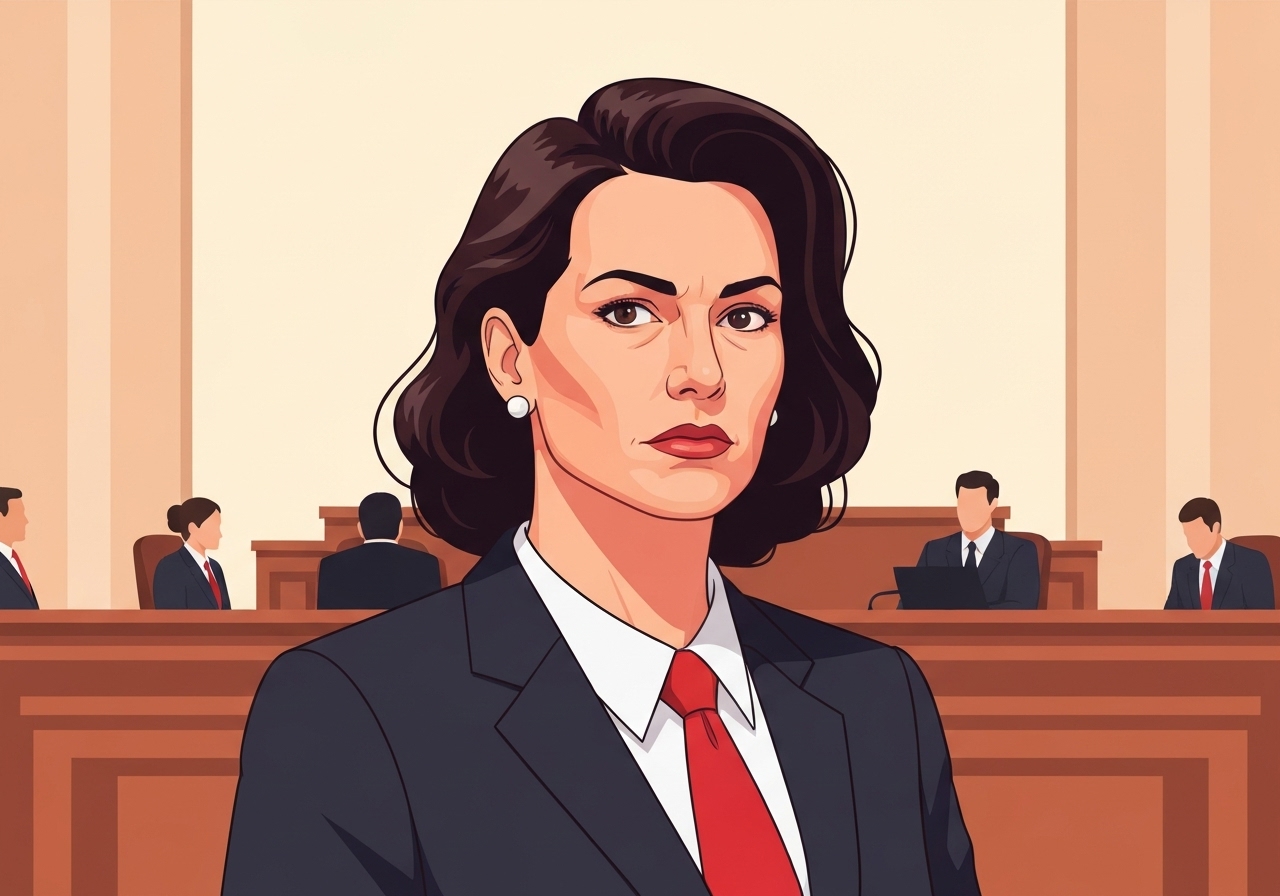
A federal judge on Nov. 25, 2025, set aside indictments against former FBI Director James Comey and New York Attorney General Letitia James after finding the acting U.S. attorney who signed the charges was unlawfully appointed. The judge ruled Lindsey Halligan — a 36-year-old former insurance lawyer and ex-White House aide who was named acting U.S. attorney for the Eastern District of Virginia in late September — lacked lawful authority to present those indictments. The decision voided actions that flowed from her appointment and leaves the Justice Department able to appeal. The ruling has intensified scrutiny of how the prosecutions were handled and of the White House role in selecting the prosecutor.
Key Takeaways
- Judge Cameron McGowan Currie ruled on Nov. 25, 2025, that Lindsey Halligan’s appointment violated a federal statute limiting interim U.S. attorneys to 120 days, rendering indictments she signed invalid.
- Halligan, 36, was appointed as acting U.S. attorney for the Eastern District of Virginia in late September after predecessor Erik Siebert resigned under pressure from President Trump.
- The Comey indictment was announced Sept. 25, five days before the statute of limitations would have run, and while Halligan was on her fourth day in the job.
- Magistrate orders and court filings revealed grand-jury procedural problems: the full grand jury never reviewed the final indictment and prosecutors renumbered charges without returning to the grand jury.
- Halligan’s background is in insurance defense; she earned her J.D. from the University of Miami in 2013 and became a partner at Cole, Scott & Kissane in 2018 before joining Trump’s legal team in 2022.
- Halligan served in the White House starting January 2025 as senior associate staff secretary and special assistant and led a controversial Smithsonian review in August 2025.
- The decision does not resolve underlying factual allegations against Comey or James; the Justice Department has said it will appeal the ruling.
Background
Lindsey Halligan grew up in Broomfield, Colorado, and studied politics and broadcast journalism at Regis University before earning a law degree from the University of Miami in 2013. Early legal experience included internships at the Miami-Dade Public Defender’s Office and the Miami Innocence Clinic; she then joined Cole, Scott & Kissane, a firm focused on insurance defense litigation, and became a partner in 2018. Her litigation work included a notable win on a $500,000 property-damage claim, a matter her firm publicized at the time.
After Donald Trump left office in 2021, Halligan met him at an event in November 2021 and later joined his personal legal team in 2022. She assisted in defending Trump in the aftermath of the August 2022 Mar-a-Lago search, frequently appearing in court and on television. In January 2025, upon Trump’s return to the White House, Halligan joined the administration as a senior associate staff secretary and special assistant to the president, taking on visible duties including leading a review of several Smithsonian exhibits that drew criticism from historians and professional associations.
Main Event
In late September 2025, Erik Siebert, the acting U.S. attorney for the Eastern District of Virginia, resigned after what court filings and reporting describe as pressure from President Trump to pursue charges against James and Comey. The next day, Trump announced Halligan’s appointment and praised her publicly. Attorney General Pam Bondi’s office issued an order authorizing Halligan for the interim U.S. attorney role on Sept. 22, 2025.
On Sept. 25, Halligan’s office announced a federal grand jury had returned an indictment charging Comey with making a false statement and obstruction related to his 2020 Senate testimony. The timing was legally sensitive: the announcement arrived five days before the statute of limitations would expire on the underlying conduct and within Halligan’s first week in the position.
Questions soon arose about how the grand jury process had been handled. A magistrate judge ordered the Justice Department to turn over grand-jury materials to Comey’s defense team, citing a pattern of investigative problems. Halligan later confirmed that the full grand jury never reviewed the final version of the indictment — an omission defense lawyers argued could be fatal to the case. Separately, prosecutors produced a renumbered indictment apparently not returned to the grand jury after changes were made.
On Nov. 25, 2025, U.S. District Judge Cameron McGowan Currie issued dual opinions concluding Halligan’s appointment violated the federal time limit on interim U.S. attorneys and that, because she was the only signer, the indictments were unauthorized and therefore void. Currie ordered that actions flowing from the defective appointment be set aside, while leaving open the government’s right to appeal.
Analysis & Implications
The Currie ruling turns primarily on statutory appointment mechanisms rather than on the underlying evidence in the Comey and James matters. Under federal law, an acting U.S. attorney is limited to 120 days unless a nominee is confirmed by the Senate; after that period only district courts may fill vacancies. Because Siebert had served as acting U.S. attorney since January 2025, the judge found the later appointment to Halligan was not authorized by statute.
Legally, the ruling illustrates how procedural and appointment errors can eclipse substantive allegations. Even if prosecutors believe they have facts to support charges, a court can nullify indictments when signatory authority is flawed. That creates a procedural avenue for defendants to have cases dismissed irrespective of merits — a recurring theme in high-stakes political prosecutions where appointment timing and administrative formalities become litigated.
Politically, the ruling deepens criticism that the Justice Department and the White House allowed partisan priorities to guide staffing decisions. Critics point to Siebert’s reported reluctance to bring the charges for lack of evidence, the rapid appointment of a trusted White House aide, and the fast-moving timeline to secure an indictment before the statute of limitations expired. Supporters argue the White House and Bondi acted within their discretion and that the decision is a narrow statutory ruling susceptible to appeal.
Practically, the Justice Department now faces choices: appeal Currie’s opinion, re-open investigative steps to cure procedural defects where possible, or decide against further prosecution. Any appeal would confront clear statutory text but also deference questions about internal appointment practices. The ruling may also prompt Congress to reassess interim-appointment authority or to clarify administrative pathways to avoid similar disruptions.
| Date | Event |
|---|---|
| Aug 2022 | FBI search of Mar-a-Lago; Halligan assisted Trump’s defense. |
| Jan 2025 | Halligan joins White House staff as senior associate staff secretary. |
| Late Sept 2025 | Erik Siebert resigns; Halligan appointed acting U.S. attorney for EDVA. |
| Sept 25, 2025 | Indictment of James and Comey announced. |
| Nov 25, 2025 | Judge Currie rules Halligan’s appointment unlawful; indictments voided. |
The table shows how quickly events unfolded once the acting U.S. attorney role changed hands and why courts scrutinize both timing and process when high-profile prosecutions follow abrupt staffing changes.
Reactions & Quotes
“All actions flowing from Ms. Halligan’s defective appointment, including securing and signing Mr. Comey’s indictment, were unlawful exercises of executive power and are hereby set aside.”
Judge Cameron McGowan Currie (court opinion)
“We believe that the attorney in this case, Lindsey Halligan, is not only extremely qualified for this position but she was in fact legally appointed.”
Karoline Leavitt, White House Press Secretary
“If I went into a grand jury on my fourth day on the job and tried to indict a complicated, high-stakes case like this, I’m sure I would’ve screwed up as well.”
Elie Honig, former federal prosecutor (legal analyst)
Unconfirmed
- Whether the Justice Department can re-present any corrected indictments without new grand-jury proceedings is unresolved and will depend on appellate rulings and prosecutorial choices.
- Reports that Halligan personally directed specific investigative steps remain partially reported; some internal deliberations have not been made public and are still under review.
- The extent to which White House discussions influenced the timing of the appointment and charging decisions is not fully documented in the public record.
Bottom Line
The Currie decision highlights that procedural compliance in appointing prosecutors is not a technicality but a potential case-ending issue. Lindsey Halligan’s rapid elevation from White House aide and private insurance lawyer to acting U.S. attorney, combined with irregularities in grand-jury practice, produced a legal outcome that nullified high-profile indictments despite ongoing public debate about their substance.
For the Justice Department, the immediate path forward is likely an appeal, which would test statutory interpretation around interim appointments and could prompt changes in how politically sensitive prosecutions are staffed. For observers and lawmakers, the case underscores how administrative choices — personnel, timing, and paperwork — can determine whether major prosecutions survive judicial scrutiny.