
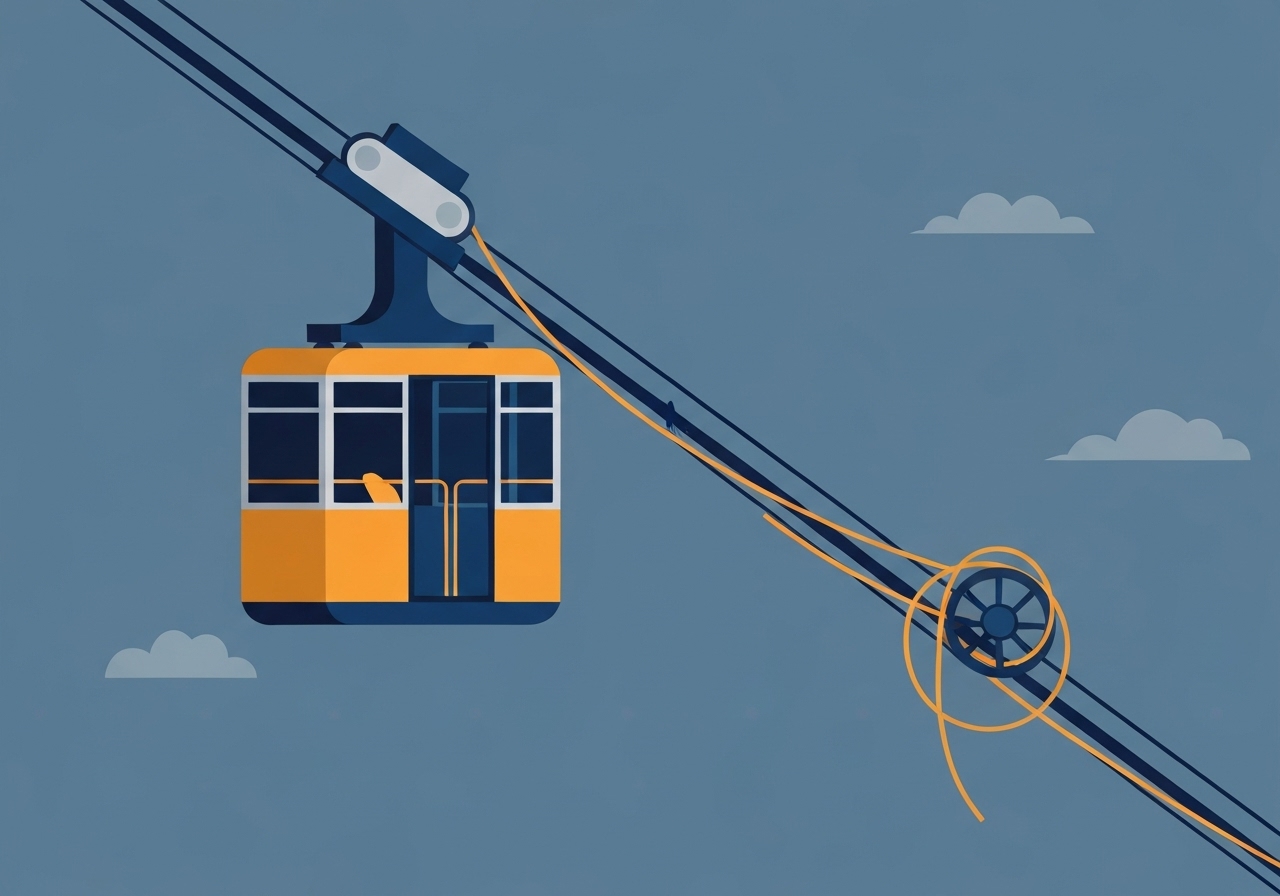
A preliminary investigation released on Sept. 6, 2025, found the connecting cable between the two cabins snapped shortly before the Gloria funicular derailed near Avenida da Liberdade in central Lisbon on Sept. 4, killing 16 people and injuring 21.
Key takeaways
- The accident occurred on Sept. 4, 2025, near Avenida da Liberdade in central Lisbon.
- Sixteen people died and 21 were injured; 11 of the dead were foreign nationals.
- Investigators say the connecting cable gave way at its top-cabin attachment after a visual check earlier that morning detected no anomalies.
- The two cabins had moved only about 6 meters (20 feet) when they lost the balancing force provided by the cable; the sequence unfolded in under 50 seconds.
- Two independent probes are under way: the air and rail accidents bureau (GPIAAF) and the public prosecutor’s office.
- A preliminary report is due within 45 days; a final report with causes and safety recommendations will follow, or an interim report if a year is needed.
Verified facts
According to the investigative bureau’s initial findings, the connecting cable linking the upper and lower cabins detached at the point where it was fixed to the top cabin. Inspectors working at the scene described the cable failure as immediately obvious during the wreckage examination.
GPIAAF’s preliminary account states that a scheduled visual inspection had been completed on the morning of the accident and that the maintenance plan was up to date. That inspection reportedly found no visible defects in the vehicles’ cable or braking systems.
Investigators estimated the cabins traveled no more than about 6 meters (20 feet) after losing the balancing force provided by the connector before the car derailed and crashed into a nearby building. The bureau says the whole accident sequence unfolded in under 50 seconds.
The vehicle involved is the Gloria funicular carriage, a yellow-and-white car that has been in service since 1914 and operates on a steep incline in central Lisbon. Emergency services and police responded quickly, treating the scene as a major accident and beginning evidence preservation.
Context & impact
Officials described the crash as one of Lisbon’s worst recent tragedies, prompting national mourning and international attention because many victims were foreign nationals. The accident has renewed scrutiny of heritage transport systems that remain in daily use while carrying tourists and residents.
Two investigations are proceeding in parallel but independently: the technical probe by GPIAAF focusing on mechanical and operational causes, and a criminal inquiry by the public prosecutor’s office examining potential legal liability. GPIAAF said a preliminary report will be released within 45 days; a final report will set out confirmed causes and any safety recommendations.
City authorities have signaled plans for inspections of similar funicular systems and temporary safety measures while investigators continue their work. Transport operators and heritage managers face pressure to review inspection protocols and records in the wake of the crash.
Official statements
“Upon inspecting the wreckage at the scene, it was immediately clear that the connecting cable had given way at the top-cabin attachment.”
GPIAAF preliminary report
Unconfirmed
- Whether the cable failed due to fatigue, corrosion, manufacturing defect, improper installation, or an external factor remains under investigation.
- No public evidence yet ties the accident to deliberate tampering or criminal interference; that possibility is part of the prosecutor’s separate inquiry.
- Longer-term systemic maintenance shortcomings, if any, have not been established by the preliminary report.
Bottom line
The initial investigation identifies a mechanical failure of the connecting cable as the proximate cause of the Gloria funicular derailment that killed 16 and injured 21. Independent technical and criminal investigations will determine underlying causes and any responsibility; formal safety recommendations are expected in follow-up reports.