
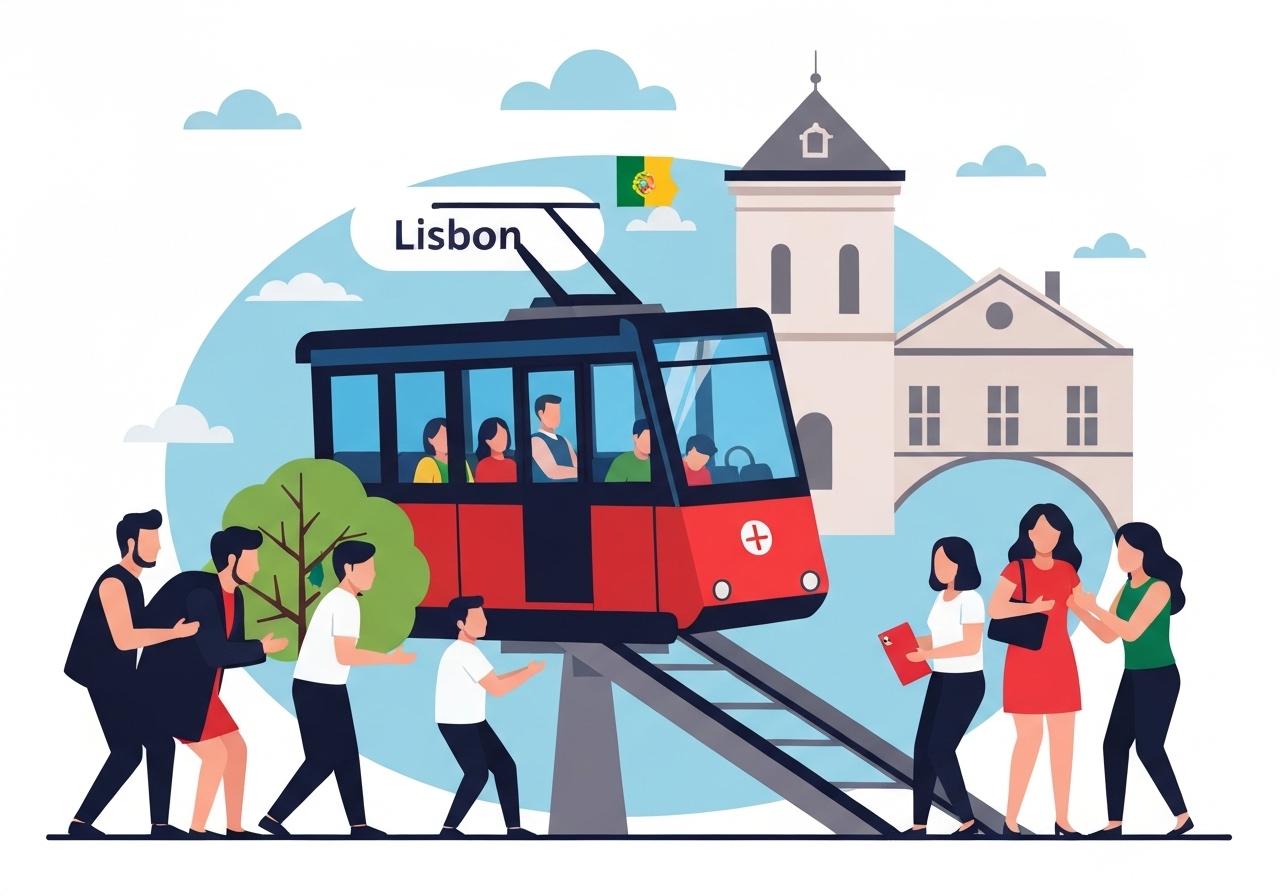
On 3 September 2025, a carriage of Lisbon’s historic Elevador da Glória derailed late afternoon, killing 17 people and injuring 21 after the car left the rails and struck a building.
Key takeaways
- At least 17 people died and 21 were injured when the Elevador da Glória funicular derailed on 3 September 2025.
- Emergency crews worked through the night; all victims were recovered from the wreckage, authorities said.
- The Portuguese government declared a national day of mourning and Lisbon officials announced three days of local mourning.
- Lisbon fire department reported a loose cable caused the car to lose control; an official criminal investigation has been opened.
- Carris, the operator, the police and the national transport safety authority are cooperating with prosecutors.
- The funicular, opened in 1885 and serving residents and tourists, runs on a two-car counterweight cable system.
- At least 11 of the injured were reported to be foreign nationals, but full identities and nationalities have not been released.
Verified facts
The accident occurred just after 18:00 local time (17:00 GMT) on Wednesday, 3 September 2025, on the steep hillside track linking Baixa and Bairro Alto. Photographs and video from the scene showed one carriage heavily damaged against a building and another car displaced beside the tracks while rescuers pulled passengers from the wreckage.
Authorities confirmed that all 17 deceased had been recovered from the site. Emergency services reported 21 people injured; local hospitals received multiple casualties and treated a number of seriously wounded patients.
Lisbon’s fire department publicly stated that a loose cable appeared to have caused the funicular to lose control. The attorney general’s office said the public prosecutor will open an investigation to preserve evidence and determine potential criminal liability, working with police forces, the national transport safety authority and Carris, the operator.
The Elevador da Glória, inaugurated in 1885, is one of three historic funicular lines operated by Carris. The line normally runs two counterbalanced cars connected by a cable and powered from a single motor; witnesses and footage indicate the upper carriage sustained the most severe damage while the lower car was largely intact.
Context & impact
The line serves as both daily transport for residents and a popular tourist attraction, especially during summer when visitor numbers in Lisbon rise significantly. The crash is among Portugal’s deadliest transport incidents in recent years and will likely prompt immediate operational and regulatory reviews.
Investigators will examine maintenance records, inspection logs, recent repairs and the condition of cables and braking systems. Depending on findings, similar heritage lines in the city could face temporary suspensions or stricter oversight to reassure the public.
Beyond immediate safety checks, the incident may affect tourism sentiment in the short term and trigger broader questions about how century-old infrastructure is maintained amid heavy modern use.
Official statements
“It’s a tragic day for our city… Lisbon is in mourning,”
Mayor Carlos Moedas
President Marcelo Rebelo de Sousa offered condolences and the government announced a national day of mourning on Thursday, with Lisbon authorities declaring three days of mourning locally.
Unconfirmed
- Full identities and nationalities of the deceased have not been published by authorities; some early reports said foreign nationals were among the victims.
- While the fire department cited a loose cable, investigators have not yet publicly released a final technical cause; mechanical failure, maintenance lapses or other factors remain under formal review.
- Any potential criminal charges or administrative sanctions against the operator or contractors are pending the prosecutor’s inquiry.
Bottom line
Authorities have launched a criminal probe and taken initial steps to recover victims and secure the scene. The coming days will focus on forensic examination of the track, cable and braking systems and on transparency about findings to restore public confidence.
Expect temporary service suspensions on heritage lines, official updates from prosecutors and possible regulatory responses depending on the investigation’s outcome.