
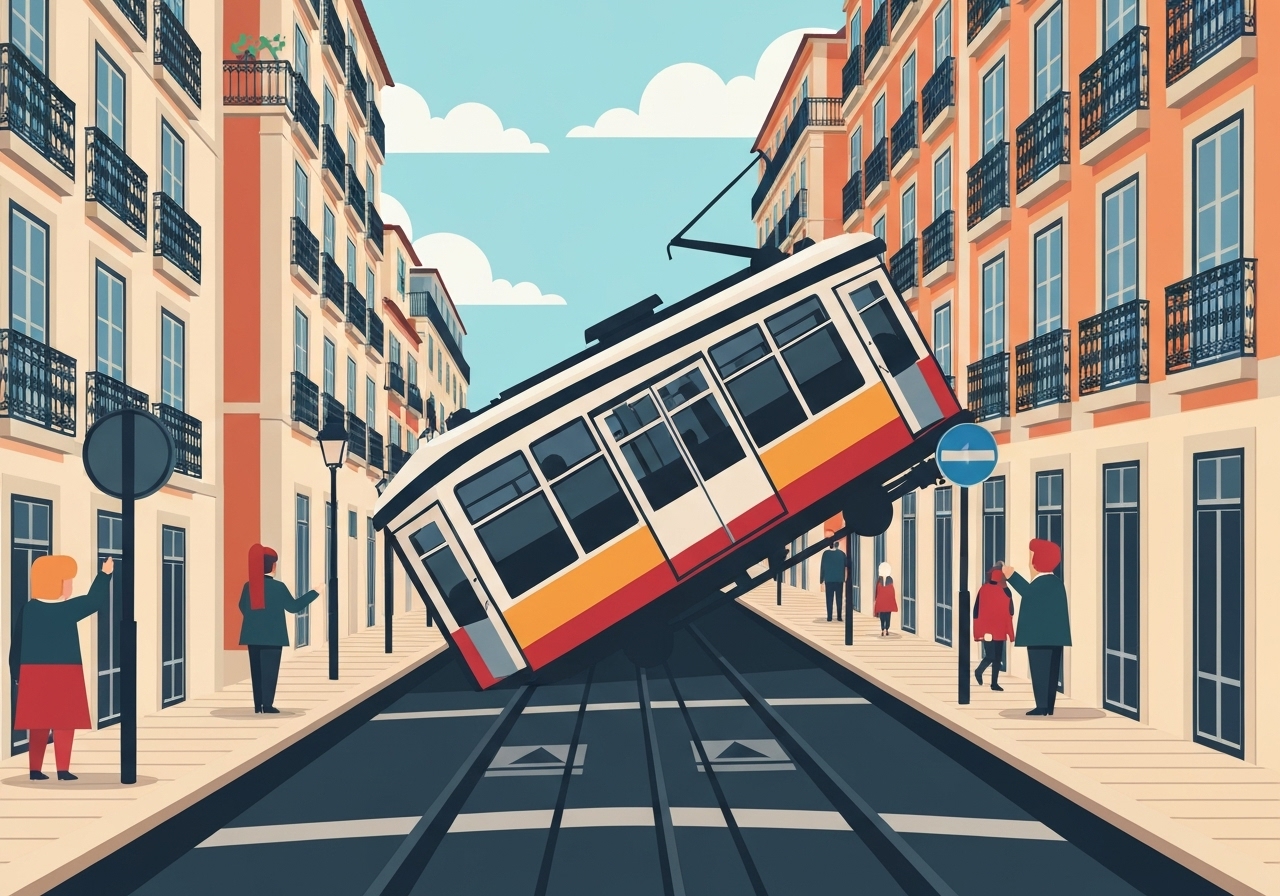
On Sept. 3, 2025, a historic Lisbon funicular known as Elevador da Glória derailed and crashed during the evening rush hour, killing 16 people and injuring more than 20, officials said.
Key takeaways
- The accident occurred around 6 p.m. on Sept. 3, 2025, on a steep central Lisbon route.
- Authorities say 16 people died and 21 were injured; emergency teams treated both locals and foreign tourists.
- Investigations by national and municipal authorities are under way; officials have not yet identified a definitive mechanical cause.
- Carris, the operator, said scheduled maintenance had been performed on the funicular.
- Elevador da Glória dates to 1885 and is classified as a national monument, carrying up to about 40 passengers per trip.
Verified facts
Portuguese emergency services and the national investigative police reported that the funicular overturned and struck a building on a curved section of its downhill route. Lisbon’s Civil Protection authority and health officials confirmed a final death toll of 16 and said 21 people were taken to hospitals with injuries ranging from minor to serious.
Initial tallies briefly varied: Civil Protection earlier reported 17 deaths but later corrected its count to 16 after removing duplicated entries in the data. Authorities described the event as an accident and said several formal inquiries — including criminal and technical probes — have been opened to determine how the vehicle left its rails.
The operator, Carris, stated that routine maintenance had been carried out before the incident. Officials have declined to confirm specific mechanical failures, such as brake malfunction or cable failure, pending the outcome of forensic and technical inspections.
The attorney general’s office said eight victims had been identified by the morning after the crash — five Portuguese citizens, two South Koreans and one Swiss national — and investigators said there is a high possibility other victims include nationals from Canada, the United States, Germany and Ukraine. Health authorities listed additional injured people from Spain, Israel, Brazil, Italy and France.
Context & impact
The Elevador da Glória is both a working transit link and a tourist draw that climbs a steep, traffic-free incline in central Lisbon. The funicular system uses steel cables and paired cars where the weight of the descending car assists the ascent of the other; it has been operating since 1885 and is protected as a national monument.
The crash has prompted a national day of mourning and drawn condolences from Portuguese leaders and European officials. City officials said the accident is among the worst peacetime tragedies Lisbon has faced in recent memory and pledged swift, transparent investigation results.
Beyond immediate rescue and medical response, the incident raises questions about the oversight of historic transport systems that remain in daily use. Authorities and transport safety experts will likely review inspection regimes, maintenance records and operational procedures for heritage vehicles across Portugal and elsewhere.
Official statements
“The city needs answers,”
Carlos Moedas, Mayor of Lisbon
“A tragic accident that has left the whole country in mourning,”
Government of Portugal (official statement)
Unconfirmed or evolving details
- Some early media and agency reports listed different casualty totals; the confirmed count at the time of publication is 16 dead and 21 injured.
- Investigators have not publicly confirmed whether brake failure, a snapped cable, operator error or another factor caused the derailment.
- Nationality counts for some victims remain provisional while officials complete identification and family notifications.
Bottom line
The Sept. 3 derailment of Lisbon’s Elevador da Glória left 16 people dead and dozens hurt, prompting criminal and technical investigations and national mourning. Authorities have urged patience as forensic teams work to establish how a long-standing, regularly maintained funicular came off its rails.