
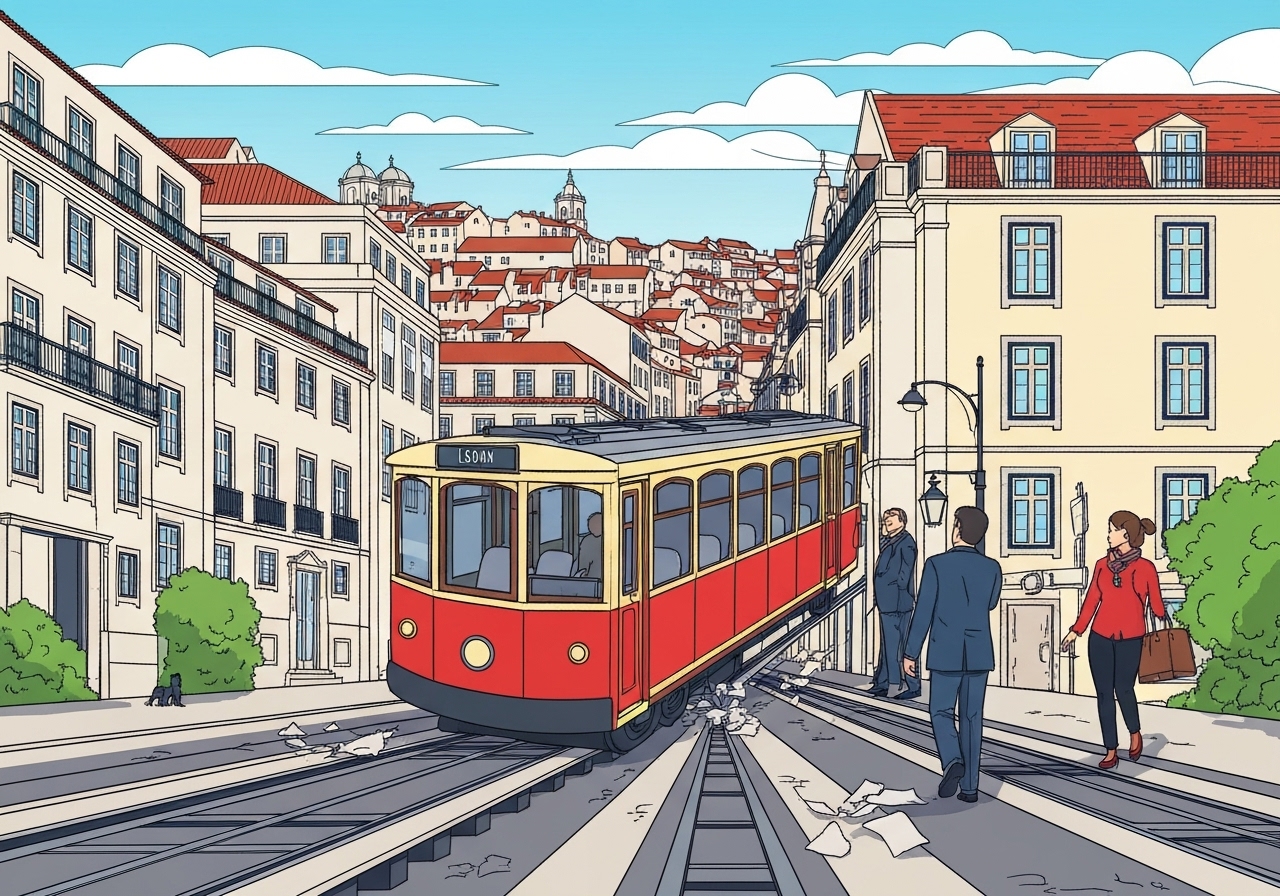
On Wednesday, Sept. 3, 2025, a car on Lisbon’s historic Glória funicular derailed after its haulage cable snapped, racing down a 265-meter slope and crashing into a building; authorities say 16 people were killed and dozens injured as emergency teams responded.
Key Takeaways
- At least 16 people died and multiple others were hurt when a Glória funicular carriage left the track and struck a building.
- Officials say the line’s traction cable appears to have snapped; the pair of counterbalanced cars operate on the same cable.
- Lisbon declared a day of mourning; the city temporarily suspended its other funicular lines for inspection.
- Witnesses described the lower carriage accelerating uncontrollably before derailing; some passengers jumped from windows.
- Municipal operator Carris stated maintenance protocols were followed; a union said workers had reported tension problems with the cable.
- Prime Minister Luis Montenegro called the incident a major tragedy and ordered a swift investigation.
- TAP, Portugal’s state airline, offered help with repatriation and family transport for victims.
Verified Facts
Emergency services responded to the Glória line after a yellow carriage left its track and collided with a building near the base of the hill that links Restauradores Square with Bairro Alto. Firefighters and medical teams recovered victims at the scene; authorities reported 15 died at the crash site and one additional death was confirmed later in hospital.
The two-car funicular operates by counterbalancing two tram-like carriages connected by a steel cable; electric motors control movement while the cable provides traction. Each car can carry roughly 40 passengers and the route is about 265 metres long. City officials and forensic teams photographed wreckage and inspected braking and cable components as part of the probe.
Carris, the municipal transport operator, said it had performed daily, weekly and monthly inspections as required. The Fectrans union leader, Manuel Leal, told reporters that workers had previously flagged issues with cable tension and braking, though he cautioned it was too early to assign blame. Police and technical investigators have kept the scene under review while emergency teams continue follow-up work.
Context & Impact
The Glória line opened in 1885 and is one of Lisbon’s best-known historic attractions, carrying about 3 million passengers a year. The crash is the deadliest transport accident in the city’s recent memory and raises questions about the safety of heritage transit systems under heavy tourist use.
Officials immediately closed the remaining funiculars for inspection and announced a national day of mourning. The event is likely to trigger a wider reassessment of maintenance practices, oversight procedures, and emergency readiness on similar urban heritage lines.
- Short-term: increased inspections, possible temporary suspension of service on similar lines.
- Medium-term: technical audits of cables, braking systems and maintenance records.
- Long-term: potential regulatory or legislative review of historic transport safety standards.
Official Statements
“This is one of the greatest human tragedies in our recent history,”
Prime Minister Luis Montenegro
“All maintenance protocols have been carried out,”
Carris (municipal transport operator)
Unconfirmed
- Exact cause: investigators have not publicly declared a definitive technical cause beyond initial reports that the cable snapped.
- Casualty totals reported in early statements varied (some officials cited 17 or 38 injured); official tallies are being reconciled.
- Identification of all victims and the nationality breakdown of the deceased remain incomplete pending family notifications.
Bottom Line
Portuguese authorities have opened a formal investigation into the Glória funicular crash while rescue and recovery operations continue. The accident spotlights the safety challenges of operating historic transit systems in busy urban tourism hubs and is expected to prompt technical audits and policy responses.