
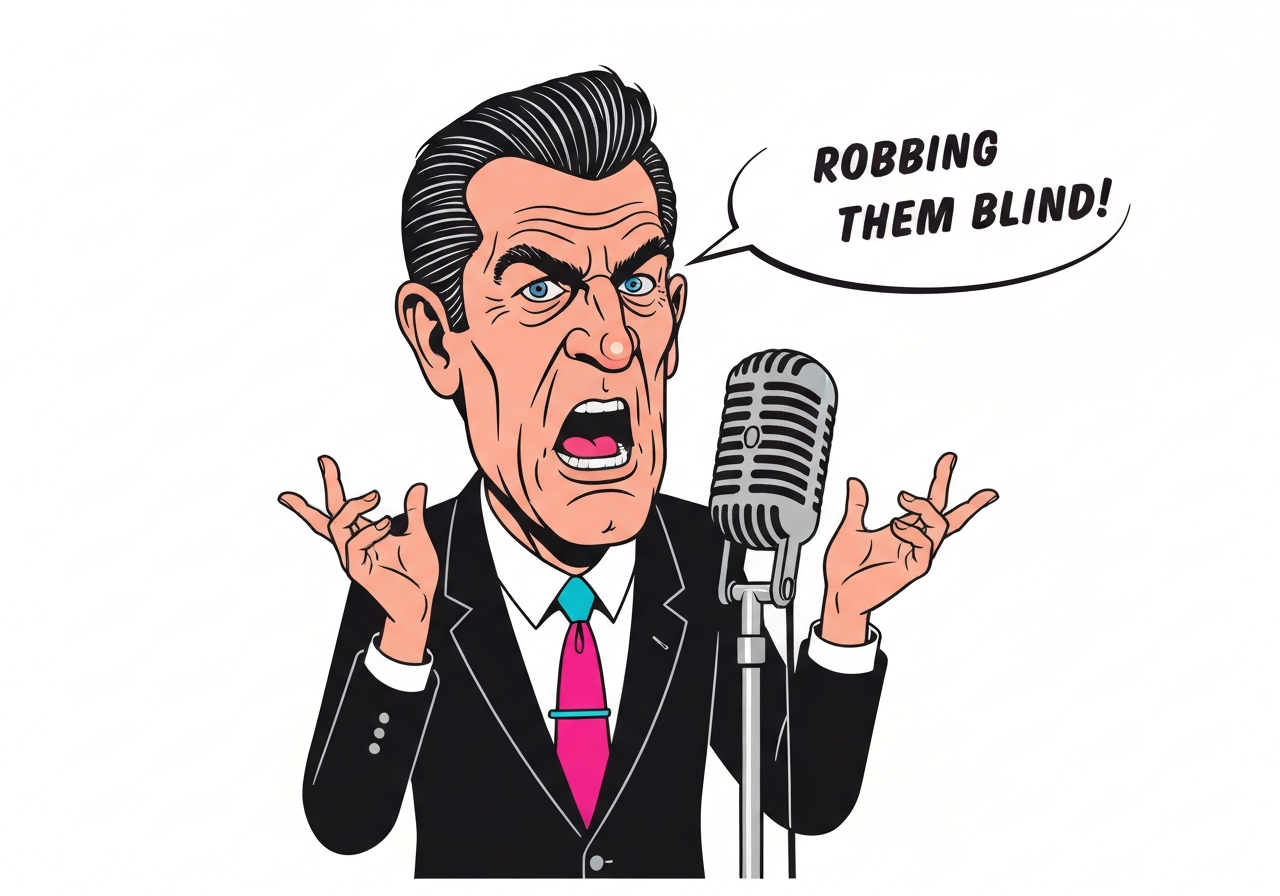
Lead: Newly unsealed Slack messages from 2022 show a Live Nation regional ticketing director openly describing practices that charged fans steep ancillary fees, including boasting of “robbing them blind.” The messages were released to the court after the U.S. government and several state attorneys general opposed Live Nation’s effort to keep them out of an antitrust trial over the company’s control of amphitheater ticketing. The disclosures arrive as the U.S. announced a proposed settlement with Live Nation and Ticketmaster, a development that could pause or reshape the trial. A federal judge in the Southern District of New York ordered the documents unsealed yesterday, adding new evidence to a high-profile case about concert-market power.
Key takeaways
- Unsealed Slack messages dated mostly from 2022 show Live Nation employees Ben Baker and Jeff Weinhold discussing ancillary fees and parking pricing in candid terms.
- One message quoted Baker saying Live Nation was “robbing them blind, baby,” and another stated, “I gouge them on ancil prices,” language plaintiffs say shows intent to monetize captive fans.
- Exhibits include specific price examples: Baker wrote “I charge $50 to park in the grass lmao” and “I charge $60 for closer grass,” and referenced premier parking revenue rising from $499,415 in 2019 to $666,230 in 2021.
- Plaintiffs argue ancillary revenue matters to the case; Live Nation reported ancillary revenue of over $45 per fan and CEO Michael Rapino described “onsite” sales as a “high margin business.”
- Live Nation sought to exclude the Slack chats on grounds they are irrelevant and prejudicial; the U.S. and state attorneys general countered and succeeded in having the exhibits posted to the court docket.
- The timing overlaps a March 8 notice that the U.S. and Live Nation informed the court of a proposed settlement, prompting state AGs to signal they may take the lead if federal prosecutors step back.
- Live Nation said the private messages “don’t reflect our values” and pointed to steps such as capping amphitheater venue fees at 15% and investing $1 billion in U.S. venues over 18 months.
Background
The dispute stems from long-running antitrust scrutiny of Live Nation Entertainment, the parent company of Ticketmaster, over its dominant position in live-event ticketing and venue operations. Plaintiffs in the Southern District of New York have alleged that Live Nation leverages control of amphitheaters and ticket distribution to extract higher prices from fans and artists. Ancillary fees—charges for parking, VIP access, and other onsite services—have been a central focus because they add to what fans ultimately pay but are often sold separately from face-value tickets.
Historically, concerns about the Live Nation–Ticketmaster tie have centered on vertical integration: Live Nation promotes concerts and operates venues, while Ticketmaster sells tickets and processes payments. Regulators and states have argued that the combined firm can shield itself from competitive pressure by making it hard for promoters and venues to switch providers. Previous investigations, congressional hearings, and consumer complaints have underscored complaints about opaque fees and limited alternatives for large-scale shows.
Main event
The newly public exhibits are internal Slack exchanges between Ben Baker and Jeff Weinhold, regional directors of ticketing for several major amphitheaters in 2022. According to the plaintiffs’ court filings, Baker later was promoted to Head of Ticketing for Venue Nation and Weinhold to Senior Director of Ticketing for Live Nation’s Capital Region. The messages include explicit price points and revenue tallies that plaintiffs say demonstrate how Live Nation monetizes captive attendees.
After the exhibits were filed, Live Nation moved to exclude them from the trial, arguing the messages concern ancillary, onsite products sold separately from primary tickets and thus fall outside the markets at issue. The company also argued the messages were prejudicial and could ‘‘inflame the jury.’’ Plaintiffs and the U.S. opposed exclusion, contending the chats are highly relevant to the claim that Live Nation uses ancillary sales to extract monopoly rents in the amphitheater market.
The procedural backdrop deepened when the U.S. and Live Nation informed the court of a proposed settlement on March 8, a move state attorneys general said left them blindsided. State AGs asked to take over prosecution and requested a mistrial to prepare for new proceedings. Judge Arun Subramanian ordered the Slack exhibits unsealed yesterday, making them available on the court docket despite Live Nation’s objections.
Analysis & implications
Legally, the central question is relevance: do private employee messages about ancillary fees illuminate whether Live Nation unlawfully leverages monopoly power in the market for amphitheater ticketing? Plaintiffs say yes—arguing ancillary sales are part of how Live Nation captures value from fans who have limited choice of venues and ticketing platforms. If jurors see evidence that employees intentionally priced ancillaries to maximize revenue without regard to consumer harm, that could bolster claims of anticompetitive conduct.
From a damages and remedies perspective, ancillary revenues are quantifiable and could be used to calculate overcharges or to show exclusionary effects. Data points such as the jump in premier parking revenue (from $499,415 in 2019 to $666,230 in 2021) and corporate disclosures of roughly $45 in ancillary revenue per fan provide plaintiffs with concrete metrics to present to a jury. Those figures can be contrasted with venue-level competition and substitution possibilities to demonstrate limited alternatives for consumers.
The public-relations and factual-risk dimensions also matter. Live Nation characterizes the messages as private banter from lower-level employees and says they do not represent corporate policy. Plaintiffs counter that at least one author of the messages now holds senior responsibility for amphitheater ticketing. If jurors view the exchanges as reflective of internal incentives, Live Nation could face reputational damage and heightened regulatory scrutiny regardless of trial outcomes.
Comparison & data
| Metric | Value |
|---|---|
| Premier parking revenue, 2019 | $499,415 |
| Premier parking revenue, 2021 | $666,230 |
| Ancillary revenue per fan (company disclosure) | Over $45 |
| Cap on amphitheater venue fees (company policy) | 15% |
The table above highlights figures plaintiffs and Live Nation have cited. The revenue increase for premier parking between 2019 and 2021 is used in filings to illustrate how onsite services contributed materially to venue income. Context matters: pandemic-era scheduling, show counts, and pricing strategies can affect year-to-year comparisons, but the plaintiffs emphasize the revenue shifts to argue ancillaries are a deliberate monetization channel.
Reactions & quotes
Plaintiffs urged the judge to admit the messages as probative evidence of how defendants run their businesses. They framed the chats as showing internal intent that could contradict testimony given under oath.
“The individual who is currently Head of Ticketing for these amphitheaters calls fans ‘so stupid,’ explains that he ‘gouge[s]’ them, and brags that Live Nation is ‘robbing them blind, baby.'”
Plaintiffs’ memorandum (U.S. government and state AGs)
Live Nation pushed back, describing the Slack exchange as unrepresentative and private banter unconnected to the defined markets in the case. The company also highlighted business steps it says benefit fans.
“The Slack exchange from one junior staffer to a friend absolutely doesn’t reflect our values or how we operate.”
Live Nation statement (company)
State attorneys general, reacting to the settlement news, have signaled they will pursue their own litigation strategy and criticized the federal settlement terms. Their intervention could determine whether the trial proceeds, pauses, or is reconfigured.
Unconfirmed
- Whether the Slack messages reflect formal company policy or were isolated remarks by staff remains unproven; the company says they are private banter.
- It is not yet confirmed whether higher-level executives directed the pricing approaches described in the chats; plaintiffs point to promotions as circumstantial linkage.
- The ultimate effect of the U.S.–Live Nation proposed settlement on the state-led litigation and the timing of any new trial is unresolved.
Bottom line
The unsealed Slack messages add striking, contemporaneous language to an antitrust case that already centers on how Live Nation and Ticketmaster monetize live entertainment. While Live Nation characterizes the messages as out-of-context comments by individual staffers, plaintiffs argue the exchanges prove a corporate practice of extracting ancillary revenue from fans who have limited alternatives.
Practically, the chats strengthen plaintiffs’ factual narrative and supply concrete figures plaintiffs can use at trial, but they do not determine legal liability on their own. Much will depend on how the court treats relevance and prejudice, how state attorneys general proceed after the federal settlement notice, and whether jurors see the exchanges as indicative of broader company behavior.
Observers should watch for the judge’s ruling on evidentiary motions, any settlement revisions, and follow-up discovery that may further clarify the role of ancillary pricing in demonstrating market power.
Sources
- Ars Technica (news report summarizing court filings and Slack exhibits)