
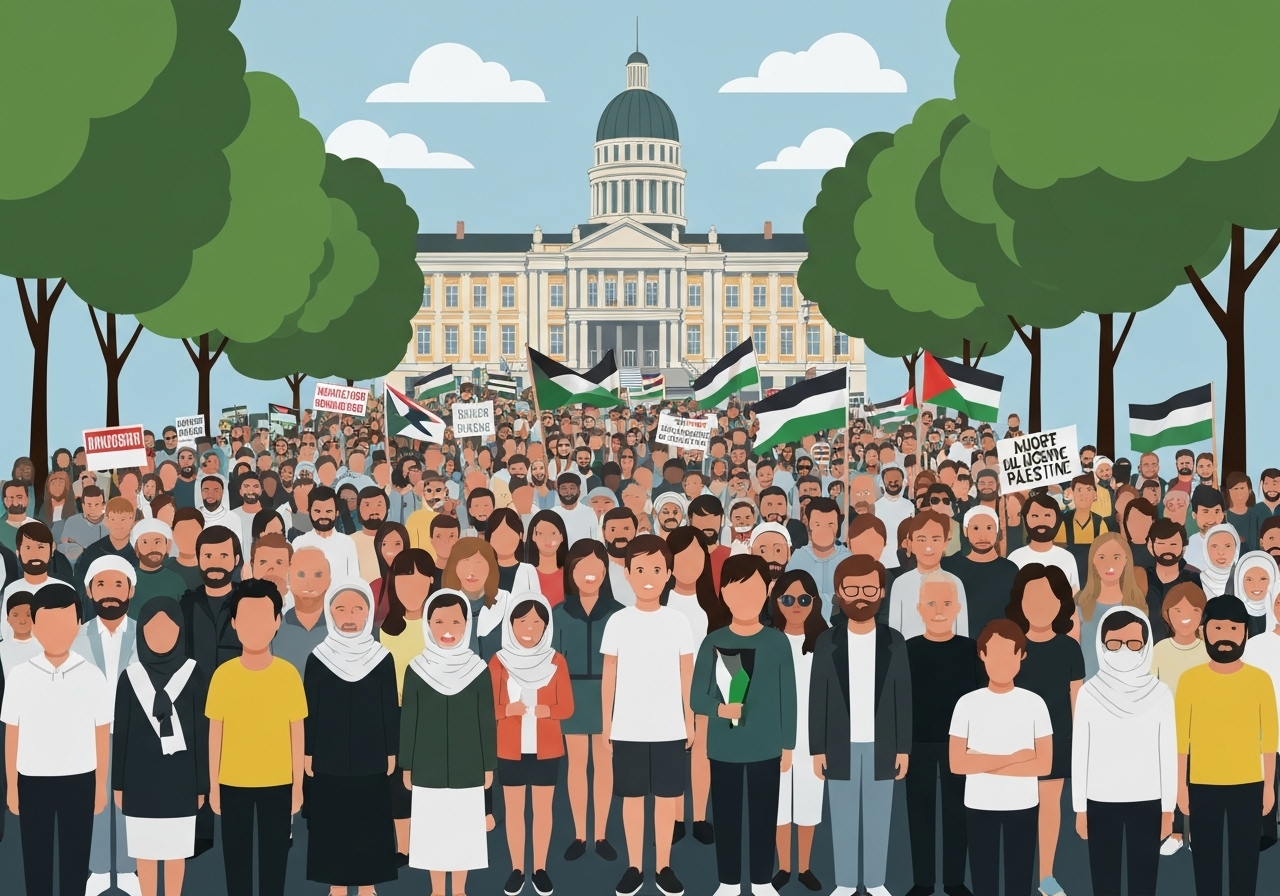
Who: Supporters of Palestine Action and allied demonstrators; When: Saturday, Sept. 6, 2025; Where: Near Parliament in central London; What: A large demonstration in support of the proscribed group; Result: London police say 890 people were detained, the highest single‑event total to date.
Key Takeaways
- London police reported 890 detentions during a Sept. 6 protest near Parliament.
- Authorities said 857 people were held for supporting a banned organisation; 17 were arrested for assaults on officers.
- Police described parts of the protest as coordinated and disorderly.
- Organisers said many arrestees were elderly, including priests, veterans and healthcare workers.
- Palestine Action was proscribed in July and faces penalties of up to 14 years for membership or support.
- Human rights groups have criticised the ban as disproportionate and a curb on free expression.
- Defence Minister John Healey defended the government’s stance while praising lawful protest over Gaza imagery.
Verified Facts
Metropolitan Police reported that 890 people were detained after a demonstration close to the Houses of Parliament on Saturday, Sept. 6, 2025. Officers said the figure is the largest number of detentions recorded from a single protest linked to Palestine Action.
Of those detained, police identified 857 as being held under the proscription law for showing support for a banned organisation; a further 17 were arrested on suspicion of assaulting officers amid clashes that police described as violent and coordinated.
Britain formally proscribed Palestine Action in July 2025 under anti‑terrorism legislation after some members reportedly breached a Royal Air Force base and damaged military aircraft. The proscription makes public support or membership of the group a criminal offence, with sentences of up to 14 years.
Organisers of Saturday’s demonstration, a group calling itself Defend Our Juries, said the detained included older adults, clergy and health workers, and signalled plans to continue acts of defiance until the ban is lifted.
Context & Impact
The proscription followed a series of actions that targeted defence contractors and an incident at an RAF site earlier in the summer. The government says the measure is necessary to address threats to public safety and to respond to criticism that policing and justice must be applied consistently.
Civil liberties organisations have pushed back, arguing the ban casts a wide net that could criminalise otherwise peaceful protest and curtail political expression related to the conflict in Gaza.
Practical consequences include increased use of police powers at demonstrations, higher arrest numbers at single events, and a legal environment where attendees may be processed under terrorism‑related statutes rather than standard public order offences.
For individuals arrested, many have been released on police bail in recent weeks; public information from police did not specify how many remained in custody following Saturday’s operation.
Official Statements
“The violence we encountered during the operation was coordinated and carried out by a group of people intent on creating as much disorder as possible.”
Deputy Assistant Commissioner Claire Smart, Metropolitan Police
“I applaud lawful protest about the images from Gaza, but that does not mean linking demonstrations to a proscribed organisation is acceptable.”
Defence Minister John Healey
Unconfirmed
- The exact number of people still held in custody after the mass detentions was not publicly confirmed by police at the time of reporting.
- Claims by organisers about the precise age, disability status, or professions of all detained individuals are based on their statements and have not been independently verified.
Bottom Line
The Sept. 6 demonstration underscores heightened tensions in the UK over the Gaza war and intensifying enforcement after Palestine Action’s proscription. Expect further scrutiny of protest policing, potential legal challenges to the ban, and continued public debate over how to balance security and free expression.