
Lead
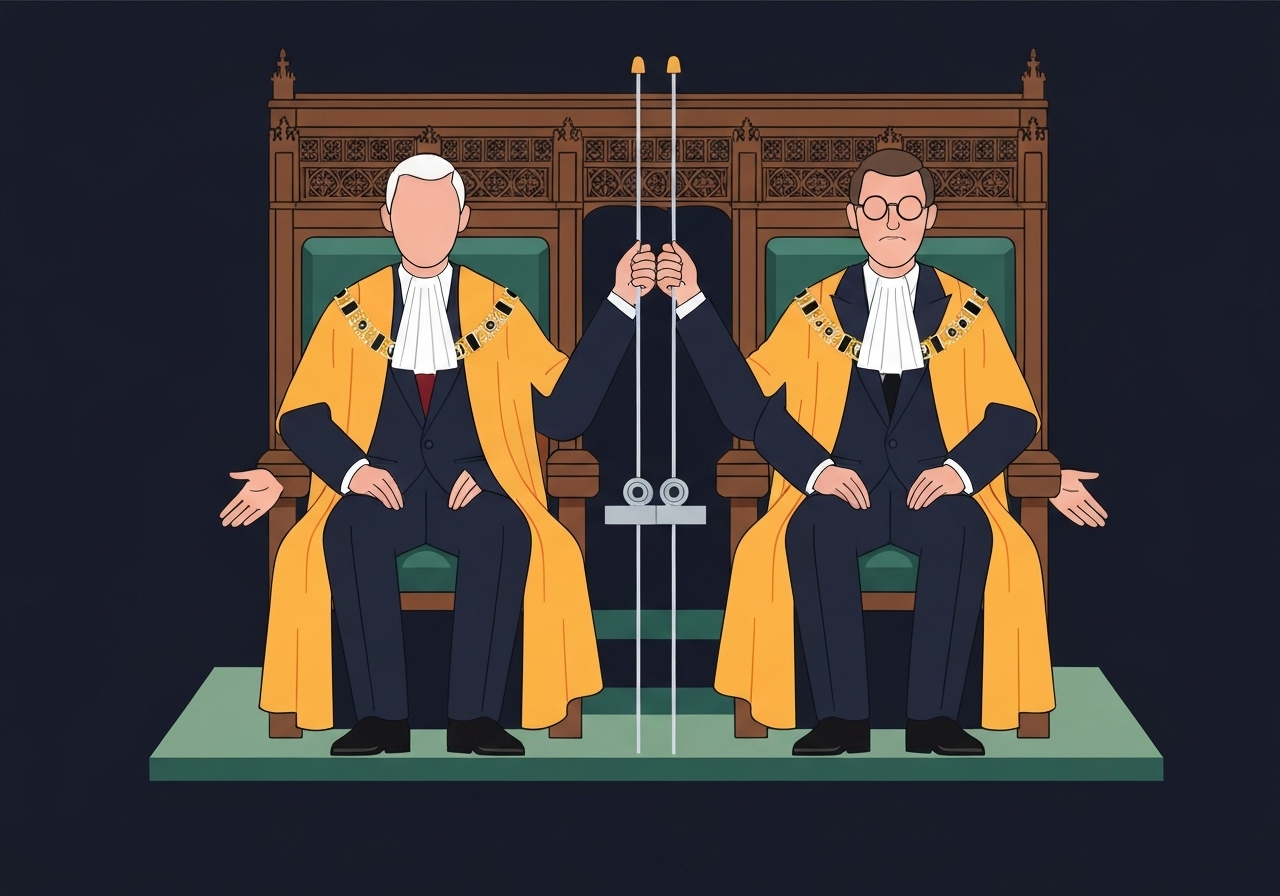
Two members of the House of Lords — former Army chief Lord Richard Dannatt and businessman Lord David Evans of Watford — face suspensions after a standards watchdog found they breached conduct rules following an undercover Guardian investigation. The commissioner recommended four-month and five-month suspensions respectively; the sanctions will take effect if the House of Lords approves them. Investigations concluded no payments were established, but found willingness to provide paid parliamentary services and other breaches of the code of conduct. Both peers accepted the commissioner’s findings and chose not to appeal.
Key takeaways
- Lord Richard Dannatt, a crossbench peer and former Army chief, was found to have committed three breaches relating to contacting ministers about UK Nitrogen, Teledyne UK and Blue International Holdings; a four-month suspension was recommended.
- Labour peer Lord David Evans was found to have committed multiple breaches, including sponsoring parliamentary events for Affinity (a company in which he held one-third of the shares) and was recommended a five-month suspension.
- Both cases stemmed from an undercover Guardian operation; each peer voluntarily referred themselves to the House of Lords standards commissioner after the reporting.
- The commissioner found no evidence that either peer received payment for parliamentary services, but concluded Lord Dannatt showed a readiness to perform paid parliamentary services.
- The commissioner cited breaches of the requirement that peers “always act on their personal honour” and the prohibition on profiting from membership by providing parliamentary advice or services for reward.
- Lord Dannatt said the Registrar of Consultant Lobbyists had examined two UK matters and found he had not acted as a consultant lobbyist; he accepted the commissioner’s findings and expressed remorse.
- Lord Evans told investigators he believed his shares in Affinity had been transferred to his son in 2013 and did not expect to benefit; the commissioner judged the number and seriousness of breaches warranted a lengthy suspension.
Background
The House of Lords enforces a code of conduct that requires members to act on their personal honour, declare relevant interests and avoid using their parliamentary position to obtain financial rewards. The Standards Commissioner investigates alleged breaches, produces a report with findings and sanctions, and the House of Lords must approve any recommended suspension before it takes effect. Concerns about peers offering services for reward have been heightened in recent years by public scrutiny of contacts between parliamentarians and external organisations.
Undercover reporting by media organisations has repeatedly prompted standards inquiries in Westminster, leading to formal self-referrals or commissioner-led probes. The Registrar of Consultant Lobbyists and the Lords’ Register of Interests sit alongside the commissioner’s remit: the former monitors consultant lobbying activity, while the latter records financial and other interests declared by peers. Sanctions range from formal advice to lengthy suspension, depending on the assessed seriousness and number of breaches.
Main event
The commissioner’s separate investigations followed footage and conversations recorded by undercover reporters working for the Guardian. In Mr Dannatt’s case, the investigation found he corresponded with ministers and officials about three companies—UK Nitrogen, Teledyne UK and Blue International Holdings—in which he had a declared financial interest. The commissioner judged those contacts to breach the code sections that bar seeking profit from membership of the House.
The commissioner concluded that while no payment was shown to have been received, Lord Dannatt had indicated a readiness to make introductions to government figures and had said he could “make a point of getting to know” ministers best placed to help. The report emphasized that such willingness would have amounted to paid parliamentary services if reward had been agreed, and that his conduct showed insufficient regard for acting solely in the public interest.
In Lord Evans’s case, the commissioner identified at least four breaches, including sponsoring events in Parliament on behalf of Affinity and asking peers to take part. Tickets were offered at a price above the actual per-head cost, contrary to Lords rules on holding events. The commissioner noted Lord Evans’s assertion that he believed his Affinity shares had been transferred to his son in 2013, but concluded that, given the scale and seriousness of the breaches, a lengthy suspension was warranted.
Both peers accepted the findings without appealing. Lord Dannatt made a public statement acknowledging the breaches, expressing remorse and noting his long record of public service; he also pointed to an earlier Registrar of Consultant Lobbyists finding that he had not acted as a consultant lobbyist in two UK matters. The recommended suspensions—four months for Lord Dannatt and five months for Lord Evans—must be confirmed by the full House.
Analysis & implications
The commissioner’s decisions illustrate the distinction between unlawful or proven paid lobbying and conduct that nonetheless breaches parliamentary standards by demonstrating readiness to trade on parliamentary access. The absence of established payments reduces the criminal or regulatory implications, but the sanctions underscore that willingness to offer parliamentary services for reward violates the ethical obligations of peers. That distinction is likely to be central in future cases where intent, opportunity and payment are not all present.
Institutionally, the episode may prompt renewed calls for clearer guidance and stronger deterrents around events held within Parliament and how peers engage with external commercial interests. Sponsorship of parliamentary events and the sale of tickets above cost have been contentious because they risk creating the appearance that parliamentary access can be monetised. The standards commissioner’s emphasis on declared interests and the duty to act only in the public interest points to areas where rules and training might be tightened.
Politically, the sanctions affect crossbench and party-affiliated credibility differently. For a crossbench peer such as Lord Dannatt, who is often presented as independent and non-partisan, an adverse finding feeds reputational risk about impartiality and propriety. For a Labour peer, the case increases scrutiny on how party-affiliated members manage declared family or business ties. Both outcomes could prompt parties and crossbench groups to review internal briefing and compliance procedures.
Practically, the recommended suspensions create a precedent for how the Lords will respond to conduct uncovered by undercover reporting. The House’s decision to ratify or amend the sanctions will be watched closely: approval would reinforce the commissioner’s findings and likely deter similar behaviour, whereas any mitigation by the House could raise questions about enforcement consistency.
| Peer | Affiliation | Breaches identified | Recommended suspension |
|---|---|---|---|
| Lord Richard Dannatt | Crossbench | Three breaches: contacting ministers about companies in which he had financial interests; willingness to provide paid parliamentary services | 4 months |
| Lord David Evans | Labour | At least four breaches: sponsoring parliamentary events for Affinity while holding one-third of shares; arranging speakers; ticket pricing issues | 5 months |
The table summarises the commissioner’s findings and recommended sanctions for quick comparison. The numeric sanctions reflect the commissioner’s view of the number and gravity of breaches rather than any financial loss or payment being established.
Reactions & quotes
The commissioner framed key rules breached in both cases, underlining the core ethical standard peers must meet.
Peers must “always act on their personal honour” and must not “seek to profit from membership of the House by accepting or agreeing to accept payment or other incentive or reward in return for providing parliamentary advice or services.”
Standards Commissioner report
Lord Dannatt issued a personal statement accepting the commissioner’s findings and expressing regret while noting prior inquiries by the Registrar of Consultant Lobbyists.
“I deeply regret the findings… At nearly 75 no-one is too old to learn lessons and I hope that these activities will be placed in the context of my 56-years public service.”
Lord Richard Dannatt
The commissioner also reported Lord Evans’s stated belief about his shareholding in Affinity; the report treated that belief but still judged the breaches sufficiently serious to justify a lengthy suspension.
He “did not think he would benefit from sponsoring events for Affinity as a shareholder.”
Commissioner report summarising Lord Evans’s position
Unconfirmed
- No evidence of payment: while the commissioner found no payment had been received, the precise nature and extent of any offered but unrealised commercial arrangements has not been fully publicised.
- Affinity share transfer: Lord Evans said he believed shares had been transferred to his son in 2013; the report records that belief but details of the share transfer timing and documentation were not publicly disclosed in full.
Bottom line
The commissioner’s report and the recommended suspensions signal that the House of Lords intends to enforce its code of conduct strictly where peers appear to leverage parliamentary access for potential private gain, even when no payment is proved. The sanctions underline that readiness to provide paid parliamentary services and failures around sponsorship and event rules are treated seriously.
Next steps to watch: the House of Lords vote to confirm the suspensions, any internal changes to guidance or training for peers about events and declared interests, and whether the regulator or Parliament introduces clearer rules on events, sponsorship and the line between permissible engagement and paid parliamentary services. The cases are likely to prompt closer scrutiny of how peers handle commercial ties and public trust.
Sources
- BBC News (media report)
- House of Lords Standards Commissioner (official office)